The Year of the Recall

SPC can be used to create a competitive advantage. Source: Infinity QS
As consumers, we’ve all experienced product defects in our day-to-day purchases. Whether it is something minor such as a part missing from a toy or something more significant such as a car breaking down in the middle of the road just weeks after purchase, product defects are annoyances to the consumer, and potentially detrimental to the manufacturer.
Product defects are a given in manufacturing. Unfortunately, no manufacturing process is so refined that it produces perfect parts on every run. For quality professionals, the goal is to identify which processes are working properly and those that are creating quality issues. Whether it is a package of candy, a toy, an appliance or an automobile, manufacturers need to know exactly what customers are receiving when they put their faith in the brand and make a purchase.
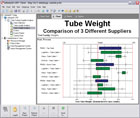
SPC’s strength is in its versatility--it can be applied on the shop floor in different ways within a variety of manufacturing conditions. Source: Infinity QS
Quality as a Statistical Equation
For the everyday consumer, quality is determined by the look, feel or function of the product. For quality professionals and industrial statisticians, quality carries a more precise definition. The assessment of quality involves the use of analyses such as control charts, histograms, box and whisker plots and other means of quantifying quality levels.Instead of looking at a defective piece of candy as an interesting anomaly, quality professionals, by default, concern themselves with the variables that must have contributed to such a result. In this case, it could have been a problematic oven, a cooling fan with a short, or perhaps a blocked valve or sprayer in need of maintenance.
There is a statistical process control (SPC) application for the seemingly infinite number of production characteristics that could be measured on each part. Innovative quality professionals are creating new strategies to move toward “right the first time” by using SPC with short production runs, small batch sizes, multiple characteristics and limited opportunities for data collection. When used effectively, SPC can be applied on the shop floor in many different ways within a variety of complex and changing manufacturing conditions.

SPC software will not solve all quality issues, but it can be immensely helpful. Source: Infinity QS
The "Real-time" Advantage
How can manufacturers truly leverage real-time SPC to create a competitive advantage? The simple and most basic approach is to identify a few quality characteristics that indicate how a process is running. Those characteristics might be product-specific such as the diameter of a washer or the weight of a food product, or they might be process-specific such as a machine’s temperature, feed rate or speed.While manufacturing processes are running and products are being manufactured, operators gather data based on some of these quality characteristics and enter the data into an SPC software application. They do so with the goal of identifying statistical trends that either confirm that the quality levels are where they should be, or alert the quality professional that the process is not performing correctly. But the difference is that the quality checks occur in real-time-at the very moment that a product has been produced. The shop floor is where, ultimately, the least expensive and most powerful defect detection and prevention take place-potentially saving the manufacturer millions of dollars in scrap, and preventing expensive recalls that could diminish brand value.
Many manufacturers fall into the common trap of implementing SPC to follow the trend of other companies. Often times, they do so without understanding its true value to the organization.
Additionally, many companies believe that SPC software will solve all of their quality issues. It will not, but it can be immensely helpful. First and foremost, sound manufacturing practices must be in place. Then SPC can be used to stabilize processes, remove unwanted product and process variability and highlight process “personalities” that can adversely affect defect levels. While some product variation is to be expected, quality professionals leverage SPC to dramatically minimize variation and its unnecessary consequences of scrap and rework.
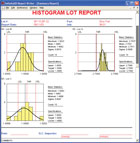
Factory Illumination with SPC
Duracell, a manufacturer and marketer of high-performance alkaline batteries, is using SPC for true factory illumination and quality improvement initiatives.“We first needed to understand how our processes were running with regards to the various products that we manufacture,” says Austin S. Lin, Six Sigma Black Belt for supplier quality assurance at Duracell. “We then needed to determine exactly how those processes behaved through time, across shifts and how they reacted when we used different sources of raw materials.”
To understand how these processes were running across all parts, a 3-D analysis of the data was required. ”It’s difficult enough to make critical business decisions, but imagine making those decisions without concrete evidence of where improvements can have the best impact on quality and costs,” continues Lin. “Making process improvements typically involves some cost, and we want to know that the decisions we’re making will result in the highest quality at the lowest cost.”
By implementing Six Sigma with the help of real-time SPC analysis, Duracell has systematically improved manufacturing processes, prevented quality issues from occurring and contributed to increasing bottom line profitability.
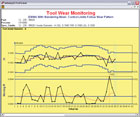
Extracting Value from Data
Why do businesses invest so much time and money in collecting and storing data-quality or otherwise? Because data has value to the organization. In fact, a company’s data is one of its most valuable assets. The more companies can analyze data, the better able they are to expose problem areas and make educated business decisions.The quality arena is no different. In each step of a manager’s decision-making process, Pareto charts, box and whisker plots, and control charts should help to clearly reveal opportunities for improvement and identify successes and failures of quality improvement initiatives.
SPC is the best way to keep a finger on the pulse of the manufacturing processes. When applied successfully, SPC maximizes the ability to extract meaningful information from massive volumes of accumulated quality data. Customers are able to make better decisions about their manufacturing processes because of how they were able to perform sophisticated analyses of their data.
Decision-making becomes easier when SPC software can graphically compare different production lines, highlight issues with received vendor goods, and reveal troublesome parts and machinery. Quality professionals need to be able to analyze quality data from many different perspectives and a multitude of different angles-all in real time during the production process.
Marketplace Impact
By all accounts, 2007 was the Year of the Recall. Fiscal year 2007 brought 472 product recalls and consumers were bombarded with high impact recalls on a weekly, or sometimes daily, basis. Items such as pet food, prescription drugs, spinach, toys, cribs, dishwashers, infant car seats and toothpaste were being pulled from shelves left and right, leaving consumers skeptical and forcing manufacturers to take a closer look at how they control product quality.While quality took a backseat to quantity during the rapid global industrial expansion of the past 30 years, it is once again coming to the forefront. Quality control investments such as real-time SPC systems are now playing a major role in manufacturers’ strategic initiatives for preventing defects, avoiding recalls and dramatically enhancing marketplace competitiveness. Q
Quality Online
Visit www.qualitymag.com and type “SPC software” into the search engine to find related articles. Among the results you’ll find:- “SPC Advances Improve Manufacturing,” by Frank J. Tappen and Beena Anand
- “Harnessing Real-Time SPC,” by Bruce Brigham
- “Collect Less Data for Better SPC,” by Bill Caterisano
- “Develop an SPC System,” by Dan Sternbergh
- Case Studies: "SPC Solution Manages Quality of Diesel Fuel Injectors"
Tech Tips
Looking for a reprint of this article?
From high-res PDFs to custom plaques, order your copy today!