Today’s aviation, defense, and space organizations navigate three converging trends: faster technology adoption, increasingly distributed supply chains, and rising expectations for risk-based oversight.
The next few years mark a major convergence in quality and compliance standards. ISO 9001, the foundational global quality management system (QMS) standard, is being revised for 2026. In aerospace and defense, AS9100 is evolving into IA9100, aligning with ISO’s revisions, and incorporating tighter supply-chain and digital assurance practices.
The aerospace and manufacturing sectors are bracing for change as the IAQG (International Aerospace Quality Group) Standard Development Organization works to revise AS9101 and AS9104/1 with IA9104/1 (Requirements for Aerospace Quality Management Systems Certification Bodies) and IA9101 (Requirements for Aerospace Auditor Competence).
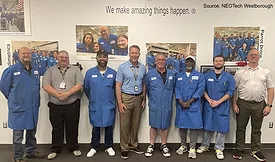
NEOTech announced that its Westborough, MA, facility has successfully completed the rigorous AS9100 Bi-Annual Surveillance Audit with zero findings, a testament to the company’s unwavering commitment to quality, security, and operational excellence.
The most personally transformative element of the upcoming revisions is arguably the formalization of quality culture and human factors within the QMS framework.
The aerospace and defense sectors rely on the AS9100, AS9110, AS9120, and AS9145 series standards for quality, reliability, safety, and compliance. In 2026, the International Aerospace Quality Group (IAQG) will revise and rebrand these standards.
Industries like aerospace and automotive now require stringent quality assurance, focusing on proactive measures throughout the product lifecycle to ensure safety and continuous improvement.
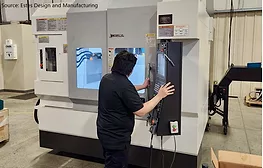
Estes Design and Manufacturing has received its AS9100D certification for its quality management system governing the design, manufacture and assembly of fabricated sheet metal products.
The aerospace industry is grappling with a shortage of auditors for AS9100 Quality Management Systems certification, crucial for safety and compliance, as demand for aircraft and services increases in 2025. This shortage affects manufacturers and suppliers globally, emphasizing the need for improved recruitment and retention in auditing.
Quality assurance in aerospace has shifted from hands-on inspections to digital checklists, creating potential lapses in verification, as demonstrated by incidents like the Alaska Airlines door blowout. Despite tracking compliance, digital records do not guarantee that physical checks were performed.