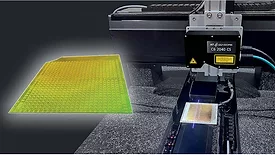
No matter the industry, every manufactured product carries critical information: specifications, safety warnings, regulatory markings and even serialized identifiers that are linked to traceability and quality control.
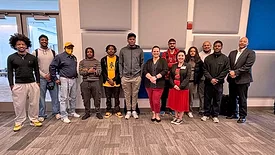
The North Carolina A&T State University College of Science and Technology, in collaboration with the ASQ Central North Carolina section 1109 and student branch, hosts an annual Sci-Tech Week Conference.
The sector’s future depends on employers’ ability to build cultures that value every worker, invest in skill development and create environments that attract and retain top talent.
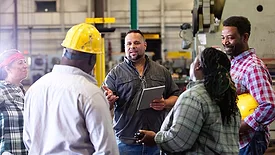
The manufacturing sector faces a pivotal moment in 2026. Employers and HR leaders are confronted by a scarcity of skilled workers, an aging workforce and intensifying competition for talent.
Denise Hall is the president and CEO of Peak Performance, which is a workforce training and consulting firm helping manufacturers achieve operational excellence.
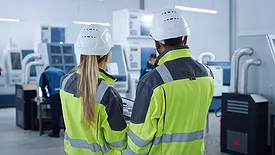
It is an exciting time to be in manufacturing. Across the globe, the industry is reinventing itself through artificial intelligence, automation, and data analytics that improve speed, visibility, and precision.
In metal additive manufacturing, “traceability” has become a badge of seriousness. We can trace powder batches. We can trace build jobs. We can trace post-processing steps. We can trace inspection results. Great.
Like many professionals, my introduction to ASQ began with a very practical goal: certification. At the time, I was focused on strengthening my technical foundation and building credibility in the field of quality.
 RSS
RSS