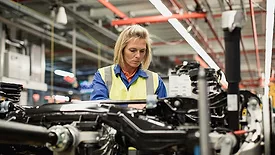
Automotive manufacturers have long relied on end-of-line testing to catch defects before vehicles leave the plant. Increasingly, that approach is giving way to something more proactive.
There is a persistent gap between what computer simulation predicts and what the production floor delivers. Research now shows exactly how to close it.
Every vehicle begins as a simulation. Before a single tool is built or a single part is pressed, engineers model how materials will behave, how components will form, and how structures will perform under load.
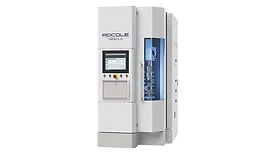
The rapid expansion of New Energy Vehicles (NEVs), including battery-electric, hybrid, and plug-in hybrid platforms, has fundamentally reshaped the metrology requirements for rotating powertrain components.
As industries transition to higher-performance technologies, the materials used in electric vehicles, semiconductors, and aerospace systems are operating under increasingly demanding conditions.
Statistical Process Control is a critical tool used in many industries to monitor complex processes that could pose a serious financial or safety risk. Decades ago, the automotive industry was looking for ways to improve productivity and reduce waste.
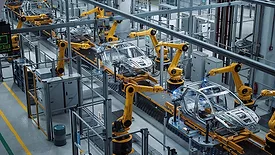
Automotive production is at an inflection point. For decades, automakers relied on traditional industrial robots to deliver the speed, durability and throughput required for mass production. Those large, stationary machines defined efficiency, but often at the expense of flexibility.
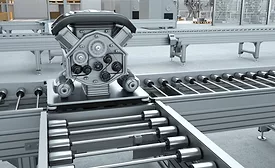
Conveyance has always been central to automotive production. Every vehicle component, from a small subassembly to a complete powertrain, depends on reliable movement through the factory.
Victor Taylor is the vice president of manufacturing at the award-winning Nissan Canton vehicle assembly plant with more than 20 years of engineering and manufacturing expertise.
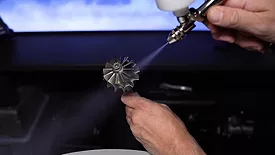
3D measurement technology has advanced rapidly, especially in digitization and automation. New scanning equipment and powerful evaluation tools enable quick and accurate handling of complex measurement tasks. Measurement accessories like sublimating scanning sprays and reference points are crucial for achieving efficient and reproducible results.