Every morning, millions of people cross bridges, board aircraft, step into elevators, cook with gas, and drive through tunnels without giving a second thought to the forces that hold those structures together.
The quality requirements for the aerospace industry are essential to human life, and any component used in the final craft is mission-critical for success.
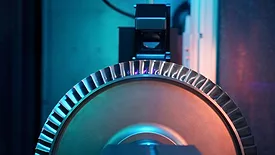
Earlier detection through CT scanning prevents downstream rework, reduces material waste, and protects production capacity while also enabling traceability.
Ask any aerospace manufacturer about their biggest challenge, and one word comes up again and again: speed. For quality, this is in constant tension between maintaining uncompromising precision and meeting production demands.
Today’s aviation, defense, and space organizations navigate three converging trends: faster technology adoption, increasingly distributed supply chains, and rising expectations for risk-based oversight.
Wire built for aerospace applications operates across elevated altitudes where temperatures plummet to -50°C. Similarly, in defense applications, wiring must face the unpredictability of ground operations, enduring constant vibration and shock.
Trevor Campbell, Sales Development Manager of Microscopy at Zeiss Industrial Quality Solutions, discusses artificial intelligence, microscopy, and a new manufacturing report deployed by Zeiss from the MAX Show in Nashville.
Since my early days in manufacturing, I’ve been participating in what is termed “digital twins.” It’s been largely covered and frankly overused in anything from construction planning to flight simulators.
 RSS
RSS