Is Your Coordinate Measuring Machine Future-Ready?
June 8, 2021
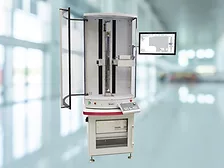
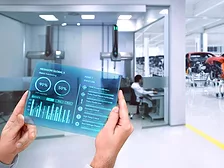
Digital transformation is placing urgent demands on coordinate measuring machines (CMMs) to be interconnected and communicative. Without the ability to collaborate with other systems and workers on the shop floor, CMMs risk becoming an informational black hole that prevents the flow of data required for smarter manufacturing.
Organizations have been forced to redefine their quality audit strategies to ensure compliance and render support to their supply base. Over the years, I have been involved with championing three categories of audits: on-site, hybrid and remote audits.
There are three primary options available today for shaft measurement: optical, tactile, and a combination system. The optical systems have become common over the past few decades because of their flexibility and speed. So how do you choose the best option for your specific application?
Remote visual inspection (RVI) is a nondestructive testing (NDT) technique used for the visual inspection of an object where the person performing the inspection operates a piece of equipment from a distance. Most of the inspection applications used for quality purposes are carried out using three main types of equipment: borescopes, unmanned aerial vehicles (UAV), and crawler robots. Find out more about their uses and advantages.
Digital radiography is the future. Read about the most common modalities, computed radiography (CR) and digital detector array (DDA) radiography, that are replacing traditional film-based inspections.
For those of us in the manufacturing world, measurements on products and processes are all important to ensure the products will meet customer requirements, perform correctly, safely, and for a reasonable lifespan. We place our faith in the measurements to accept or reject product—or to adjust the manufacturing process. But are the measurements correct—and how would we know?
When the pandemic hit, manufacturers were already behind in terms of embracing new forms of learning. Training people, recruiting new people, troubleshooting problems in training and education is a must for manufacturers and now is the time to do it.
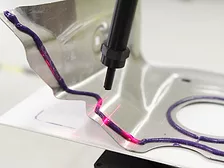
Manufacturing industries have been striving for years for a robust quality control solution which can reliably sort out bad parts of the dispensing process without causing much production downtime. What the industry craves is a robust 3D solution that provides a 360° view of the bead regardless of the dispensing direction.
Over the past 50 years, computer programming languages have made several significant advancements all focused on making a computer easier to use in a more human-readable format. If you wanted to learn programming in the early days you would have had to learn Assembly Language, a set of binary machine operation codes that instructed the microprocessor how to perform each step.