Quality Magazine logo
search
cart
facebook twitter linkedin youtube
  • Sign In
  • Create Account
  • Sign Out
  • My Account
Quality Magazine logo
  • NEWS
  • PRODUCTS
    • FEATURED PRODUCTS
    • SUBMIT YOUR PRODUCT
  • CHANNELS
    • AUTOMATION
    • MANAGEMENT
    • MEASUREMENT
    • NDT
    • QUALITY 101
    • SOFTWARE
    • TEST & INSPECTION
    • VISION & SENSORS
  • MARKETS
    • AEROSPACE
    • AUTOMOTIVE
    • ENERGY
    • GREEN MANUFACTURING
    • MEDICAL
  • MEDIA
    • A WORD ON QUALITY PUZZLE
    • EBOOK
    • PODCASTS
    • VIDEOS
    • WEBINARS
  • EVENTS
    • EVENT CALENDAR
    • IMTS
  • DIRECTORIES
    • BUYERS GUIDE >
      • Supplier Insights
    • NDT SOURCEBOOK
    • VISION & SENSORS
    • TAKE A TOUR
  • INFOCENTERS
    • Digital Quality Management Systems
    • NEXT GENERATION SPC & QUALITY ANALYTICS
  • AWARDS
    • ROOKIE OF THE YEAR
    • PLANT OF THE YEAR
    • PROFESSIONAL OF THE YEAR
  • MORE
    • Expert Columns
    • NEWSLETTERS
    • QUALITY STORE
    • INDUSTRY LINKS
    • SPONSOR INSIGHTS
  • EMAG
    • eMAGAZINE
    • ARCHIVES
    • CONTACT
    • ADVERTISE
  • SIGN UP!
NDTMedical

Nondestructive Testing of Implanted Medical Device Materials

Detecting defects in medical devices before they are implanted is critical to ensure the safety and reliability of such devices.
By Richard Goodwin, Phil Trach
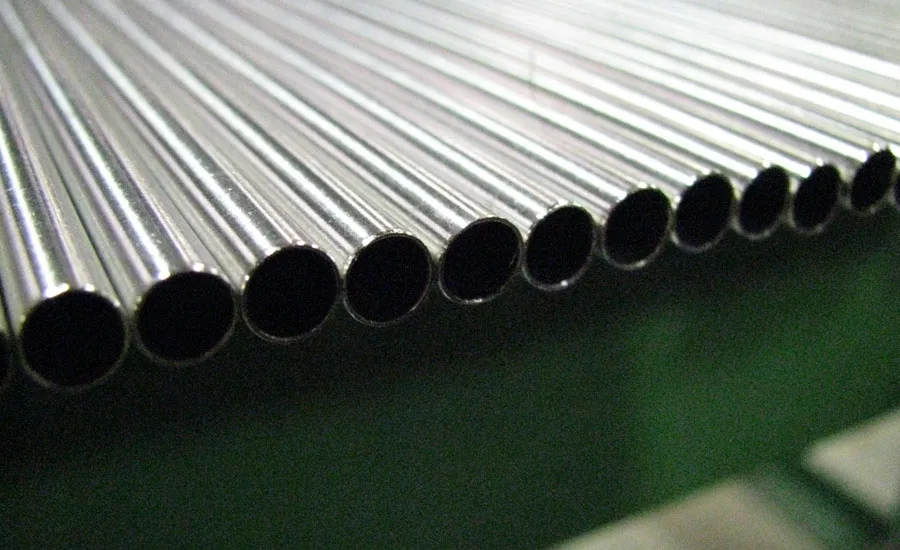
An example of tubing subject to ultrasonic testing.
An example of tubing subject to ultrasonic testing.

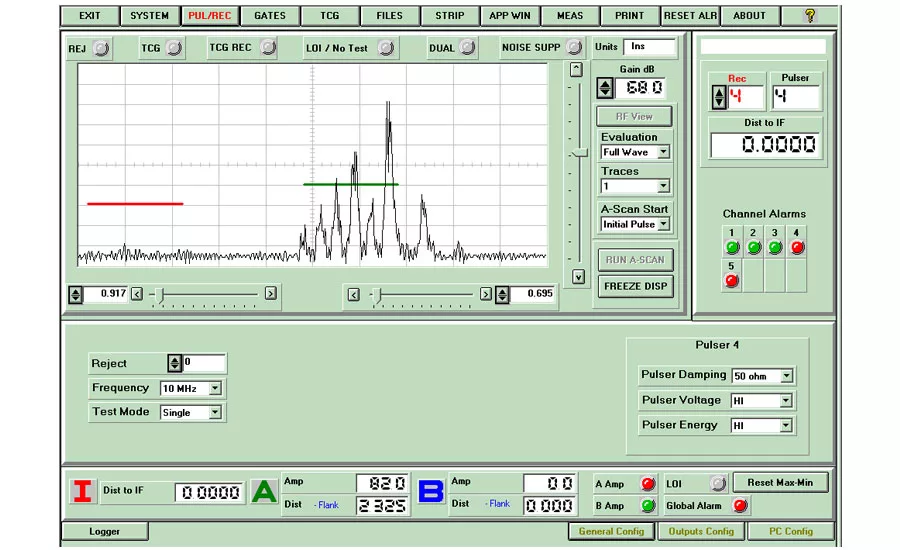
The ultrasonic signal from a typical defect.
The ultrasonic signal from a typical defect.

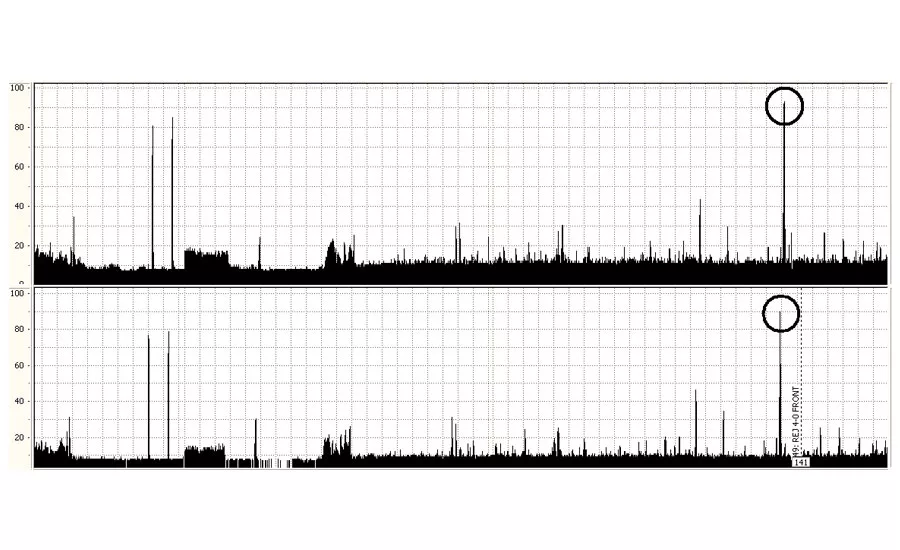
A chart recording showing the indications from the reference standard (left) and a typical defect (circled, right).
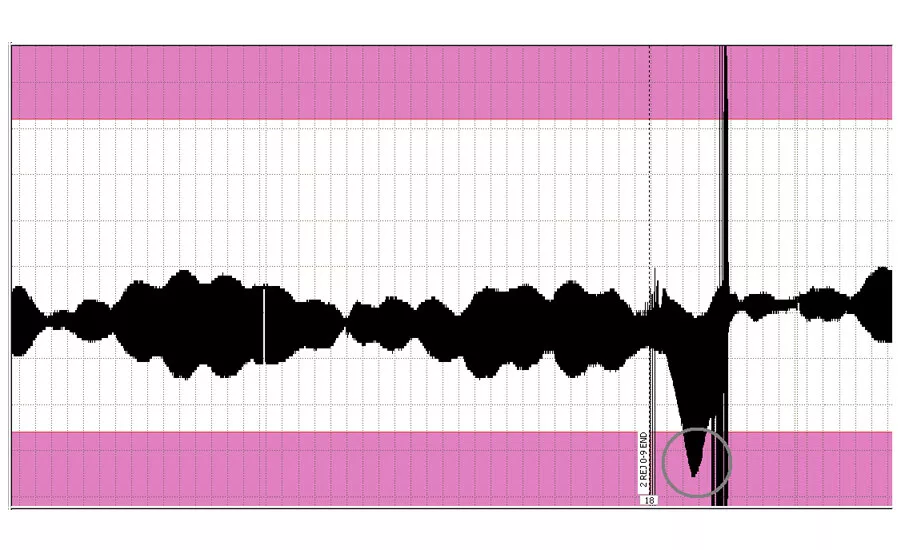
A chart recording showing the indications from the reference standard (left) and a typical defect (circled, right).

A chart recording showing a region below the minimum required wall thickness.
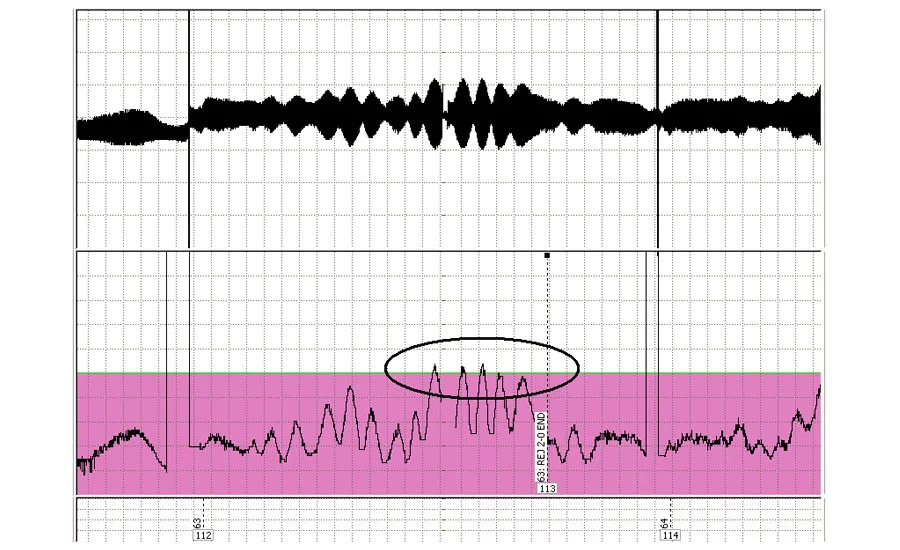
A chart recording showing a region below the minimum required wall thickness.

A chart recording showing a region with too wide a variation in wall thickness.

A chart recording showing a region with too wide a variation in wall thickness.

An example of tubing subject to ultrasonic testing.
The ultrasonic signal from a typical defect.
A chart recording showing the indications from the reference standard (left) and a typical defect (circled, right).
A chart recording showing a region below the minimum required wall thickness.
A chart recording showing a region with too wide a variation in wall thickness.
April 1, 2017

Nowhere is the need for material integrity more obvious than in medical devices that are implanted into human beings. A failed device inside an aircraft or power plant may, under some circumstances, cause a problem. A failed device inside a human being will always cause a problem. Therefore, assuring the integrity of the materials used for manufacturing implanted medical devices and the actual medical devices themselves is extremely important.

Nondestructive testing (NDT) is commonly used to detect defects in material without damaging the material or making it unsuitable for use. NDT contains a variety of methods which can detect defects open to the material surface and contained within the material itself (subsurface). Detecting these defects in medical devices before they are implanted is critical to ensure the safety and reliability of such devices. Two common methods used are liquid penetrant testing (PT) and ultrasonic testing (UT).

Liquid penetrant testing uses an inert colored liquid (called a penetrant) which penetrates into surface defects such as cracks or pores. The excess penetrant is removed from the surface, leaving only the penetrant which has formed a reservoir in any of the surface defects present. A developing powder is then applied to the part, which draws the penetrant out of the defects, creating a visible indication of the defect which can be seen under suitable special lighting.

The most commonly used specification for this inspection is ASTM F601 which is Standard Practice for Fluorescent Penetrant Inspection of Metallic Surgical Implants.

The first processing step is to thoroughly clean the part because any dirt, oil, machining fluids, or other surface contaminants can prevent the penetrant from entering into the defects. It should be noted that a majority of surgical implants are titanium, so it is critical to use non-chlorinated solvents for pre-cleaning to avoid possibly causing stress corrosion cracking in the material at a later time.

The penetrant is then applied, usually by placing the parts in a basket and immersing into a tank of penetrant, by spraying, or brushing the penetrant onto the part. It is important that penetrant be applied to the entire region to be inspected, including any holes and grooves. These areas can be stress raising features and are extremely critical to the reliability of the implant.

The penetrant is given a specified time, called a dwell time, to find its way into surface defects. After this time, excess penetrant is removed, usually by a strictly controlled water spray. Afterwards, the parts are thoroughly dried in a circulating warm air oven at 125 degrees Fahrenheit.

A fine powder, called developer, is then applied in a thin layer to the entire part. A specified time, called developing time, is given to allow the penetrant to seep back out of any defects. The parts are then inspected for indications of defects in a darkened area under an ultraviolet black light.

The most important limitation of liquid penetrant testing is that it can only find defects which are open to the surface. Penetrant testing is commonly used on finished parts with complex geometry, which is typical for implanted medical devices.

Also, because the liquid penetrant testing is usually being performed on finished implants, most manufacturers require a process material list of every material used for the liquid penetrant testing (cleaners, testing materials, gloves, etc.) to be documented and frozen unless a change has been approved. 

Ultrasonic testing is very dependent on part geometry, so it is typically used on raw material with simple shapes, such as round tubing and bar, rather than finished parts. Common industry specifications are typically used for inspection, along with customer-specific requirements, depending how the material will be further processed.

Ultrasonic testing uses high-frequency sound waves to inspect the surface and the interior of materials. A probe converts an electrical pulse into a sound wave, the sound wave travels into the material through a liquid coupling medium and reflects off any boundaries it encounters, whether a defect or another surface of the material. A portion of the reflected sound is received by the probe, converted to an electrical signal, and displayed on a screen.

The time taken for the sound to travel gives information on the size and location of defects or the thickness of the material. For defect inspection, the amount of sound received is compared to the sound received from a precisely manufactured artificial defect, called a reference standard. This comparison allows a technician to estimate the size of a defect compared to the known reference standard. For wall thickness measurement, the time taken for the sound to travel through the material is measured and converted into a thickness measurement.

In this example, the material is round metal tubing with a very precise outside diameter and wall thickness. This material will be inspected for surface and subsurface defects. Additionally, the wall thickness and the variation in the wall thickness will be measured.

Ultrasonic testing is often done using automatic equipment. For this test, thousands of ultrasonic pulses are sent into the part each second, and are received and processed individually by the test system. The results are sent to a digital chart recorder, where they can be immediately evaluated by a technician.

The circled regions on the chart on the previous page recording show where the signals received from the probes exceeds the signals received from the set of known defects in the reference standard (shown at the left of the image). These indications show that this region of material contains defects which are larger than those in the reference standard.

This circled region on the top chart recording shows where the wall thickness of the tubing is below the required thickness. Material which is too thin will produce parts with regions which are too thin, which might fail in service.

The circled region on the bottom chart recording shows where the wall thickness variation is above the allowable amount. Too high a variation in thickness can generate wide variations in finished part thickness, which can be unsuitable for service.

The nature of implanted medical devices means that assuring their integrity is of critical importance. Nondestructive testing, often using multiple methods, is an important part of that assurance. 

KEYWORDS: liquid penetrants medical devices nondestructive testing ultrasonic testing (UT)

Share This Story

Looking for a reprint of this article?
From high-res PDFs to custom plaques, order your copy today!

Richard S. Goodwin is the NDT manager at Laboratory Testing Inc. For more information, visit www.labtesting.com.

Phil Trach is the NDT technology coordinator at Laboratory Testing Inc. and holds ASNT Level III certification in ultrasonic testing. For more information, call (215) 716-7404, email [email protected] or visit www.labtesting.com. 

Recommended Content

JOIN TODAY
to unlock your recommendations.

Already have an account? Sign In

  • 2024 Quality Rookie of the Year Justin Wise 1440x750px banner with "Quality Rookie of the Year" logo inset

    Meet the 2024 Quality Rookie of the Year: Justin Wise

    Justin Wise is an exceptional individual who has been...
    Aerospace
    By: Michelle Bangert
  • Man with umbrella and coat stands outside while it rains at night looking at a building.

    Nondestructive Testing: Is there an ethics problem?

    I was a whistleblower who exposed fraudulent activities...
    NDT
    By: Dale Norwood
  • Unraveling Deflategate: Football stadium with closeup of football on field

    Unraveling the Tom Brady Deflategate

    The Deflategate scandal erupted following the 2014 AFC...
    Measurement
    By: Greg Cenker and Henry Zumbrun
Manage My Account
  • eMagazine Subscriptions
  • Newsletters
  • Online Registration
  • Subscription Customer Service
  • Manage My Preferences

More Videos

Sponsored Content

Sponsored Content is a special paid section where industry companies provide high quality, objective, non-commercial content around topics of interest to the Quality audience. All Sponsored Content is supplied by the advertising company and any opinions expressed in this article are those of the author and not necessarily reflect the views of Quality or its parent company, BNP Media. Interested in participating in our Sponsored Content section? Contact your local rep!

close
  • Key Takeaways for Quality Leaders
    Sponsored byComplianceQuest

    Key Takeaways for Quality Leaders from the 2026 Gartner Magic Quadrant™ for QMS

  • This image shows a person seated next to a Bobcat T66 compact track loader.
    Sponsored byPolyWorks by InnovMetric

    Supercharging Digital Gauging at Bobcat North America

  • Dorsey Calibration Lab photo by Tom LaBarbera Picture this Studios
    Sponsored byDorsey Metrology International

    Ensuring Product Quality in a Competitive Manufacturing Landscape

Popular Stories

a titanium diaphragm speaker driver

The One Thing Elon Gets Right Is Designed to Scare You

This image shows a person seated next to a Bobcat T66 compact track loader.

Supercharging Digital Gauging at Bobcat North America

Dorsey Calibration Lab photo by Tom LaBarbera Picture this Studios

Ensuring Product Quality in a Competitive Manufacturing Landscape

2026 Quality Professional of the Year!

Events

June 9, 2026

Future-Proof your Quality Processes with Advanced 3D Optical CMM Technology

Discover how to effortlessly capture complex data, leverage true multi-sensor automation, and ensure continuous operation without creating inspection delays.

June 22, 2026

Automate 2026

Automate is North America's largest robotics and automation event — and the best place to take your ideas from insight to impact.
 
Our show floor features the world’s leading automation solutions, from AI and robotics to motion control, vision systems, and more. Plus, our educational conference is second to none, led by the brightest minds in automation today.
 
Ready to transform the way you work? Take the next step at Automate.
View All Submit An Event

Products

Lean Manufacturing and Service Fundamentals, Applications, and Case Studies

Lean Manufacturing and Service Fundamentals, Applications, and Case Studies

See More Products
Quality Podcast Channel Custom Content

Related Articles

  • QTY 1121 NDT Automotive Trends Key Visual

    Size, Safety and Software: Driving Innovation in Nondestructive Testing of Electronics

    See More
  • NDT Inspection Eddy Current Testing

    Nondestructive Testing (NDT) of Commercial Aircraft Wheels

    See More
  • A student detecting a defect with ultrasonic testing.

    Promoting Nondestructive Testing to the Next Generation

    See More

Related Products

See More Products
  • The FDA and Worldwide Quality System Requirements Guidebook for Medical Devices, Second Edition

  • H1537.jpg

    The Biomedical Quality Auditor Handbook, 3E

See More Products

Related Directories

  • American Institute of Nondestructive Testing

    The American Institute of Nondestructive Testing offers online and hands-on training in RT, UT, ET, MT, PT and VT nondestructive testing methods. Let us customize an NDT training program that fits your company's needs. We offer training online, at your facility or at our 22,000 Sq Ft facility.
  • American Society for Nondestructive Testing (ASNT)

    ASNT is the association for nondestructive testing (NDT) professionals committed to making the world a safer place. NDT professionals detect irregularities, flaws, and defects in materials, components, and structures that could compromise the safety, reliability, or functionality of an object or structure. Established in 1941, ASNT supports members with certifications, professional development, industry insights, advocacy, events, publications, and networking opportunities and is focused on fostering the growth of future generations of NDT professionals through the ASNT Foundation. Serving more than 22 000 members and certificate holders worldwide, ASNT is the largest technical society for NDT professionals. ASNT is based in Columbus, Ohio, with offices in Houston, Texas, and Chennai, India.
×

Stay in the know with Quality’s comprehensive coverage of
the manufacturing and metrology industries.

Newsletters | Website | eMagazine

JOIN TODAY!
  • RESOURCES
    • Advertise
    • Contact Us
    • Directories
    • Manufacturing Division
    • Store
    • Want More
  • SIGN UP TODAY
    • Create Account
    • eMagazine
    • Newsletters
    • Customer Service
    • Manage Preferences
  • SERVICES
    • Marketing Services
    • Market Research
    • Reprints
    • List Rental
    • Survey/Respondent Access
  • STAY CONNECTED
    • LinkedIn
    • Facebook
    • YouTube
    • X (Twitter)
  • PRIVACY
    • PRIVACY POLICY
    • TERMS & CONDITIONS
    • DO NOT SELL MY PERSONAL INFORMATION
    • PRIVACY REQUEST
    • ACCESSIBILITY

Copyright ©2026. All Rights Reserved BNP Media, Inc. and BNP Media II, LLC.

Design, CMS, Hosting & Web Development :: ePublishing