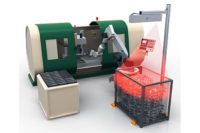
Selecting an integrator who is comfortable with using multiple types of cameras and data can often make the difference between success and continual service calls. Source: Sick Inc.
Machine vision systems are increasingly being used in industrial automation to help reduce manufacturing errors and automate quality control processes. Advancements in technology have improved camera processing times and reduced costs, making vision systems more affordable than in the past. As the demand for vision systems increases, so does the need to know more about integrating vision systems onto the plant floor.
Whether you are a machine builder or end user, there are several key considerations when deciding to work with a machine vision integrator to solve the application.
1. Do I truly need an integrator? In an ideal world, machine builders and end users would have the capabilities and resources in-house to solve all of their development requirements-however, this is often not reality. Unless the application can be solved with a less complicated vision solution, such as a vision sensor, a qualified integrator who offers a high level of expertise can save the customer time and money in the end.
2. Does the integrator come recommended? When choosing an integrator, it is appropriate to think of the process as a job interview. The type of skill set required will vary depending on the complexity of the vision application. Look into the integrator’s qualifications: Is he trained to use the equipment required for the application and certified by the manufacturer or other agency, such as the Control System Integrators Association (CSIA)?
3. Does the integrator have specific industry knowledge or broad knowledge from several different industries? Ask about other applications he has solved. If the integrator can show a solution to a project similar in scope or from the same industry, it should reduce risk when moving forward with the project. In addition, it should be possible to get a letter of reference from a previous customer.
4. Can the integrator support the system going forward? Knowing whether the integrator can support multiple systems in different locations is important. Establishing a service plan also can be just as important as the actual solution. For example, additional requirements might surface as a result of customer product line extensions or changes in packaging.
5. Is a feasibility study necessary? Sometimes it might be necessary to pay for some upfront engineering to decide how to move forward. In many circumstances, integrators will do some of this work to prove out their idea while working up a bid for the project. If there is a need to go more in-depth before awarding the bid, customers might expect to pay for some of this time. For a large project, this investment can be well worth the cost as it may uncover issues that were not expected and save many headaches.
These are a few of the key considerations to think about when choosing an integrator, but be prepared for the types of questions the integrator will ask.
1. Do you have a defined specification for the application? It is impossible to engineer a solution without a thorough understanding of the problem. Lack of specification or a change to the specification can lead to a phenomenon known as “scope creep.” This is especially true in vision applications where new technology such as 3-D inspection is used. After customers see the range of data that is available, they sometimes want to look for just one more thing. A key factor in an efficient and successful integration project is ensuring that customers stick to the described specification for the application, regardless of the technology chosen. An integrator can save an enormous amount of time and effort, often preventing customers from spending money on inappropriate equipment and software.
2. Is there a defined test procedure to verify the project is complete? Having an idea or being prepared to discuss acceptance criteria can help integrators create their plans for solving the application.
3. Is there selection criteria for choosing from different bids? Is budget the most important thing, or is it more important to have a solution now? Are there preferred vendors and how does that factor into the selection of a system integrator?
Another consideration is how to choose between a 2-D vision system and a 3-D vision system. This is important when looking at applications where traditional 2-D technology may or may not be able to solve the project in a reliable way. When 3-D technology is used, there may be methods and concepts available to solve an application that may have been nearly impossible to solve any other way.
When inspecting the quality of candy bars, for example, if the specification states to measure the dimensions, including the height of each bar, selecting the integrator who specified a 3-D system might be preferred to an integrator who is using multiple 2-D cameras and more complicated lighting to capture the data. Often, the price might be similar for a multiple camera 2-D solution and a single camera 3-D solution, but the integration time and cost is higher when complicated lighting and multiple camera synchronization is required. Selecting an integrator that is comfortable and familiar with using multiple types of cameras and data can often make the difference between success and continual service calls.
Thinking about the selection process like a job interview can help both sides understand what will be expected of them when choosing an integration partner. Both sides need to feel comfortable with the process and having an open discussion using the above questions as a guideline will help that process.