Quality 101: Torque Tool Testing: A Primer
Learn the foundation for good torque testing.

Torque equals force times distance. This equation sets the foundation for all torque calibration-that of the torque testers as well as the tools. It also sets the starting point for torque testing; the weights (force) and arms (distance) used to calibrate the tester must themselves be certified as accurate to national standards. It is strongly urged that these components be calibrated and certified only by calibration laboratories having ISO 17025 accreditation and an applicable scope.
If you test torque tools but send your tester out for calibration, the tester is the foundation of the calibration system. To ensure that the foundation is solid, the calibration laboratory performing the service should have ISO 17025 accreditation for torque tester calibration. The laboratory must have a scope that includes a torque range encompassing that of the tester.
The questioner usually hopes for a simple answer, and the simplest answer is a fixed calendar-based interval. Unfortunately, a fixed calendar interval ignores a host of factors that affect the time when calibration is needed. Is the tool brand new or does it have 300,000 cycles (uses) on it? Is it used to tighten 10 fasteners each day or 1,200? Is the daily usage rate constant, increasing or decreasing? Is it being used at 40% of capacity or 98%? Are we talking about one type of torque tool or several? Are these all of the same make and model or are there different designs from different manufacturers?
These questions apply to each tool individually, and the answer is likely to be different from tool to tool. Applying a simple calendar answer to a population of torque tools invites both interval error types-too frequent and too infrequent calibration.
The overly simple approach can even result in the creation of both errors simultaneously. This results in money spent for excessive calibration of some tools while not calibrating others in time to prevent assembly problems.
The Calibration Interval Committee of NCSL International faced and addressed this issue some time ago. Their RP-1 (Recommended Practice) publication addressing calibration intervals gives not one, but multiple ways in which a reliable calibration interval can be calculated and maintained through the life of the measurement instrument (the torque tool and the torque tester). Better still, these methods are for the most part easy to understand and cost virtually nothing to implement.
The data-driven methods for calibration interval determination effectively adjust for changes in tool (or tester) usage rates, age and wear. The methods in this RP are proven and provide objective answers that reduce the probability of over- and under-calibration. Over time they provide a solid view of the stability (and ownership cost) of each torque tool. This data should be used to make future tool purchases on a more objective basis.
When selecting a torque tester, the accuracy of the tester in relationship to the accuracy of the tools is a primary factor. The tester must be at least four times as accurate as the tools to be tested with it. The ±1% I.V. tester that is acceptable for testing clicker-type torque wrenches is not sufficiently accurate for testing most dial (±3%), flat beam (±2%) or digital (±1%) tools. Further, the tester must support test modes and torque ranges that accommodate the types and capacities of the tools to be tested.
Mechanical loaders can be significant assets in ensuring the quality of the test results and the productivity of the technician performing the calibrations. A well-designed mechanical loader will apply force to the tool through a single point of contact, and remain perpendicular to the tool, throughout the arc of movement.
Some loaders use a moving arm to achieve these requirements, while others hold the tool in a fixed position and rotate the torque transducer. Either method can work since both can accommodate the fixed distance and perpendicularity requirements.
The best designs also will reduce technician fatigue, thus helping maintain technician productivity throughout the day.
When a tester and mechanical loader are coupled with purpose-designed software, the calibration process can be made more error-proof and more efficient. Optimal test quality and productivity is attained when the software stores the test protocol, downloads it to and controls the tester during the testing, and uploads each result as it is obtained. Software that also stores the results and outputs a certificate of calibration meeting all requirements on demand will make the process highly cost effective.
If power tools are to be tested, additional considerations must be accommodated. Automatic and manual shutoff tools are slightly different in their behaviors, as are electric and pneumatic tools. Additional equipment such as rundown fixtures may be needed to obtain accurate results, and the tester itself must have filters that cover the tool types, brands and designs to be tested. ISO 5393 can be of assistance in determining what is necessary to fill any given set of needs in the testing of power tools.
A well-designed mechanical loader will apply force to the tool through a single point of contact, and remain perpendicular to the tool, throughout the arc of movement. It also will ensure that the tool remains perpendicular to the transducer during loading.
The upright cylinder shown here is used to apply force to the torque wrench during testing. This design uses vertical cylinders perpendicular to each other (tool grip and round vertical steel bar) to ensure single-point contact during testing. Source: Sturtevant Richmont
Torque equals force times distance. This equation sets the foundation for all torque calibration-that of the torque testers as well as the tools. It also sets the starting point for torque testing; the weights (force) and arms (distance) used to calibrate the tester must themselves be certified as accurate to national standards. It is strongly urged that these components be calibrated and certified only by calibration laboratories having ISO 17025 accreditation and an applicable scope.
If you test torque tools but send your tester out for calibration, the tester is the foundation of the calibration system. To ensure that the foundation is solid, the calibration laboratory performing the service should have ISO 17025 accreditation for torque tester calibration. The laboratory must have a scope that includes a torque range encompassing that of the tester.
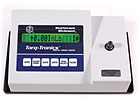
Current-generation digital torque testers feature exact torque readings of high accuracy, simple push-button operation for easy use and computer communication. Source: Sturtevant Richmont
Standards
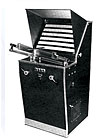
The ASME B107.300-2010 standard and the ISO 6789 standard supply important information on torque tools and the testers required to test and calibrate them. These standards form an excellent starting point for anyone involved in testing torque tools.Earlier-generation torque testers were reasonably accurate, but were large and cumbersome, usually requiring interpolation to obtain a torque value. Source: Sturtevant Richmont
Frequency
“How often should we test the tools?” is among the most frequently asked questions of every torque tool manufacturer. It also is one of the most frequent sources of misunderstanding and problems.The questioner usually hopes for a simple answer, and the simplest answer is a fixed calendar-based interval. Unfortunately, a fixed calendar interval ignores a host of factors that affect the time when calibration is needed. Is the tool brand new or does it have 300,000 cycles (uses) on it? Is it used to tighten 10 fasteners each day or 1,200? Is the daily usage rate constant, increasing or decreasing? Is it being used at 40% of capacity or 98%? Are we talking about one type of torque tool or several? Are these all of the same make and model or are there different designs from different manufacturers?
These questions apply to each tool individually, and the answer is likely to be different from tool to tool. Applying a simple calendar answer to a population of torque tools invites both interval error types-too frequent and too infrequent calibration.
The overly simple approach can even result in the creation of both errors simultaneously. This results in money spent for excessive calibration of some tools while not calibrating others in time to prevent assembly problems.
The Calibration Interval Committee of NCSL International faced and addressed this issue some time ago. Their RP-1 (Recommended Practice) publication addressing calibration intervals gives not one, but multiple ways in which a reliable calibration interval can be calculated and maintained through the life of the measurement instrument (the torque tool and the torque tester). Better still, these methods are for the most part easy to understand and cost virtually nothing to implement.
The data-driven methods for calibration interval determination effectively adjust for changes in tool (or tester) usage rates, age and wear. The methods in this RP are proven and provide objective answers that reduce the probability of over- and under-calibration. Over time they provide a solid view of the stability (and ownership cost) of each torque tool. This data should be used to make future tool purchases on a more objective basis.
Equipment
The advent of the digital torque tester changed the landscape of torque tool calibration. The mechanical torque testers of just a couple of decades ago were cumbersome objects, heavily reliant on the individual to interpolate from a dial and to manually record results. Current-generation digital testers are easy to set up and use, require no interpolation and communicate with computers seamlessly.When selecting a torque tester, the accuracy of the tester in relationship to the accuracy of the tools is a primary factor. The tester must be at least four times as accurate as the tools to be tested with it. The ±1% I.V. tester that is acceptable for testing clicker-type torque wrenches is not sufficiently accurate for testing most dial (±3%), flat beam (±2%) or digital (±1%) tools. Further, the tester must support test modes and torque ranges that accommodate the types and capacities of the tools to be tested.
Mechanical loaders can be significant assets in ensuring the quality of the test results and the productivity of the technician performing the calibrations. A well-designed mechanical loader will apply force to the tool through a single point of contact, and remain perpendicular to the tool, throughout the arc of movement.
Some loaders use a moving arm to achieve these requirements, while others hold the tool in a fixed position and rotate the torque transducer. Either method can work since both can accommodate the fixed distance and perpendicularity requirements.
The best designs also will reduce technician fatigue, thus helping maintain technician productivity throughout the day.
When a tester and mechanical loader are coupled with purpose-designed software, the calibration process can be made more error-proof and more efficient. Optimal test quality and productivity is attained when the software stores the test protocol, downloads it to and controls the tester during the testing, and uploads each result as it is obtained. Software that also stores the results and outputs a certificate of calibration meeting all requirements on demand will make the process highly cost effective.
If power tools are to be tested, additional considerations must be accommodated. Automatic and manual shutoff tools are slightly different in their behaviors, as are electric and pneumatic tools. Additional equipment such as rundown fixtures may be needed to obtain accurate results, and the tester itself must have filters that cover the tool types, brands and designs to be tested. ISO 5393 can be of assistance in determining what is necessary to fill any given set of needs in the testing of power tools.
A well-designed mechanical loader will apply force to the tool through a single point of contact, and remain perpendicular to the tool, throughout the arc of movement. It also will ensure that the tool remains perpendicular to the transducer during loading.
Looking for a reprint of this article?
From high-res PDFs to custom plaques, order your copy today!