Back to Basics: Ensure Integrity with Materials Verification
Proper verification provides valuable information on a material’s ability to perform and endure.
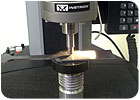 Materials verification is a fundamental yet essential element in analyzing component properties and can be accomplished through a multitude of methods and techniques. Determining material properties provides insight to the performance, durability, strength, flexibility and capabilities of a variety of material types-from raw materials to prepared specimens and finished goods. Mechanical material verification methods can be used on metals, plastics, ceramics, cements, elastomers, composites and even foods. Manufacturing, research and quality control depend heavily on these techniques for the critical measurements of material properties.
Materials verification is not a new science by any means; testing of various materials, for example, tools, dates back to ancient times using simple methods. As global industrialization began in the 18th century, more refined machines and techniques were developed in reaction to structural failures and the need to design sufficient material integrity into components. Early industrial designs included methods such as the scratch hardness test and the load-pulling machine. These eventually became more widely accepted for design and manufacturing use. More recently, in the mid to late 20th century, as the electronic and computer age blossomed, the resultant advances in hardware and software have led to much more sophisticated materials testing equipment that can quickly, reliably-and with extreme precision-provide valuable data and material properties.
An important challenge in designing and implementing a materials test instrument and method is ensuring the ability to meet an engineering design specification while also complying with an array of international standards such as ASTM, ISO and DIN. Such standards govern not only the test process, but also the specifications and parameters that test instruments must operate under.
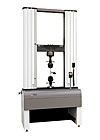
Compression tests may be performed on structural components-ranging from bridges to thin aerospace components-and provide critical material strength properties that have obvious implications in structural design. Compression, or stress-strain testing, can be simply defined as the ultimate stress required to rupture a material. During the test process, load and displacement are recorded, providing valuable information on both the flow properties as well as the fracture limits of material. A typical compression test instrument uses a universal load frame that includes varying drive technologies, including an electromechanical design that uses ball screw driven crossheads, load cell force control and closed loop positioning. Static hydraulic systems are used for higher-capacity requirements.
All types involve pressing an indenter of specified geometry and properties into the test material at a precisely defined force for a specified length of time. The resultant impression is then measured. The Rockwell test measures the depth of penetration of that force while the micro/macro-indentation and Brinell tests require measurement of the indentation dimensions. Rockwell testing is the most commonly used method by virtue of the quick results generated and is typically used on metals and alloys. Knoop and Vickers testing is more suitable for thin materials, coatings and mounted metallographic components. Brinell testing applications generally include cast iron, large steel framework and aluminum.
Some hardness testing can be done within seconds with a handheld device. The indent made by the hardness test can be ground out, or can be so small as to not affect the performance or appearance of the component. Because the testing is done to the component itself, each product or a spot check of products can be tested before shipping to the customer.

There are basically two types of impact tests: pendulum and drop weight. In the first, a pendulum of a known weight is hoisted to a known height on the opposite side of a pivot point. The weight falling from the set height will contain a certain amount of impact energy at the bottom of the swing. By clamping or supporting a specimen on the bottom, the sample can be released to strike and break the specimen. The energy required to break the specimen is then calculated. A second method is to drop a weight in a vertical direction, with a tube or rails to guide it during the drop. With the height and weight known, impact energy can be calculated.
These tests differ from impact and hardness tests in that applied force is absorbed slowly. The tensile test involves mounting the specimen in a machine and subjecting it to tension by stretching it. The tensile capacity of the material is recorded as the specimen increases in length. The purpose of tensile testing is to determine the elastic limit, elongation, tensile strength and yield, or breaking point, of the material.
Tensile testing is an extremely established method of material testing, widely performed in material verification and not limited to prepared specimens. Many different forms of manufactured components can be mounted and tested in a wide range of tensile test instruments using a variety of specially designed holding fixtures. Instruments designed to perform tensile tests are similar to the ball screw driven crossheads testers used for compression testing and have load cell force control and closed loop positioning.
Unlike other types of tests, torsion testing does not necessarily measure the material, but rather the entire component. The automotive and aerospace industries are increasingly using torsion testing to provide material property information on full-sized parts and structural components. By testing these products in torsion, manufacturers are able to simulate real-life service conditions, check product quality, verify designs and ensure proper manufacturing techniques.
Materials testing and verification is of significant importance in today’s fast-paced, mechanized world. Proper verification of components provides valuable information on a material’s ability to perform and endure. From chairs to the beams on a bridge, the use of the proper material is paramount to keep the world safe and moving.
Hardness testing systems analyze the resistance of a material to permanent indentation. Source: Wilson Instruments
Materials verification is not a new science by any means; testing of various materials, for example, tools, dates back to ancient times using simple methods. As global industrialization began in the 18th century, more refined machines and techniques were developed in reaction to structural failures and the need to design sufficient material integrity into components. Early industrial designs included methods such as the scratch hardness test and the load-pulling machine. These eventually became more widely accepted for design and manufacturing use. More recently, in the mid to late 20th century, as the electronic and computer age blossomed, the resultant advances in hardware and software have led to much more sophisticated materials testing equipment that can quickly, reliably-and with extreme precision-provide valuable data and material properties.
Methods
Several methods exist for performing material analysis; generally, these can be grouped into five basic categories: compression, hardness, impact, tensile and torsion testing. These techniques are typically destructive in nature, as the material tested is mechanically altered or ruined. Each of these test types may be used for a variety of applications and may be performed exclusively or in combination with the others depending on engineering requirements.An important challenge in designing and implementing a materials test instrument and method is ensuring the ability to meet an engineering design specification while also complying with an array of international standards such as ASTM, ISO and DIN. Such standards govern not only the test process, but also the specifications and parameters that test instruments must operate under.
Mechanical material verification methods can be used on metals, plastics, ceramics, cements, elastomers, composites and even foods. Source: Wilson Instruments
Compression Testing
A compression test determines behavior of materials under crushing loads. The specimen is compressed and deformation at various loads is recorded.Compression tests may be performed on structural components-ranging from bridges to thin aerospace components-and provide critical material strength properties that have obvious implications in structural design. Compression, or stress-strain testing, can be simply defined as the ultimate stress required to rupture a material. During the test process, load and displacement are recorded, providing valuable information on both the flow properties as well as the fracture limits of material. A typical compression test instrument uses a universal load frame that includes varying drive technologies, including an electromechanical design that uses ball screw driven crossheads, load cell force control and closed loop positioning. Static hydraulic systems are used for higher-capacity requirements.
Hardness Testing
Hardness testing systems analyze the resistance of a material to permanent indentation. The test is more straightforward and minimally destructive when compared to many other forms of material testing. Hardness testing is most often performed on metals, hard plastics and even rubber. It is used to complement tensile and compression testing for several reasons: it is fast, comparatively affordable and can usually be performed directly on the component without significant alteration. In respect to hardness testing of metals, there are three main test types that are typically performed. They are the Rockwell, the micro/macro-indentation (Knoop/Vickers) and the Brinell test.All types involve pressing an indenter of specified geometry and properties into the test material at a precisely defined force for a specified length of time. The resultant impression is then measured. The Rockwell test measures the depth of penetration of that force while the micro/macro-indentation and Brinell tests require measurement of the indentation dimensions. Rockwell testing is the most commonly used method by virtue of the quick results generated and is typically used on metals and alloys. Knoop and Vickers testing is more suitable for thin materials, coatings and mounted metallographic components. Brinell testing applications generally include cast iron, large steel framework and aluminum.
Some hardness testing can be done within seconds with a handheld device. The indent made by the hardness test can be ground out, or can be so small as to not affect the performance or appearance of the component. Because the testing is done to the component itself, each product or a spot check of products can be tested before shipping to the customer.
Determining material properties provides insight to the performance, durability, strength, flexibility and capabilities of a variety of material types. Source: Wilson Instruments
Impact Testing
Impact testing is a method for determining behavior of material subjected to shock loading in bending, tension or torsion. The quantity usually measured is the energy absorbed in breaking the specimen in a single blow. Impact tests also are performed by subjecting specimens to multiple blows of increasing intensity, as in the drop ball impact test and repeated blow impact test.There are basically two types of impact tests: pendulum and drop weight. In the first, a pendulum of a known weight is hoisted to a known height on the opposite side of a pivot point. The weight falling from the set height will contain a certain amount of impact energy at the bottom of the swing. By clamping or supporting a specimen on the bottom, the sample can be released to strike and break the specimen. The energy required to break the specimen is then calculated. A second method is to drop a weight in a vertical direction, with a tube or rails to guide it during the drop. With the height and weight known, impact energy can be calculated.
Tensile Testing
Tensile, or tension, testing is performed to test the flexibility of a substance and its overall ability to stand up to a gradually increasing uni-axial load. As the material is being pulled, it is possible to find its strength along with how much it will elongate. A stress-strain curve is generated that provides data on the behavior of the material while subjected to the pulling.These tests differ from impact and hardness tests in that applied force is absorbed slowly. The tensile test involves mounting the specimen in a machine and subjecting it to tension by stretching it. The tensile capacity of the material is recorded as the specimen increases in length. The purpose of tensile testing is to determine the elastic limit, elongation, tensile strength and yield, or breaking point, of the material.
Tensile testing is an extremely established method of material testing, widely performed in material verification and not limited to prepared specimens. Many different forms of manufactured components can be mounted and tested in a wide range of tensile test instruments using a variety of specially designed holding fixtures. Instruments designed to perform tensile tests are similar to the ball screw driven crossheads testers used for compression testing and have load cell force control and closed loop positioning.
Torsion Testing
Torsion testing is used in conjunction with other testing methods to ensure the capacity of a specimen to stand up to twisting and wrenching. Many products and components are subjected to torsional forces during their operation. Torsion testing not only measures the strength of the component, but also the joints or fixtures to which the product is attached.Unlike other types of tests, torsion testing does not necessarily measure the material, but rather the entire component. The automotive and aerospace industries are increasingly using torsion testing to provide material property information on full-sized parts and structural components. By testing these products in torsion, manufacturers are able to simulate real-life service conditions, check product quality, verify designs and ensure proper manufacturing techniques.
Materials testing and verification is of significant importance in today’s fast-paced, mechanized world. Proper verification of components provides valuable information on a material’s ability to perform and endure. From chairs to the beams on a bridge, the use of the proper material is paramount to keep the world safe and moving.
Looking for a reprint of this article?
From high-res PDFs to custom plaques, order your copy today!