Video Interfaces and the Cabling Connection
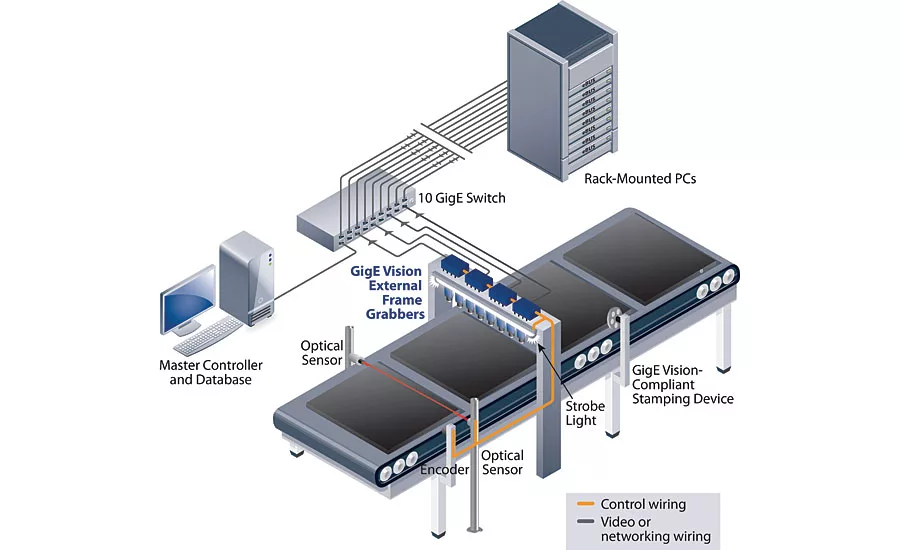
Diagram 1: A primary advantage of GigE Vision is extended cabling length. In a manufacturing site, processing and analysis systems can be centralized away from harsh environments. Source: Pleora
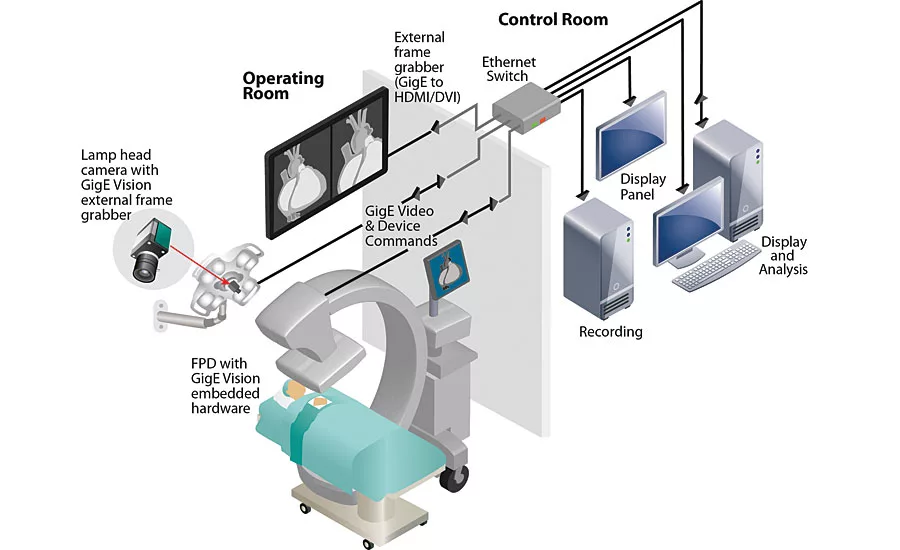
Diagram 2: New markets, including medical imaging, are taking advantage of the extended reach and multicasting capabilities of Ethernet to reduce costs while increasing intelligence and awareness for end-users. Source: Pleora
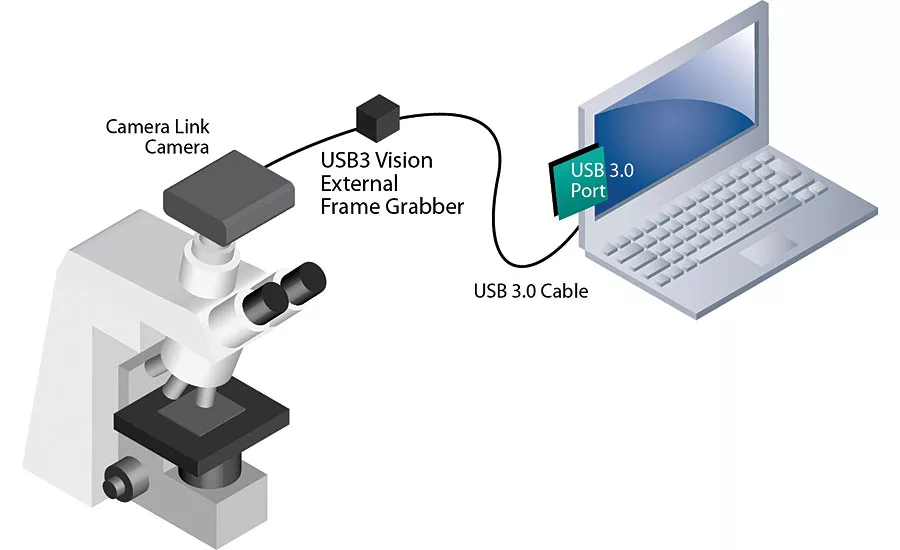
Diagram 3: High-performance imaging is leveraging the plug-and-play capabilities of USB 3.0 to simplify usability and lower system costs. Source: Pleora
Video interfaces and cabling have played a significant role in bringing new capabilities to machine vision and supporting automation’s migration into a broadening range of markets.
GigE Vision is the most widely deployed standard in machine vision, and gaining fast traction in medical, security, and transportation markets, thanks in large part to interface and cabling advantages. With GigE Vision, images are streamed directly to an existing Ethernet port on a computing platform. This eliminates the need for a PCIe frame grabber to capture images, reducing system costs and complexity, while enabling the use of smaller form factor lower cost computing platforms for processing and analysis.
Images are transmitted across off-the-shelf Ethernet cabling supporting a 100 meter connection over standard copper and even further with fiber and inexpensive network switching equipment. In comparison, Camera Link cabling is bulky, more expensive, and limited to a 10 meter maximum reach. \
GIGE REACHES FURTHER
GigE Vision’s extended reach means expensive processing and analysis equipment can be moved away from harsh environments. In a quality inspection application, systems designers can centralize processing away from the manufacturing floor. (Diagram 1) Similarly, inspection and analysis equipment for license plate recognition systems can be protected from punishing weather conditions in a roadside cabinet that is easily accessible for maintenance. The flexible, field-terminated Ethernet cabling is easily routed during system installation, and is well suited for robotics applications requiring a wide range of motion. Images, control data, and power are all delivered over a single cabling to further reduce costs and complexity.
The cabling and video interface advantages of GigE Vision are playing an important role in the migration of automation into new markets. In a medical imaging system (Diagram 2), the extended-reach cabling allows processing and analysis equipment to be located outside of the operating room. This reduces the costs of sterilizing equipment, lowers the risk of patient infection, and allows data to be easily shared across multiple departments. Flexible Ethernet cabling is also easier to route through fluoroscopy systems that use multiple moving X-ray sources to capture images at incremental angles and reduce exposure time for patients.
One of the key performance advantages of the GigE-based network architecture is the ability to aggregate previously isolated image sources and display integrated information on a dashboard. In a networked operating room, video interfaces convert image feeds from X-ray panels and observation cameras into a GigE Vision video stream that is transmitted to centralized processing equipment.
The video processor highlights areas of interest, including pre-op images, and overlays patient vital signs information. The composite image is then multicast over the Ethernet network to various displays. In the operating room, an external frame grabber converts the GigE Vision image stream to HDMI/DVI signals for viewing on a high-definition dashboard monitor used by the surgeon to track real-time patient data from different imaging devices and systems. The image destination can also be easily changed, with real-time video from the operating theater transmitted to scheduling staff, a conference room, multiple departments, or shared with remote specialists.
USB 3.0 MAKES THE EASY CONNECTION
USB is the backbone for wired data connectivity in a wide range of consumer and computing applications thanks primarily to its ease of use. One clear exception has been high-performance imaging, where previous versions of USB failed to deliver the bandwidth required to support real-time image delivery. This changed thanks to the raw speed offered by USB 3.0 and the development of the USB3 Vision standard regulating high-speed image transfer over USB 3.0 links.
The USB3 Vision standard provides a framework for designers to address performance, cost, and usability requirements in real-time imaging systems. Data is transmitted directly to existing ports on a computer with sustained throughputs approaching 3 Gb/s; surpassing the performance of Camera Link Base configurations and rivalling Medium configuration, but without requiring specialized frame grabbers at endpoints to capture data.
The flexible, lighter USB cables cost less and are simpler to install than the bulky cabling and connectors of legacy interfaces. Video, control data, and power are transmitted over a single cable. This simplifies cabling and eliminates the need for an external power supply for cameras, helping lowering both system footprint and bill of material.
Microscopy systems, for example, often use a Camera Link camera to transmit images to a computer for analysis and observation (Diagram 3). With a USB3 Vision video interface, the image feed from a Camera Link microscopy camera is converted into uncompressed video that is transmitted with low, consistent latency over a USB 3.0 cable directly to an existing port on a laptop used for analysis and display. The thinner, lighter USB 3.0 cable is easier to route than bulky Camera Link cables and connects with “plug-and-play” ease, allowing faster setup and teardown of inspection stations.
Distance remains the last hurdle for USB 3.0 interfaces, with vendors now providing active copper and optical cabling solutions and traditional repeaters that extend the distance between imaging sources and processing units for beyond the five meter range described in the USB3 Vision standard.
WHAT’S NEXT?
Today video interfaces supporting GigE and 10 GigE bandwidth requirements are widely available and deployed across a broad range of applications. Designers are now evaluating innovative technologies that promise to bring new levels of performance and cost advantages to imaging.
NBASE-T, a new standard initially developed to support higher speed data transmission over installed copper cabling for telecom networks, offers a natural step in the evolution of high-performance imaging thanks to its bandwidth support, low-cost cabling, and compatibility with the GigE Vision standard. With GigE Vision over NBASE-T, designers can transmit uncompressed images at throughputs up to 5 Gb/s over Cat 5e copper cabling and 10 Gb/s over Cat 6A copper cabling.
Wireless brings a new level of flexibility to system design. GigE Vision over an industry-standard 802.11 wireless is already being designed into portable medical imaging equipment that can be better positioned for patients with limited mobility, and centrifuge applications with short-reach data transmission requirements. Further advances in wireless interface technologies will bring higher-speed, long-reach connections that could significantly influence the design and performance of imaging systems.
Looking for a reprint of this article?
From high-res PDFs to custom plaques, order your copy today!