A tensile test is performed to assess the disassembly force of a medical needle from its hub. Source: Mecmesin
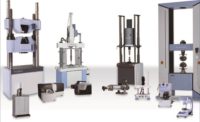
A tensile test determines how a subject will react while being pulled apart, or, more formally, when a force is applied to it in tension. It may be performed to assess the joint strength of two components; a tensile test on a cell phone, for instance, could determine the disassembly force of the aerial from the body casing. More fundamentally, the tensile properties of the material from which the phone is fabricated also may be determined. Industrially, it provides manufacturers with a quick and cost-effective method of assessing quality in production, and designers a tool to physically characterize the functionality of products.

A sample of polyolefin film is loaded into a tensile testing machine to perform an elongation test. Source: Mecmesin
Materials Under Tension
When placed under tension, most materials behave in a similar manner initially. There is a linear relationship between the applied force (the stress), in this case a tensile load, and the amount by which the material deforms (the strain). This observation is defined by Hooke’s law:- Stress (s) / Strain (e) = E
A bungee rope, for instance, must have a low enough Young’s Modulus to guarantee the jumper will achieve a long, thrilling jump without the rope jarring when the slack is taken up, but a high enough Young’s Modulus to ensure the rope is sufficiently stiff to bring the jumper springing back skywards prior to hitting the ground.
However, this linear region is short lived, and any material will eventually reach a point beyond which the tensile load will cause permanent deformation. This is called the elastic, or proportional, limit, and the force at which this happens to a material is its yield strength. Beyond the elastic limit a material will eventually break, displaying its tensile strength at break, another clearly useful physical property. The material may break very soon after reaching the elastic limit (for example, steel) or it may continue to elongate for a long period of increased loading prior to breaking (for example, a polyethylene sheet). The distance of this elongation is again a useful parameter to determine, as is the total elongation at break. Many very brittle materials, however, such as glass and ceramics, do not have a clearly distinct yield point, and will break prior to undergoing permanent deformation.
Joint Strength
Tensile testing is commonly used to determine the joint strength of assembled parts, such as automotive and aerospace components, electronic devices, medical apparatus and packaging. Determining the tensile load at which a hypodermic needle breaks out of its plastic hub, for example, will provide a valuable indication of its expected performance in situ, to both its designer and manufacturer.
Shown here is a typical tensile stress-strain profile. Source: Mecmesin
Preparing the Test
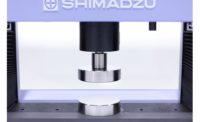
To perform a materials test, sample strips of uniform thickness with the appropriate width and length should be prepared. Appropriate grips should then be selected that will exert an even stress across the width of the test piece. Care must be taken to ensure the test sample is accurately aligned with the axis of loading. There is a comprehensive range of versatile grips available on the market, offering a variety of clamping actions. For example, some grips close automatically as the tension increases (for example, a wedge grip), some are clamped shut manually (for example, a vice grip) and some rely on pneumatic power to close around the sample. Selection of appropriate, high-quality gripping fixtures will minimize the risk of sample slippage or premature failure at the jaw face.To assess the disassembly force of jointed components, specialized fixtures are available dedicated to specific applications, such as a pull-peel wheel for performing peel tests on adhesive films, and a cork-extraction test jig. This is in addition to universal fixtures, designed to accommodate a variety of awkwardly shaped samples.

A cork extraction force test is being performed. Source: Mecmesin
Performing the Test
The load should be applied at a uniform travel rate until the required parameter has been determined-tensile strength, elongation or disassembly force. The crosshead speed should be slow enough to capture a reliable tensile profile of the material, yet high enough to complete testing within a reasonable timeframe. A motorized, and ideally computer-controlled, test frame will guarantee the load is applied at a consistent rate. Bear in mind that to test the elongation of a particularly stretchy material, a test frame with sufficiently long travel will be needed to affect the required elongation distance.Sufficient repeat tests should then be performed to ensure statistical significance of results and observed trends.
After testing is complete, results may be viewed, stored, exported or analyzed with varying degrees of sophistication depending on the tensile tester in use. All good motorized testing systems will provide a facility for electronic transfer of results to a peripheral device, such as a PC, printer or datalogger.