Sheila R. Poling

Mark A. Nash is a lean specialist, certified NIST/MEP lean trainer and operations manager for Pelco Products Inc. (Edmond, OK). Sheila R. Poling is a managing partner of Pinnacle Partners Inc. (Oak Ridge, TN). For more information call (865) 482-1362 or visit www.pinnaclepartnersinc.com .

ARTICLES

Management: The Secret to Sustaining Six Sigma

September 7, 2012
How do you sustain the improvements that are the result of a Six Sigma project?
Read More

Case Study: Lean Six Sigma Delivers for Pelco Products, Inc.

May 4, 2012
While many focus Lean Six Sigma on manufacturing, Pelco project focused on delivery.
Read More

Quality 101: What Do You Measure in a Lean Organization?

March 8, 2012
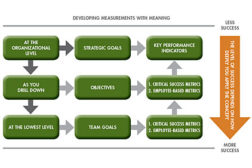
Measurements should tie into the company’s overall strategy for success.
Read More

Management: Supply Chain Quality Begins With You

August 3, 2011
Some tips will help get you started on the supply chain quality road.
Read More

Quality 101: Process Mapping for the 21st Century

July 31, 2009
Process mapping tools are found in every quality practitioner’s toolbox. Whether flowcharts, SIPOCs (suppliers, inputs, process, outputs, customers), mind maps or swim lanes, there is a process mapping tool that can document the process under review. Since the 1970s, when the quality movement took hold in the United States, the most often used and most widely accepted of these tools has been the flowchart. It is from this basic mapping concept that all others have emerged.
Read More

Selecting Successful Six Sigma Projects

October 1, 2008
Management invests time and money in Six Sigma to get better results. Projects are the key to organization improvement in Six Sigma; they also are the most visible and quantifiable part of this effort. Too often, organizations do not do the basics of good project selection and project management well.
Read More

Quality 101: Improving Quality Through Lean Concepts

November 21, 2007
Pull systems, one-piece flow, elimination of waste-these are the concepts most often discussed when lean is the topic. Quality at the Source, on the other hand, is rarely front and center when lean improvement efforts are presented.

Even though improved quality is a common outcome of lean transformations every day, the glamorous lean concepts and tools seem to get all the attention. However, just as 5S systems are credited with productivity improvements of up to 10%, Quality at the Source (QATS) can produce dramatic quality improvements in short order.
Read More

Quality 101: Six Sigma: The Power of Understanding Process Behavior

August 27, 2007
What is the purpose of using the Six Sigma Methodology? Have you ever heard Six Sigma referred to as a problem-solving methodology? This is a disservice to both problem solving and Six Sigma. There are numerous problem-solving methodologies around, but they are focused on finding the cause of some exceptional event that has occurred. Six Sigma, on the other hand, is a process improvement methodology and goes far beyond problem solving.
Read More

Quality management: Quality Evolves in a Six Sigma World

June 1, 2007
As an organization implements Six Sigma thinking, it needs to restructure how it approaches quality. These changes impact everyone and change the way business is managed.
Read More

Multimedia

Videos

Podcasts

Bill Arbogast explains his perspective on quality, ISO 9001, and how to manage inevitable business changes.


Read: The 2013 Quality Professional of the Year

 
More Podcasts

THE MAGAZINE

Quality Magazine

magazine quality cover 2013 may audits

2013 May

Check out the May 2013 edition of Quality Magazine for features about Measurement, Software and Test & Inspection.
Table Of Contents Subscribe

Plant of the Year

Which is the most important factor in considering a Quality plant of the Year?
View Results Poll Archive

THE QUALITY MAGAZINE STORE

M:\General Shared\__AEC Store Katie Z\AEC Store\Images\Quality\prac-field-guide-for-iso.gif
A Practical Field Guide for ISO 9001:2008

The purpose of this field guide is to assist organizations, step by step, in implementing a quality management system (QMS) in conformance with ISO 9001:2008, whether from scratch or by transitioning from ISO 9001:2000. It examines each sub-clause of Sections 4–8 of ISO 9001:2008, which contain the requirements, and gives a list of the documentation/documents required, internal audit questions, a summary of management’s responsibilities, and a flowchart of the steps that need to be undertaken to satisfy the requirements.

More Products

Clear Seas Research

qcast_ClearSeas_logo.gifWith access to over one million professionals and more than 60 industry-specific publications,Clear Seas Research offers relevant insights from those who know your industry best. Let us customize a market research solution that exceeds your marketing goals.

eNewsletters

STAY CONNECTED

facebook_40.png twitter_40px.png  youtube_40px.pnglinkedin_40px.png