96 Years of Quality
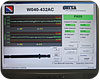
Inspection data collected from the Dalsa machine vision system gives Bead traceability down to the day, hour and minute of production. Source: Bead Industries
Bead Industries (Milford, CT), formerly the Bead Chain Manufacturing Co., was incorporated in 1914 by Waldo Calvin Bryant, and the company recently celebrated its 96th anniversary. Four generations of the Bryant family have worked at Bead Industries, which manufactures electronic pins, connectors and interconnects used in the automotive, telecommunications and PC board industries.
Bead attributes its success to factors such as lean manufacturing, quality initiatives, a dedication to continuous product innovation and excellent customer service. In this application Bead manufactures pins for electronic circuits for temperature controls in automotive applications.
The Intricacies of Electronics Inspection
Electronics inspection applications typically involve automated optical inspection (AOI) at multiple manufacturing stages. The trend is toward more points of inspection, but the key is always to capture yield-limiting defects-and avoid false positives-while reducing the overall time for inspection.As components shrink, inspection systems need to provide ever-greater resolution while maintaining an ever-increasing total system throughput-thus the need for speed. Higher speed requires higher sensitivity to make up for the reduced number of photons. Delivering better images in less time with less light presents conflicting goals, but these are the goals inspection systems must meet.
Machine Vision Tackles Tight Tolerances
To construct the interconnecting pins, Bead Industries uses a swaging process that shapes the metal instead of cutting it. Since the metal is shaped, not shaved or shredded, there is little scrap, which saves on material and costs. The tips of the tiny interconnect pins are much more reliable than competitors’ products where the metal is cut or stamped. With swaging, Bead can configure pins to virtually any application, and the precision manufacturing ensures a more reliable connection.Several years ago, Bead Industries collaborated with a large automotive electronic manufacturing supplier in the Midwest to develop a high-performance interconnect pin for use in automotive actuator control systems. An actuator is a mechanical device for moving or controlling a mechanism or system. In this case, the pins are used in electronic circuits for temperature controls in cars and trucks. Bead’s True Grip Tandem Pin with its unique flanged design offers rigidity, alignment and electrical conductivity while requiring less solder.
Bead’s challenge was to ensure that each of the tens of millions of pins produced on several different machines precisely met all of the specifications. Each pin measures approximately 0.04 inch in diameter by 0.472 inch long. They are manufactured tip-to-tail in a continuous chain, taken up onto a large reel and shipped directly to customers. This process limited Bead’s options for performing quality inspections.
Manual inspection at periodic intervals was effective but impractical as volume requirements increased. While Bead’s customer did not require 100% inspection, Plant Manager Kevin Mayer says, “An in-process, high-speed vision inspection system that could measure multiple dimensions on every pin and store the data was the only way to achieve total confidence in our process and product.”
A Solution for 100% Inspection
Bead began researching automated vision inspection systems for three of its machines in the fall of 2008. Mayer chose Dalsa’s (Billerica, MA) VA61 Vision Appliances, Genie Gigabit Ethernet (GigE) cameras and Sherlock software to verify the diameter, thickness and length of the flange, and to measure the overall length of each pin as it came out of the die-set. With the presses running at 350 parts per minute (ppm), no other type of inspection solution could keep pace reliably.Vision Appliances are multi-camera, embedded machine vision solutions that are ideal for both end-users and integrators. They provide the ease-of-use, performance and flexibility needed to meet the requirements of industrial applications, while accommodating the needs and experience of machine vision end-users.
Three Vision Appliances, equipped with the GigE cameras, were installed on each of the three machines producing Bead’s new patent-pending interconnect pin. Software running on the vision controllers allows operators to get the system up and running quickly with the click of an icon, while the flexible suite of tools enables Bead to obtain precise measurements and identify trends that could lead to nonconformances.
“Dalsa’s Sherlock software was more user-friendly than any of the other programs we looked at,” says Mayer. “Because it is flexible and easy to use, we program our vision inspection stations for other components and other machines on our plant floor as our production schedule requires.”
Each vision inspection station is networked to Bead’s database. The inspection data collected provides traceability down to the day, hour and minute of production, allowing analysis of raw dimensional data and providing insight into process variables such as tool wear. By analyzing production trends, Bead is able to predict tool life and proactively schedule tool changes and other preventive maintenance. “This has improved our efficiency tremendously since we can prepare for and schedule tool changes, rather than having to react to a potentially catastrophic tool failure,” says Mayer.
More Machine Vision on the Way
Since installing the Dalsa machine vision systems late in 2008, Bead has achieved 100% inspection of each of the more than 50 million pins produced to date, and the company has not experienced any costly product returns.“Because of these machine vision systems, Bead Industries and our customers have complete confidence in every single pin produced,” Mayer says. “Our goal is to have a vision system on every machine in our plant so that we can provide 100% inspection for all of our products.”
Dalsa Corp.
(978) 670-2002
www.dalsa.com
Benefits
Planning Machine Vision for Factory Automation
Many key tasks in the manufacture of products, including inspection, orientation, identification and assembly, require the use of visual techniques. Human vision and response, however, can be slow and tends to be error-prone either due to boredom or fatigue. Replacing human inspection with machine vision can go far in automating factory operation, but implementers need to carefully match machine vision options with application requirements.Nothing fabricated beats human vision for versatility, but other human weaknesses limit their productivity in a manufacturing environment. Boredom, distraction, fatigue and sometimes even malice can degrade human performance in vision-related factory tasks such as inspection.
Factory automation utilizing a machine vision system in such tasks, then, can bring many benefits. Machine vision systems can perform repetitive tasks faster and more accurately, with greater consistency over time than humans. They can reduce labor costs, increase production yields and eliminate costly errors associated with incomplete or incorrect assembly. They can help automatically identify and correct manufacturing problems on-line by forming part of the factory control network. The net result is greater productivity and improved customer satisfaction through the consistent delivery of quality products.
Implementing a cost-effective machine vision system, however, is not a casual task. The selection of components and system programming must accurately reflect the application’s requirements. In addition, selection decisions need to consider more than the initial component costs. Factors such as the time required for system development, installation and integration with the factory system, the operator training (and retraining) costs, project management, maintenance, and software upgrades and modification, all contribute to the total cost of ownership for the system and should be evaluated before investing in a specific system design.
Looking for a reprint of this article?
From high-res PDFs to custom plaques, order your copy today!