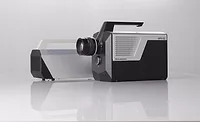
High-Speed Video Explained
High-speed video cameras are increasingly being used with a host of applications, including borescopes and microscopes.

High-speed video (HSV) is a technology that is becoming more widespread, and as a consequence, much more recognizable in everyday life. This is due to a combination of advances in technology and a relative reduction in price-both of which have made HSV more accessible to a wider group.
HSV used to be the mysterious preserve of an exclusive group of research and development (R&D) engineers concerned with detailed scientific analysis of events occurring at high speeds, traditionally in the fields of ballistics and automotive crash testing. HSV images now are routinely used in television commercials and motion picture films to create appealing special effects. Any search of the Internet, including YouTube, will reveal a plethora of homemade HSV clips as modern consumer digital cameras now often feature an HSV mode.
As HSV cameras have evolved, they have found value in commercial R&D applications, sports science research and production, and processing streamlining. In short, HSV is everywhere. Most people will have seen it, perhaps unwittingly, and most people are exposed to it every day in the products they use-from the cereals they have for breakfast, the production and packaging of which will have been individually stage-assessed with HSV; to the mobile telephone they use which will have had the speaker vibration analyzed and the complete unit drop-tested for structural integrity; to the car they drive to work, which will have had crash safety, airbags, seatbelts and various components such as windshield and wipers, tires and fuel- injection systems all tested using HSV.
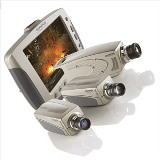
Recording at higher frame rates invariably means that the sensor can only gather light (take a picture) for a short period of time. The greater the number of fps, the lower the amount of light is available for each image. Lighting for HSV, just as with any other branch of photography, is critical. Digital HSV cameras now have large sensors with relatively large pixel sizes to improve light sensitivity.
Nevertheless, most HSV applications will require some form of illumination, natural sunlight being the best, but where this is not available, or even insufficient, operators have the option to use a variety of light sources including flicker-free flood lighting or lasers. Where events are self-illuminating, such as explosions or the welding process, operators may filter the light reaching the sensor, illuminate the subject in the infrared (IR) spectrum and capture what happens behind the flame.
For applications where the addition of light is undesirable, as it may negatively affect the subject matter, HSV cameras may be boosted by the addition of an image intensifier that electronically brightens the image.

For some operators, it may be sufficient to review captured images instantly at source on a display monitor and move on to record more events without storing the data. However, for the vast majority, more detailed analysis of the data may be required. In order to achieve this, data must be transferred to the operator’s PC, either by Ethernet or compact flash card. Various PC analysis packages are available depending on the type of analysis required.
In addition to capturing video data, it is possible to synchronize HSV cameras to external devices, such as data acquisition modules, in order to gather supportive data during testing. This could be strain measurements, temperature or pressure, and may help to fill in the blanks between video frames. Data is synchronized precisely with the video images and may be recorded at sample rates of up to 100 samples per video frame per channel of data up to a maximum of 2,000 fps at up to 16 discrete channels.
In those cases where operators would like to integrate HSV cameras into their own processes or software, software development kits are available to facilitate integration. Increasingly, HSV cameras are being used in conjunction with rigid and flexible borescopes, which enable access to otherwise difficult-to-reach areas, and also with microscopes where the subject under view is, by its very nature, microscopic.
Examples are fascinating and, typically for HSV, extremely diverse. Formula 1 teams have used HSV cameras with rigid borescopes to access gearboxes in order to view the gear changeovers; medical practitioners have used cameras with rigid endoscopes to view the vibration of patients’ vocal chords; pharmaceutical manufacturers have used systems to view the spray coating of tablets as they are lifted through an air chamber; ATM manufacturers have used systems to view the action of intricate mechanisms; and, finally, automotive manufacturers have used systems to good effect to ensure that latches and catches on doors and hoods function correctly. NDT
Modern HSV cameras use complementary metal–oxide semiconductor (CMOS) sensors to capture images at rates between 250 and 1,000,000 frames per second.
If an object or process is moving very quickly it could potentially move a relatively large distance in between each frame captured.
The more frames recorded per second, the more likely the photographer is to capture more detail.
High-speed video (HSV) is a technology that is becoming more widespread, and as a consequence, much more recognizable in everyday life. This is due to a combination of advances in technology and a relative reduction in price-both of which have made HSV more accessible to a wider group.
HSV used to be the mysterious preserve of an exclusive group of research and development (R&D) engineers concerned with detailed scientific analysis of events occurring at high speeds, traditionally in the fields of ballistics and automotive crash testing. HSV images now are routinely used in television commercials and motion picture films to create appealing special effects. Any search of the Internet, including YouTube, will reveal a plethora of homemade HSV clips as modern consumer digital cameras now often feature an HSV mode.
As HSV cameras have evolved, they have found value in commercial R&D applications, sports science research and production, and processing streamlining. In short, HSV is everywhere. Most people will have seen it, perhaps unwittingly, and most people are exposed to it every day in the products they use-from the cereals they have for breakfast, the production and packaging of which will have been individually stage-assessed with HSV; to the mobile telephone they use which will have had the speaker vibration analyzed and the complete unit drop-tested for structural integrity; to the car they drive to work, which will have had crash safety, airbags, seatbelts and various components such as windshield and wipers, tires and fuel- injection systems all tested using HSV.
Modern HSV Cameras
Modern HSV cameras use custom-designed complementary metal–oxide semiconductor (CMOS) sensors to capture images at rates between 250 and 1,000,000 frames per second (fps). For events that happen extremely quickly-the filling of a cereal packet, the crash testing of a car, fluid flows-standard cameras miss important detail. Conventional cameras record images at a rate of 25 to 30 fps. If an object or process is moving very quickly, it could potentially move a relatively large distance in between each frame captured; therefore, the more frames recorded per second the more likely the photographer is to capture more detail. Also, the object does not stop moving just because the sensor is open and exposed to light-shorter duration shutter speeds will generate sharper images, eliminating motion blur.Recording at higher frame rates invariably means that the sensor can only gather light (take a picture) for a short period of time. The greater the number of fps, the lower the amount of light is available for each image. Lighting for HSV, just as with any other branch of photography, is critical. Digital HSV cameras now have large sensors with relatively large pixel sizes to improve light sensitivity.
Nevertheless, most HSV applications will require some form of illumination, natural sunlight being the best, but where this is not available, or even insufficient, operators have the option to use a variety of light sources including flicker-free flood lighting or lasers. Where events are self-illuminating, such as explosions or the welding process, operators may filter the light reaching the sensor, illuminate the subject in the infrared (IR) spectrum and capture what happens behind the flame.
For applications where the addition of light is undesirable, as it may negatively affect the subject matter, HSV cameras may be boosted by the addition of an image intensifier that electronically brightens the image.
A razor blade cuts into a water-filled balloon and creates a splash. These are randomly selected frames from a video taken with a high-speed video camera. Source: Olympus
Image Capture
Once captured, images are stored onto cameras’ internal rolling flash memory. Due to the large number of frames captured, and the limited memory available, only relatively short durations of events may be captured. In order to ensure that a high-speed short duration event can be recorded by a device that only has the capacity to record for a short duration of time, it is essential that HSV cameras are triggered effectively. For events occurring relatively slowly, a manual trigger may be used where the operator views the event occurring or, more frequently, the outcome of the event. For more precise triggering, and unattended operation, cameras can be triggered by a defined input voltage.For some operators, it may be sufficient to review captured images instantly at source on a display monitor and move on to record more events without storing the data. However, for the vast majority, more detailed analysis of the data may be required. In order to achieve this, data must be transferred to the operator’s PC, either by Ethernet or compact flash card. Various PC analysis packages are available depending on the type of analysis required.
In addition to capturing video data, it is possible to synchronize HSV cameras to external devices, such as data acquisition modules, in order to gather supportive data during testing. This could be strain measurements, temperature or pressure, and may help to fill in the blanks between video frames. Data is synchronized precisely with the video images and may be recorded at sample rates of up to 100 samples per video frame per channel of data up to a maximum of 2,000 fps at up to 16 discrete channels.
HSV Software
HSV software suites display the combined data and facilitate export to Excel if required. Furthermore, multiple HSV cameras can be synchronized together to gain different views or angles of the same event occurring at precisely the same time. Three-dimensional images can be generated by the synchronization of two or more HSV cameras and are increasingly being used to compare with modeled data.In those cases where operators would like to integrate HSV cameras into their own processes or software, software development kits are available to facilitate integration. Increasingly, HSV cameras are being used in conjunction with rigid and flexible borescopes, which enable access to otherwise difficult-to-reach areas, and also with microscopes where the subject under view is, by its very nature, microscopic.
Examples are fascinating and, typically for HSV, extremely diverse. Formula 1 teams have used HSV cameras with rigid borescopes to access gearboxes in order to view the gear changeovers; medical practitioners have used cameras with rigid endoscopes to view the vibration of patients’ vocal chords; pharmaceutical manufacturers have used systems to view the spray coating of tablets as they are lifted through an air chamber; ATM manufacturers have used systems to view the action of intricate mechanisms; and, finally, automotive manufacturers have used systems to good effect to ensure that latches and catches on doors and hoods function correctly. NDT
Tech Tips
Looking for a reprint of this article?
From high-res PDFs to custom plaques, order your copy today!