Quality Magazine logo
search
cart
facebook twitter linkedin youtube
  • Sign In
  • Create Account
  • Sign Out
  • My Account
Quality Magazine logo
  • NEWS
  • PRODUCTS
    • FEATURED PRODUCTS
    • SUBMIT YOUR PRODUCT
  • CHANNELS
    • AUTOMATION
    • MANAGEMENT
    • MEASUREMENT
    • NDT
    • QUALITY 101
    • SOFTWARE
    • TEST & INSPECTION
    • VISION & SENSORS
  • MARKETS
    • AEROSPACE
    • AUTOMOTIVE
    • ENERGY
    • GREEN MANUFACTURING
    • MEDICAL
  • MEDIA
    • A WORD ON QUALITY PUZZLE
    • EBOOK
    • PODCASTS
    • VIDEOS
    • WEBINARS
  • EVENTS
    • EVENT CALENDAR
    • IMTS
  • DIRECTORIES
    • BUYERS GUIDE >
      • Supplier Insights
    • NDT SOURCEBOOK
    • VISION & SENSORS
    • TAKE A TOUR
  • INFOCENTERS
    • Digital Quality Management Systems
    • NEXT GENERATION SPC & QUALITY ANALYTICS
  • AWARDS
    • ROOKIE OF THE YEAR
    • PLANT OF THE YEAR
    • PROFESSIONAL OF THE YEAR
  • MORE
    • Expert Columns
    • NEWSLETTERS
    • QUALITY STORE
    • INDUSTRY LINKS
    • SPONSOR INSIGHTS
  • EMAG
    • eMAGAZINE
    • ARCHIVES
    • CONTACT
    • ADVERTISE
  • SIGN UP!
Quality 101NDTAerospace

Leak Testing 101

There will be a leak detection process suitable for your specific application
By Dave Morris
leak testing
leak testing
leak testing
leak testing
July 1, 2016

Why leak test? Leak testing is performed to ensure that when in service, the component or assembly has zero leakage or a leakage that is acceptable over time for the fluid/gas that it is meant to contain, or conversely to prevent material on the outside from leaking in. A component or assembly leaking in operation above the limit specified would at best incur the cost of replacement, tarnishing the manufacturer’s reputation and at worst may lead to a devastating failure of the system. One point to note is that all things leak to some degree, however, the reason to leak test is not to stop all leaks but to test to a standard that will ensure the tested part will not leak the product inside or not exceed an allowable leak rate in service. The test method chosen to perform this critical test requirement that ensures a part does not leak is dependent on many factors including:

 (a) The direction of leak – from inside out or from the outside in.
 (b) The media contained inside the part and if the requirement calls for zero leakage or an acceptable leak rate over a time period.
 (c) The viscosity of that substance that the part will contain in service – this will be a major contributor in calculating the sensitivity required of the test.
 (d) The pressure that the test piece will see in service – particularly important when the part is flexible or features O ring joints that may move and reset at variable pressures.
 (e) The requirement to measure the total leak rate (global test – chamber test) or to pinpoint the leak site (sniffing).
 (f) The internal volume of the test piece.
 (g) The hole size that has been determined to prevent the substance from leaking out or into the test part or assembly.

Most suppliers of leak detectors can help you calculate the test requirement for specific applications based on the information above. Calculations are based on proven documented theory and the experience of the leak test manufacturer in testing similar components /assemblies.

SELECTED TEST METHODS

The most basic form of leak testing is to pressurize the part with air and then either dunk into a water tank or to spray a soap solution around the suspect areas looking for bubbles. The test is labor intensive, lacks sensitivity and may contaminate the part. Today’s electronic leak test technology is far less labor intensive, clean, sensitive, provides a direct reading of the leak rate, and can be documented. Most importantly it can be fully integrated into an automatic production process. 

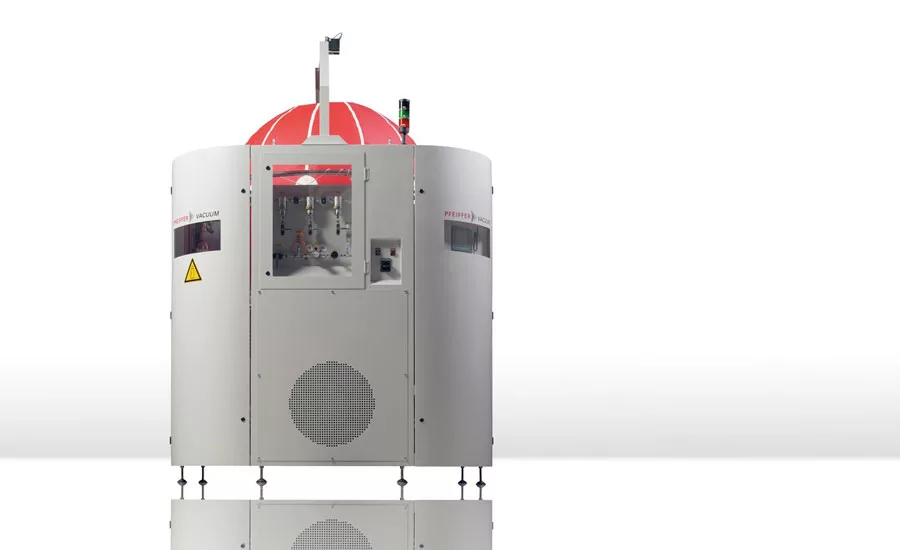
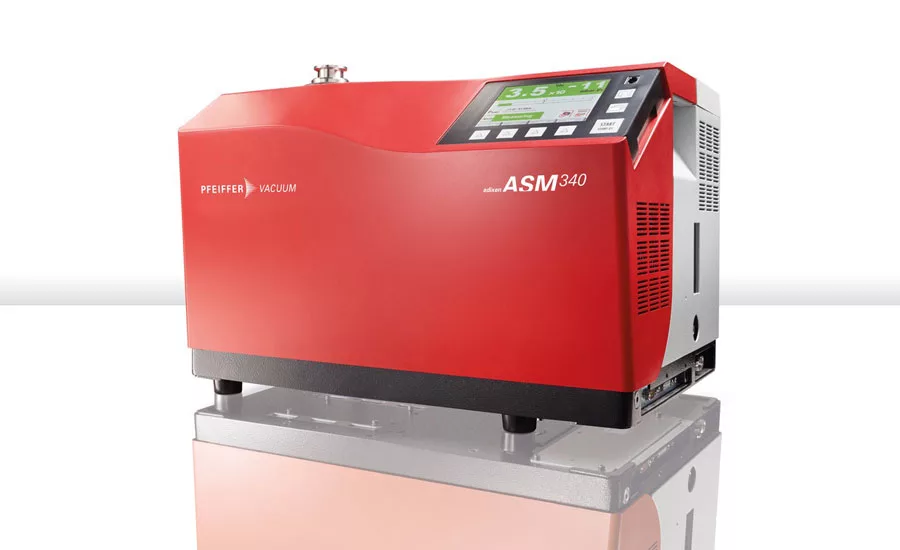
Electronic leak testing can be separated into two major groups: (a) tracer gas leak testing (b) air decay/flow leak testing which can only be used to determine the overall leak rate (global test). The air technique is typically used for less stringent applications, for example, to ensure a small part will not leak a viscous fluid such as water or oil. The air decay/flow test method has many applications in the high volume production automotive market, but far less in the aerospace industry where components tend to be large and where a higher sensitivity is required. As components and assemblies in the aerospace industry are manufactured on a much smaller scale than automotive and therefore more expensive, locating the leak for later repair is essential. To address the sensitivity and leak location requirement for testing in the aerospace industry, the leak test is typically performed using a tracer gas such as helium or diluted hydrogen. The detectors most commonly used are mass spectrometers.

Advantages of a mass spectrometer leak detector:

  • High sensitivity to detect the smallest of leaks
  • Global (chamber) or pinpoint leak testing (sniffing) capabilities
  • Testing of large or small component volumes
  • Is not affected by temperature variations
  • Can be utilized in a manual or automated test process
  • Provides full test data recording for traceability of the test
  • Traceable NIST calibration

APPLICATIONS IN THE AEROSPACE INDUSTRY

Tracer gases have been used in the aerospace industry for many years for testing the following components and assemblies:

  • Gas lines
  • Fueling systems and tanks
  • Sealed electronic enclosures
  • Missile guidance systems
  • Antennas
  • Gyro assemblies
  • Solid rocket booster cone assemblies
  • Heat exchangers
  • Valves
  • Hydraulic systems

LEAK TESTING TECHNIQUES, APPLICATIONS AND TYPICAL LEAK RATE CRITERIA

There have been many advances in the detectors used for tracer gas leak detection in production over the past few years including:

  • Enhanced filament material technology to improve reliability and sensitivity
  • Simplified user/machine interface
  • Enhanced vacuum pump technology to improve performance, reliability and speed
  • Improved test data recording capabilities for traceability of process
  • Wider product offering with detectors specifically designed to fit the application
  • Improved protection against misuse or test failures

To sum up, due to a vibrant mature leak detection industry, there will be a leak detection process that will be suitable for your specific application. The factors detailed earlier, together with consultation with the leak test manufacturer, will ensure the leak test process selected provides the quality you demand at an affordable cost.

REDUCING COST/TEST BY RECOVERING THE TEST GAS

Depending on the sensitivity requirement of the test, it will somewhat dictate the concentration of the tracer gas used. For higher concentrations of helium it may be more economical to recover the gas used for the test so it can be reused. There are systems in the market that can recover up to 98% of the gas used for a specific test.
 

KEYWORDS: gaging

Share This Story

Looking for a reprint of this article?
From high-res PDFs to custom plaques, order your copy today!

Dave Morris is the product manager of helium / hydrogen leak detection & gauges at Pfeiffer Vacuum Inc. For more information, call (978) 430-2829, email [email protected] or visit www.pfeiffer-vacuum.com. 

Recommended Content

JOIN TODAY
to unlock your recommendations.

Already have an account? Sign In

  • 2024 Quality Rookie of the Year Justin Wise 1440x750px banner with "Quality Rookie of the Year" logo inset

    Meet the 2024 Quality Rookie of the Year: Justin Wise

    Justin Wise is an exceptional individual who has been...
    Aerospace
    By: Michelle Bangert
  • Man with umbrella and coat stands outside while it rains at night looking at a building.

    Nondestructive Testing: Is there an ethics problem?

    I was a whistleblower who exposed fraudulent activities...
    NDT
    By: Dale Norwood
  • Unraveling Deflategate: Football stadium with closeup of football on field

    Unraveling the Tom Brady Deflategate

    The Deflategate scandal erupted following the 2014 AFC...
    Measurement
    By: Greg Cenker and Henry Zumbrun
Manage My Account
  • eMagazine Subscriptions
  • Newsletters
  • Online Registration
  • Subscription Customer Service
  • Manage My Preferences

More Videos

Sponsored Content

Sponsored Content is a special paid section where industry companies provide high quality, objective, non-commercial content around topics of interest to the Quality audience. All Sponsored Content is supplied by the advertising company and any opinions expressed in this article are those of the author and not necessarily reflect the views of Quality or its parent company, BNP Media. Interested in participating in our Sponsored Content section? Contact your local rep!

close
  • Key Takeaways for Quality Leaders
    Sponsored byComplianceQuest

    Key Takeaways for Quality Leaders from the 2026 Gartner Magic Quadrant™ for QMS

  • This image shows a person seated next to a Bobcat T66 compact track loader.
    Sponsored byPolyWorks by InnovMetric

    Supercharging Digital Gauging at Bobcat North America

  • Dorsey Calibration Lab photo by Tom LaBarbera Picture this Studios
    Sponsored byDorsey Metrology International

    Ensuring Product Quality in a Competitive Manufacturing Landscape

Popular Stories

a titanium diaphragm speaker driver

The One Thing Elon Gets Right Is Designed to Scare You

This image shows a person seated next to a Bobcat T66 compact track loader.

Supercharging Digital Gauging at Bobcat North America

Dorsey Calibration Lab photo by Tom LaBarbera Picture this Studios

Ensuring Product Quality in a Competitive Manufacturing Landscape

2026 Quality Professional of the Year!

Events

June 9, 2026

Future-Proof your Quality Processes with Advanced 3D Optical CMM Technology

Discover how to effortlessly capture complex data, leverage true multi-sensor automation, and ensure continuous operation without creating inspection delays.

June 22, 2026

Automate 2026

Automate is North America's largest robotics and automation event — and the best place to take your ideas from insight to impact.
 
Our show floor features the world’s leading automation solutions, from AI and robotics to motion control, vision systems, and more. Plus, our educational conference is second to none, led by the brightest minds in automation today.
 
Ready to transform the way you work? Take the next step at Automate.
View All Submit An Event

Products

Lean Manufacturing and Service Fundamentals, Applications, and Case Studies

Lean Manufacturing and Service Fundamentals, Applications, and Case Studies

See More Products
Quality Podcast Channel Custom Content

Related Articles

  • leak testing technology

    Selection Considerations for your Optimum Leak Testing Method and Process

    See More
  • Fatigue Crack Growth Testing 101

    See More
  • Cyclic thermal loading using a TMF loadstring. Source: Instron

    Fatigue Testing 101

    See More

Related Products

See More Products
  • Mechanical and Non-Destructive Testing DVD

See More Products
×

Stay in the know with Quality’s comprehensive coverage of
the manufacturing and metrology industries.

Newsletters | Website | eMagazine

JOIN TODAY!
  • RESOURCES
    • Advertise
    • Contact Us
    • Directories
    • Manufacturing Division
    • Store
    • Want More
  • SIGN UP TODAY
    • Create Account
    • eMagazine
    • Newsletters
    • Customer Service
    • Manage Preferences
  • SERVICES
    • Marketing Services
    • Market Research
    • Reprints
    • List Rental
    • Survey/Respondent Access
  • STAY CONNECTED
    • LinkedIn
    • Facebook
    • YouTube
    • X (Twitter)
  • PRIVACY
    • PRIVACY POLICY
    • TERMS & CONDITIONS
    • DO NOT SELL MY PERSONAL INFORMATION
    • PRIVACY REQUEST
    • ACCESSIBILITY

Copyright ©2026. All Rights Reserved BNP Media, Inc. and BNP Media II, LLC.

Design, CMS, Hosting & Web Development :: ePublishing