Smart Cameras: Great Things Come in Small Packages
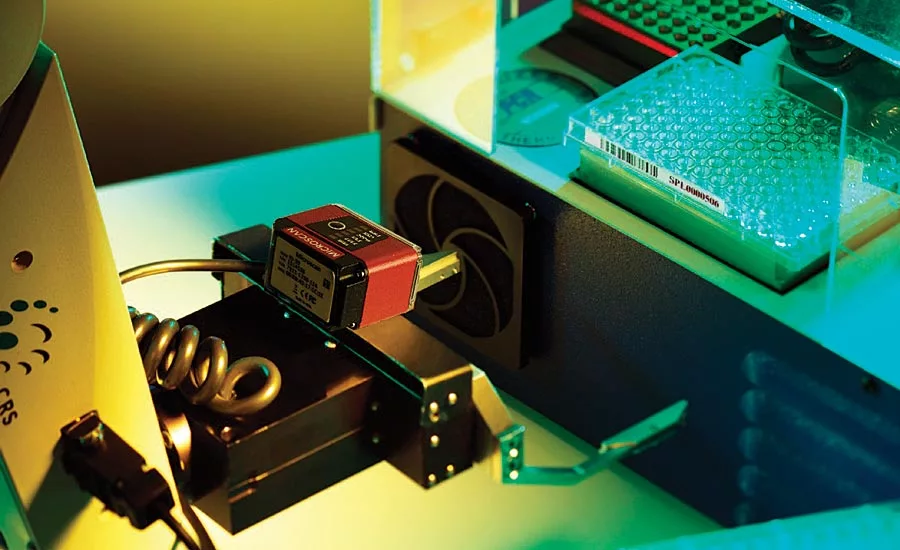
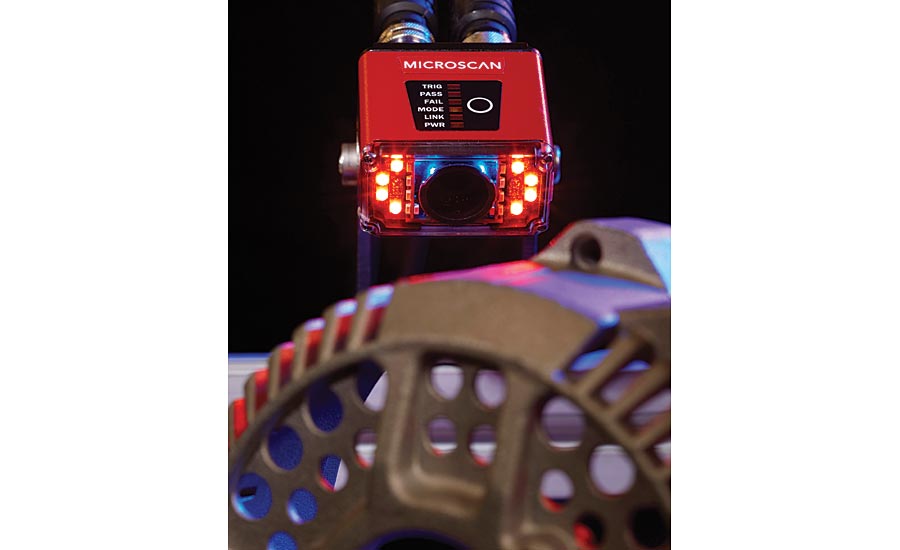
Embedded applications of smart cameras or engines, have recently seen tremendous growth in the medical device manufacturing and lab automation industry. This is primarily due to the extremely small size of smart cameras, as well as the fact that they contain all necessary elements of lighting, lensing, processing and communications in one complete sensor package.
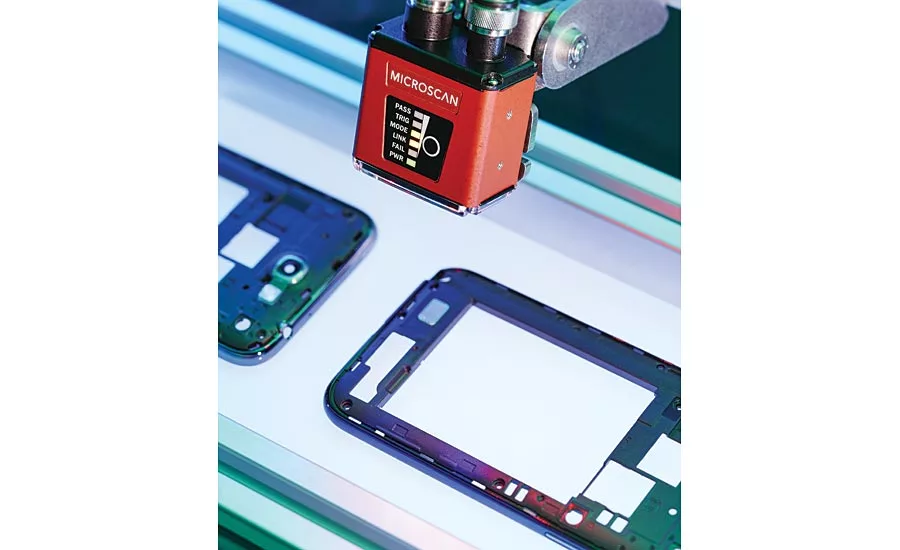
Beginning in the automotive industry, smart camera expansion quickly followed into medical device manufacturers, electronics component manufacturers, pharmaceutical producers and consumer goods packaging operations, to name a few.
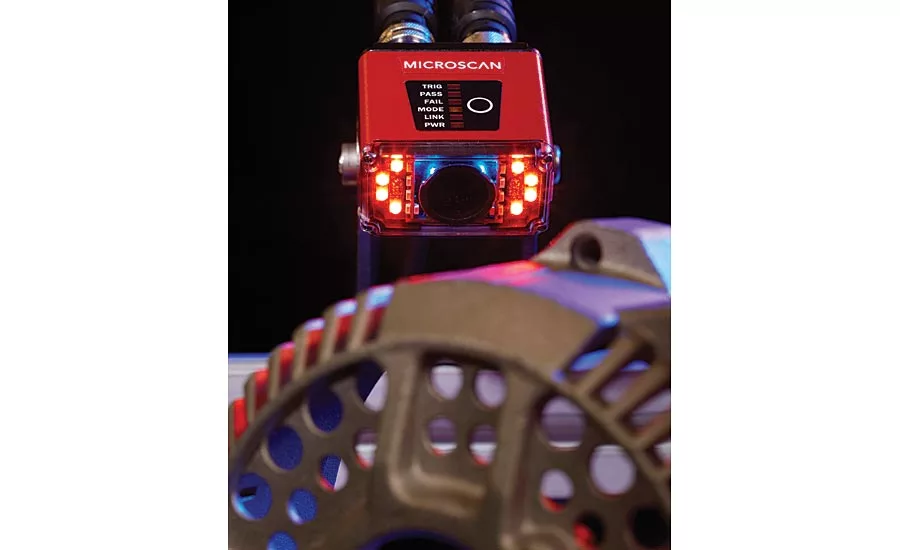
Smart cameras have emerged as simpler alternatives to PC-based machine vision systems, and currently represent the largest and fastest growing segment of the vision market. This shift is based primarily on the evolution of CMOS imagers and digital media processing chips. The technological advances have allowed providers of smart cameras to develop and offer extremely small, powerful and low-cost smart cameras that handle the most demanding, high-speed and automatic identification and machine vision inspection tasks.
While PC-based machine vision systems fit complex and centralized multi-camera automation solutions, smart cameras are ideal for distributed point procession applications. Where flexible mounting in space-constrained installations is needed, ease of setup, rugged industrial connectivity, and high reliability are of utmost importance, smart cameras are able to provide solutions that PC-based vision can’t. With technology advancements and increasing demand for affordable machine vision solutions, smart cameras have started expanding into various new industries. Beginning in the automotive industry, smart camera expansion quickly followed into medical device manufacturers, electronics component manufacturers, pharmaceutical producers and consumer goods packaging operations, to name a few. The array of applications has also been growing—from inspection for quality assurance, to gaging, machine and robot guidance, barcode reading, code verification and a host of other applications.
With rapid expansion and adaptation, what are the basic drivers for technology advancements of smart cameras in the industrial world today?
Need For Speed
Smart cameras capture and process complete 2D images. These images can include barcodes, part features and elements surrounding the actual area of interest, and extract data based on thousands of varying pixel elements within the image. This explains why smart cameras have longer processing times, depending on the device and application, compared to PC-based machine vision systems. However, recent advancements in processing technology have enabled faster processing times, now with rates up to 300 parts per second. With this trend, the debate of choosing a smart camera versus a PC-based alternative tends to stop being a decision-making problem for high-speed applications.
When considering the purchase of a smart camera, an important consideration to take into account is data communication rate. One main question to ask yourself is: How fast does the smart camera need to communicate inspection data or data-dense images to the outside world?
Some imaging and inspection applications require higher bandwidth than the traditional smart camera RS-232 serial connection could offer. For example, one common data-intensive task is the recording of inspection images, which can be saved for the diagnostic improvement of operations, proof of barcode legibility, or proof of inspection. Smart cameras are now equipped with high-speed USB ports, or 100/1000 BaseT Ethernet ports which can easily transmit these images for storage without impacting overall application speeds. When using Ethernet-based communication in particular, engineers can now take advantage of a variety of built-in protocols. Typical Smart cameras will communicate via Ethernet TCP/IP Sockets, EtherNet/IP, PROFINET, Modbus/TCP, and FTP, as well as as a variety of other newer protocols such as EtherCAT.
In recent years, the speed of image processing and data communication has been a decisive factor for many industrial buyers—the faster the better. Time is of the essence in automated applications, and time savings is one of the main reasons for implementing an automated machine. Smart cameras are now able to deliver this performance, helping companies do more with less and increasing operational output at a lower cost.
Mounting Flexibility and Miniaturization
Embedded applications of smart cameras or engines have recently seen tremendous growth in the medical device manufacturing and lab automation industry. This is primarily due to the extremely small size of smart cameras, as well as the fact that they contain all necessary elements of lighting, lensing, processing and communications in one complete sensor package. Many of the key players in the medical imaging space (which are numerous and growing) provide solutions enabled by embedded vision technology. These small, capable, smart cameras are typically fixed mounted, or mounted on small robots inside of automated equipment. This helps them perform operations such as specimen and reagent identification, fill level measurement, tracking of lab ware presence and absence, identification of test tube cap type and color and dimensional measurement of test tube height and diameter, as well as a variety of other operations to verify the correct functioning of the equipment.
A new and powerful capability of smart cameras currently being introduced to the market is integrated autofocus lens technology within the smart camera. This new capability meets the needs of manufacturers who have to apply machine vision tools or read barcodes in difficult locations at varying distances. Embedded autofocus enables users to avoid the additional costs of purchasing multiple cameras, or of adding additional optical accessories. Users will also no longer need to move the camera in three axes to provide it with the correct standoff. Autofocus helps minimize the overall size of the testing equipment, and helps to avoid integration complexity.
How Small Can You Go
Electronics and healthcare are two of the most important industries in the market space that have a big need for tiny codes. When it comes to barcode reading applications of smart cameras, miniaturization trends in electronics as well as the UDI requirements mandated by the FDA and GS1, HIBC, USPS, and ISO/IEC 15415/15416 standards in medical device manufacturing and lab automation, drive the importance of the ability to reliably and consistently read tiny codes.
As laser printing technology advances, so does the ability to print smaller and smaller codes onto a variety of surfaces via DPM (Direct Part Mark) and 2D symbols. The size of the code, the type of material it’s printed on and the curvature of the surface are huge factors when trying to read tiny codes and keep costs down. New smart cameras used in these markets can now read symbols almost invisible to a naked eye!
Ease of Use
Machine vision systems’ ease of use, as well as how tightly they’re integrated into the production process, often determines their widescale adoption and success. The simpler and more intuitive the user interface software is, the faster and more effectively the user can program and deploy a solution. Minimal setup or changeover time between solutions or part types is a must. Ideally, a smart camera will set itself up. Some smart cameras power on and begin to read codes out of the box. They are able to automatically adjust focus and lighting to obtain the best reading results. For more complex situations, some market players offer a browser-based user interface, available without having to install software onto the host computer. Solutions that provide the best out-of-box experience and minimal programming effort are displacing solutions that require longterm implementations and large efforts to support them.
Modularity and Multitasking
As machine vision solutions become more and more common throughout different industries, users are getting more confident and demanding. And while the machine vision market is not yet at its peak, smart camera users are asking for more for less. With these increasing demands, some smart cameras bring unequaled modularity to the competition. Abilities to select optics, sensors, lighting and software, as well as the capability to perform code reading, code verification and machine vision tasks without switching devices, makes. these smart cameras the way of
the future.
Understanding an application’s requirements is critical in choosing the best device for successful data acquisition. The correct smart camera provides the flexibility to meet expanding requirements without the need for future design adjustments, significantly lowering the cost of ownership. Smart camera technology is being constantly enhanced to keep up with the pace of the growing market demand across all industries. Smart cameras are no longer just a low-cost alternative, but a high-performance, flexible, easy-to-use and compact machine vision tool. compact form. Remember, great things come in small packages!
Looking for a reprint of this article?
From high-res PDFs to custom plaques, order your copy today!