Quality Magazine logo
search
cart
facebook twitter linkedin youtube
  • Sign In
  • Create Account
  • Sign Out
  • My Account
Quality Magazine logo
  • NEWS
  • PRODUCTS
    • FEATURED PRODUCTS
    • SUBMIT YOUR PRODUCT
  • CHANNELS
    • AUTOMATION
    • MANAGEMENT
    • MEASUREMENT
    • NDT
    • QUALITY 101
    • SOFTWARE
    • TEST & INSPECTION
    • VISION & SENSORS
  • MARKETS
    • AEROSPACE
    • AUTOMOTIVE
    • ENERGY
    • GREEN MANUFACTURING
    • MEDICAL
  • MEDIA
    • A WORD ON QUALITY PUZZLE
    • EBOOK
    • PODCASTS
    • VIDEOS
    • WEBINARS
  • EVENTS
    • EVENT CALENDAR
    • IMTS
  • DIRECTORIES
    • BUYERS GUIDE >
      • Supplier Insights
    • NDT SOURCEBOOK
    • VISION & SENSORS
    • TAKE A TOUR
  • INFOCENTERS
    • Digital Quality Management Systems
    • NEXT GENERATION SPC & QUALITY ANALYTICS
  • AWARDS
    • ROOKIE OF THE YEAR
    • PLANT OF THE YEAR
    • PROFESSIONAL OF THE YEAR
  • MORE
    • Expert Columns
    • NEWSLETTERS
    • QUALITY STORE
    • INDUSTRY LINKS
    • SPONSOR INSIGHTS
  • EMAG
    • eMAGAZINE
    • ARCHIVES
    • CONTACT
    • ADVERTISE
  • SIGN UP!
Quality 101NDT

Quality 101

Nondestructive Testing Using the Resonance Acoustic Method

RAM is a volumetric approach and evaluates the whole part, both for internal and external structural flaws, metallurgical deviations, and consistency.
By Gregory James Weaver
QM 1222 Quality 101 NDT RAM 08

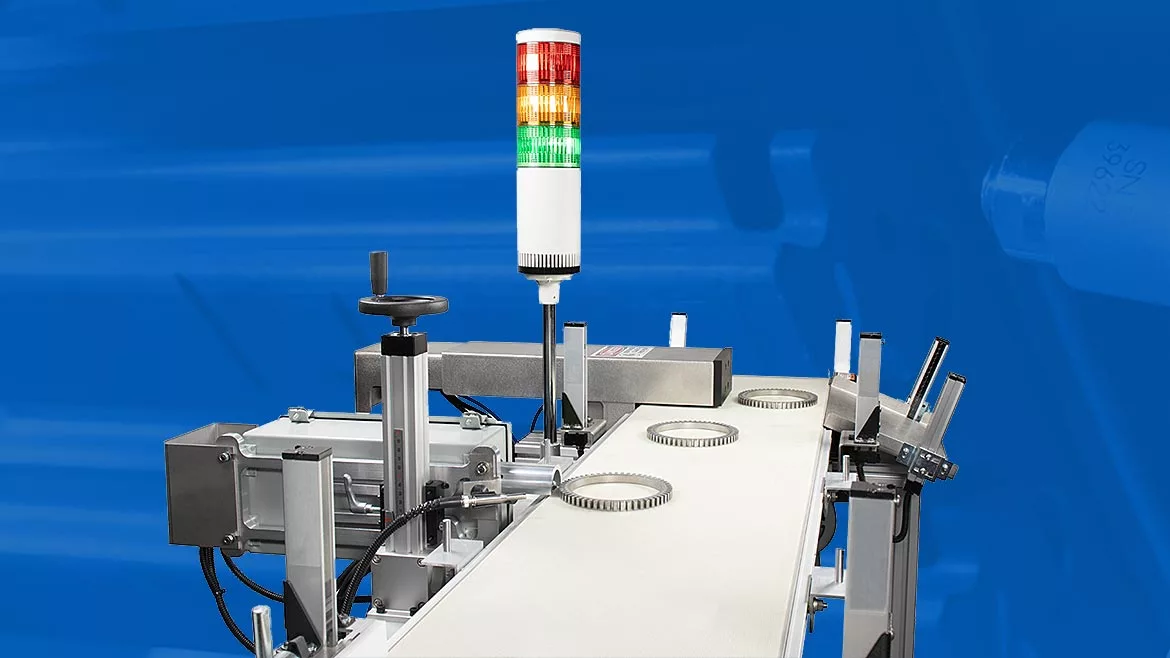
Fully Automated Resonance Testing System. Source: The Modal Shop

December 15, 2022
✕
Image in modal.

The Resonance Acoustic Method (RAM) is a long-standing nondestructive test (NDT) that measures the structural responses of a part. These responses are a set of unique and measurable natural frequency (resonance) data. This data is known as the fingerprint of the component, derived from a part’s unique material properties and geometry. RAM is an NDT technique that collects and measures all the structural characteristics of a part in a single and rapid test.

RAM is a volumetric approach and evaluates the whole part, both for internal and external structural flaws, metallurgical deviations, and consistency. Governed by ASTM E2001, the method is also known as resonant ultrasound spectroscopy (RUS). The results are objective and quantitative and provide either: 1) test results of parts against a control set of known parts to screen for processing differences and/or defects, 2) measuring a population’s statistical variation and assessing individual part positions in relation to said variation, or 3) to verify a part’s actual natural frequencies to compare to or validate a 3D model or digital twin.

Test data is collected using a mechanical impulse, typically a tap or a part drop. This impulse excites all the part’s natural resonant frequencies. Natural resonances are captured with a sensor, usually a broad range focused microphone or an accelerometer. The sensor collects the data, and relays it into a data acquisition software program. The software program then processes the data using a Fast Fourier Transform (FFT) algorithm which provides the individual resonance spectrum output. Testing, analysis, and evaluations are then performed from the acquired data.

Material property differences, geometry variation, and defects adversely affect the structural characteristics of a part. Typical items detected with RAM are cracks, chips, porosity, processing issues, variations in density, hardness, stress, grain structure differences, and machining and heat treatment errors. Traditional NDT techniques may detect flaws as well, but often only RAM can detect ALL of these in a single test, throughout the entire part (including deep sub-surface defects), in an automated and objective fashion.

A key factor with resonance testing is the possible need for process compensation. Process compensation is the measurement and analysis of the resonance frequency patterns to accommodate for known process variations that directly correlate to resonance responses. Variations in mass and temperature are known process variations that require compensation. Various statistical tools identify combinations of resonance patterns influenced by process variations. The RAM testing process uses this data in a compensation solution.

To convey a good understanding of RAM, we describe the three main ways RAM is applied in industry. Starting first with the most used application, testing parts against a control set of known parts to screen for processing differences and/or defects.

The testing of parts against a control set of known parts compares the collected resonance frequency spectrum of the part(s) under test, to the frequency spectrum of the stored resonances, known as a reference set of parts. Objects that are alike will have comparable resonant frequency spectra. Objects that are not alike will have a shift in frequency(s) when compared to the reference data. The reference data should always include known normal and acceptable variation to ensure no false positive results. Differences that fall outside acceptable criteria are an indication of a structural change e.g., defects in parts/or material properties. Frequency differences are driven by any structural change, RAM is used to inspect external, internal, and metallurgical structural flaws or deviations.

QM 1222 Quality 101 Mobile Resonance Inspection

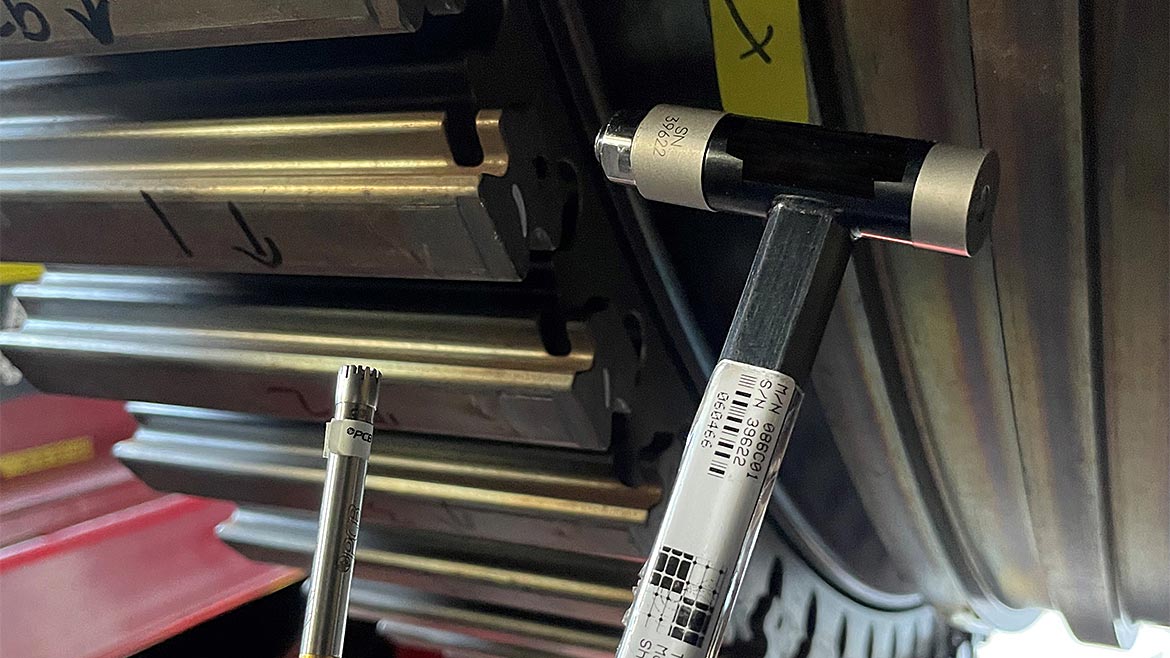
Mobile Resonance Inspection of Turbine Disk Assembly. | Source: Weaver NDT


This comparison type testing uses the following process flow:

  • Identify repeatable and consistent resonant peaks based on evaluating the reference parts
  • If needed, apply Process Compensation
  • Select a subset (normally three to five) of resonant peaks that have adequate good/bad part separation within the spectrum of peaks
  • Adjust the selected peak ranges to ensure testing reliability and to finalize the testing "criteria"
  • Test production parts against the developed criteria to evaluate the quality of the parts under test

Production part testing can begin once the above flow is complete.

Testing times are fast, usually one or two seconds. Part placement and movement are the limiting factors on faster cycle times.

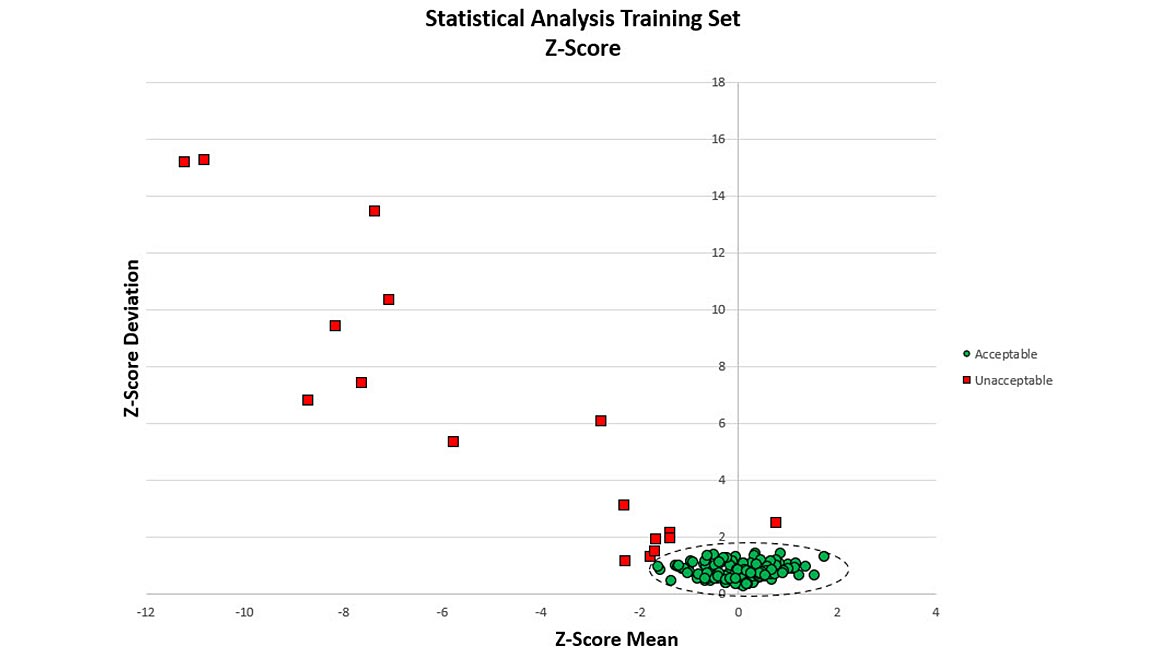
The second RAM application in industry is measuring a population’s statistical variation and assessing individual parts positions in relation to said variation.

QM 1222 Quality 101 Z Score

Z-Score Analysis of Resonance Data Results. | Source: Weaver NDT


RAM captures the raw frequency responses and during a statistical evaluation all, or a subset of the frequency responses, can be used. The most common statistical evaluation for this type of data is standard deviation Z-score for normal populations or median absolute deviation (MAD) Z-score for when the population data has skewness or if it has under thirty samples.

Z Score = (Frequency - Column Average)/Column Standard Deviation

MAD Z Score = (Frequency - Column Median)/Column Median Absolute Deviation

Both calculations are a measure of a component’s location within a given population.

This data can be particularly useful to understand the consistency of the product. This sets inspection limits without the need for known rejectable parts and provides a part’s location and its position in relation to the population.

The final RAM application is the inspection to verify a part’s actual natural frequencies to compare to or validate a 3D model or "digital twin."

All modern components use a 3D model or digital twin to either create the part tooling for casting, forging, stamping, injecting, machining, or other manufacturing processes. The "twin" is a virtual representation of a physical object for design and parameter building. These predict a product’s natural resonance frequencies and provide a means to evaluate the actual resonances collected by RAM.

For conventionally manufactured parts, modelled predicted frequencies have historically determined testing parameters for RAM in a multitude of industries. In more recent years, additive manufacturing has been utilizing the digital twin to set similar testing criteria.

In summary, RAM is a widely implemented and trusted method. It allows for process variations by adding compensation if appropriate. RAM is also extremely fast and most importantly, has a long, proven history of providing industry with accurate and efficient structural integrity inspections.

KEYWORDS: ASTM testing manufacturing metrology non destructive testing Resonant Acoustic Method

Share This Story

Looking for a reprint of this article?
From high-res PDFs to custom plaques, order your copy today!

Greg Weaver is President at Weaver NDT and an ASNT LEVEL III RT #149144. For more information, call (505) 340-5680, email
[email protected] or visit WeaverNDT.com.

Recommended Content

JOIN TODAY
to unlock your recommendations.

Already have an account? Sign In

  • 2024 Quality Rookie of the Year Justin Wise 1440x750px banner with "Quality Rookie of the Year" logo inset

    Meet the 2024 Quality Rookie of the Year: Justin Wise

    Justin Wise is an exceptional individual who has been...
    Aerospace
    By: Michelle Bangert
  • Man with umbrella and coat stands outside while it rains at night looking at a building.

    Nondestructive Testing: Is there an ethics problem?

    I was a whistleblower who exposed fraudulent activities...
    NDT
    By: Dale Norwood
  • Unraveling Deflategate: Football stadium with closeup of football on field

    Unraveling the Tom Brady Deflategate

    The Deflategate scandal erupted following the 2014 AFC...
    Measurement
    By: Greg Cenker and Henry Zumbrun
Manage My Account
  • eMagazine Subscriptions
  • Newsletters
  • Online Registration
  • Subscription Customer Service
  • Manage My Preferences

More Videos

Sponsored Content

Sponsored Content is a special paid section where industry companies provide high quality, objective, non-commercial content around topics of interest to the Quality audience. All Sponsored Content is supplied by the advertising company and any opinions expressed in this article are those of the author and not necessarily reflect the views of Quality or its parent company, BNP Media. Interested in participating in our Sponsored Content section? Contact your local rep!

close
  • Key Takeaways for Quality Leaders
    Sponsored byComplianceQuest

    Key Takeaways for Quality Leaders from the 2026 Gartner Magic Quadrant™ for QMS

  • This image shows a person seated next to a Bobcat T66 compact track loader.
    Sponsored byPolyWorks by InnovMetric

    Supercharging Digital Gauging at Bobcat North America

  • Dorsey Calibration Lab photo by Tom LaBarbera Picture this Studios
    Sponsored byDorsey Metrology International

    Ensuring Product Quality in a Competitive Manufacturing Landscape

Popular Stories

This image shows a person seated next to a Bobcat T66 compact track loader.

Supercharging Digital Gauging at Bobcat North America

Dorsey Calibration Lab photo by Tom LaBarbera Picture this Studios

Ensuring Product Quality in a Competitive Manufacturing Landscape

a professional in the aviation field performing maintenance, repair, and overhaul (MRO) work

Manufacturing Retention: Strategies for Improving Company Culture, Engagement and Skill Development

2026 Quality Professional of the Year!

Events

June 22, 2026

Automate 2026

Automate is North America's largest robotics and automation event — and the best place to take your ideas from insight to impact.
 
Our show floor features the world’s leading automation solutions, from AI and robotics to motion control, vision systems, and more. Plus, our educational conference is second to none, led by the brightest minds in automation today.
 
Ready to transform the way you work? Take the next step at Automate.
July 14, 2026

Quality Leaders Forum: Better Communication, Better Quality Data

The Quality Leaders Forum is a quarterly, editor-moderated fireside chat series hosted by Quality Magazine, featuring candid conversations with senior manufacturing and operations executives shaping enterprise-level quality.

View All Submit An Event

Products

Lean Manufacturing and Service Fundamentals, Applications, and Case Studies

Lean Manufacturing and Service Fundamentals, Applications, and Case Studies

See More Products
Quality Podcast Channel Custom Content

Related Articles

  • Resonant Acoustic Method Simplifies Metal Component Part Inspection

    See More
  • African-American male engineer using a 3D printer in the laboratory while studying a product prototype, and technology.

    Nondestructive Testing for Additive Manufacturing

    See More
  • NDT Inspection Eddy Current Testing

    Nondestructive Testing (NDT) of Commercial Aircraft Wheels

    See More

Related Products

See More Products
  • louis hannigan.jpg

    The Non-Idiot's Guide to ISO 9001:2015: Understanding and Using the Quality Management System Standard to your benefit

  • A Primer on the Taguchi Method, 2nd Edition

See More Products

Related Directories

  • American Institute of Nondestructive Testing

    The American Institute of Nondestructive Testing offers online and hands-on training in RT, UT, ET, MT, PT and VT nondestructive testing methods. Let us customize an NDT training program that fits your company's needs. We offer training online, at your facility or at our 22,000 Sq Ft facility.
  • American Society for Nondestructive Testing (ASNT)

    ASNT is the association for nondestructive testing (NDT) professionals committed to making the world a safer place. NDT professionals detect irregularities, flaws, and defects in materials, components, and structures that could compromise the safety, reliability, or functionality of an object or structure. Established in 1941, ASNT supports members with certifications, professional development, industry insights, advocacy, events, publications, and networking opportunities and is focused on fostering the growth of future generations of NDT professionals through the ASNT Foundation. Serving more than 22 000 members and certificate holders worldwide, ASNT is the largest technical society for NDT professionals. ASNT is based in Columbus, Ohio, with offices in Houston, Texas, and Chennai, India.
×

Stay in the know with Quality’s comprehensive coverage of
the manufacturing and metrology industries.

Newsletters | Website | eMagazine

JOIN TODAY!
  • RESOURCES
    • Advertise
    • Contact Us
    • Directories
    • Manufacturing Division
    • Store
    • Want More
  • SIGN UP TODAY
    • Create Account
    • eMagazine
    • Newsletters
    • Customer Service
    • Manage Preferences
  • SERVICES
    • Marketing Services
    • Market Research
    • Reprints
    • List Rental
    • Survey/Respondent Access
  • STAY CONNECTED
    • LinkedIn
    • Facebook
    • YouTube
    • X (Twitter)
  • PRIVACY
    • PRIVACY POLICY
    • TERMS & CONDITIONS
    • DO NOT SELL MY PERSONAL INFORMATION
    • PRIVACY REQUEST
    • ACCESSIBILITY

Copyright ©2026. All Rights Reserved BNP Media, Inc. and BNP Media II, LLC.

Design, CMS, Hosting & Web Development :: ePublishing