
Items Tagged with 'medical device manufacturing'
ARTICLES
dieSonne-114.webp?height=168&t=1753301600&width=275 "BrukerAlicona-FocusX (c)die Sonne")
Measurement
Seeing Beyond the Surface: Why Optical Metrology is Reshaping Quality Control
The real value lies not just in detecting deviations, but in understanding what they mean.
Read More

Test & Inspection
Building Trust: The Role of QA/QC and Specialized Inspections in High-Stakes Manufacturing
We’ve seen firsthand how targeted inspections can prevent multimillion-dollar losses and protect human lives.
Read More

Medical
Why it Pays to Prioritize Quality Amid Regulatory Uncertainty
Quality remains one of the few variables medical device manufacturers can control.
Read More

Quality Plant of the Year Winner
2025 Quality Plant of the Year: Spectrum Custom Packaging
Spectrum Stands Out
Read More


Management
Innovate for Excellence: Quality Management in Medical Device Production
Quality management and structured practices are required for the production of medical devices regulated by countries throughout the world.
Read More

Medical
Industrial Finishing of Medical Parts and Components: Advances in Technology and Methods
A key consideration for medical device OEMs is the ability to scale up additive parts production without sacrificing quality.
Read More

Quality 101
Maximizing Medical Device Quality: A Guide to Implementing Operational Excellence
By establishing precise parameters for success from the outset and implementing proven strategies, manufacturers can proactively mitigate risks, streamline operations, and foster a culture of excellence.
Read More

Test & Inspection
Just a Twist: Not Too Much, Not Too Little Turns Out Right
Here are a handful of example quality control processes that focus on the measurement of torque, with emphasis on sectors where testing is highly regulated, FDA 21CFR Part 11 being a prime consideration.
Read More
Software & Analysis
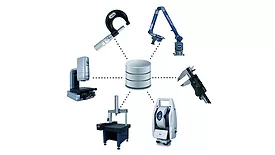
How modern software can transform the supply chain with manufacturing quality at the center
Enable a manufacturing quality-driven collaboration between suppliers and buyers to eliminate interpretation, reduce costs, risks, and expedited delivery time.
Read More