Surface Analysis Leaps into the Fourth Dimension
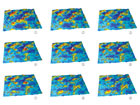
Advances in surface analysis software technology make it possible to analyze change with respect to time or another dimension. Source: Digital Surf
The analysis of surface geometry and surface texture is imperative to many industrial sectors, including aerospace, automotive, cosmetics, electronics, energy, metallurgy, paper, plastics and printing. It is required for investigating surface characteristics, specifying surface parameters for new materials, monitoring manufacturing processes and tool performance, and ensuring surface quality. It is important on all scales, including the nanoscale where the surface to bulk ratio of nano-devices is high.
In the beginning, metrologists studying surface geometry and surface texture worked with 2-D (X, Z) profile data.
Technological progress, particularly in computing, has led to a new era of working with 3-D (X, Y, Z) surface data. 3-D surface visualization and analysis makes it easier to locate anomalies and provides a better understanding of functional characteristics related to surface texture.
An innovation in surface analysis software means that it is now possible to work with 4-D (X, Y, Z, T) data and analyze the way that a 3-D surface changes with respect to time or another physical dimension. A purely static, or anatomical, 3-D surface description is complemented by a dynamic, or physiological, 4-D description, opening up new horizons for surface analysis and control in industry and research.
A range of surface metrology instruments exists, including confocal and interferometric microscopes, optical scanning profilers, tactile scanning profilers, scanning head profilers, scanning probe microscopes, structured light systems and analytical microscopes. All of these instruments use software that makes it possible to visualize and analyze 2-D profiles, 3-D surfaces and 4-D series of 3-D surfaces, depending on the application.
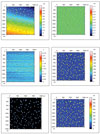
Surface analysis software can produce reports on a surface containing self-assembled nanodots. Source: ICMAB-CSIC
Traditional 2-D Profilometry
From the very beginning of surface metrology some 80 years ago, 2-D (X, Z) surfaces have been characterized by measuring and analyzing profiles between two points. This traditional method is still common in industry today and is subject to a number of international standards. For example, ISO 12085 and ISO 13565 define 2-D parameters that are dedicated to the automotive industry.Progress has been made with the introduction of advanced filtering techniques. Both the Gaussian filter and the double Gaussian filters have a well-known drawback-the sensitivity of the waviness profile to local features. ISO/TS 16610 introduces robust filters that improve the separation between waviness and roughness, reduce neighboring peak and valley errors, and make evaluations based on the bearing ratio much more reliable.
However, 2-D profilometry has major limitations because it only gives satisfactory results for isotropic surfaces-those which present identical features regardless of the direction of measurement-and most industrial surfaces are anisotropic. While the 2-D method can be applied to some anisotropic surfaces-for example, turned surfaces with representative profiles that are perpendicular to tool marks-it does not provide anything close to a general solution.
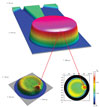
3-D profiling systems are used to characterize local defects often not detected by a simple profile and to improve understanding of functional phenomena. Source: Digital Surf
3-D Surface Measurement and Analysis
Today, 3-D profiling systems are used to measure all types of surfaces, characterizing local defects such as buckles, craters and flakes often not detected by a simple profile, and improving the understanding of functional phenomena.3-D surface analysis has come of age with the new ISO 25178 standard, the first international standard on 3-D areal surface texture. It includes height, hybrid, functional bearing ratio, functional volume, spatial and feature parameters.
One of the great challenges of surface texture analysis is predicting surface behavior during operational use. In the automotive industry, in particular, it is important to characterize surface zones involved in lubrication, wear and contact phenomena. For this application, the functional volume parameters defined in the new standard represent a significant advance over the functional indices defined in the earlier European Surfstand report.
The use of 3-D noncontact profilers, for example confocal microscopes and interferometric microscopes, is becoming almost as common as the use of traditional diamond stylus surface profilers. Noncontact sensors have the advantage of being able to measure fragile surfaces that would be damaged by a stylus, sharp surfaces that would damage a stylus, and surfaces with holes and high aspect ratios, in addition to most surfaces that could already be measured using a stylus.
However, noncontact instruments generate nonmeasured points. This means that surface analysis software must be able to handle nonmeasured points seamlessly in all applications and be able to calculate parameters on surfaces with missing data points.
Another analysis requirement is the ability to extract and analyze subsurfaces. Many surfaces are layered, such as mechanical components, microelectromechanical systems, semiconductors and textured materials. Checking a manufacturing process may require extracting a subsurface layer, for example a ring on a mechanical component or the valley of a textured surface, so that the flatness or roughness of the subsurface can be analyzed independently.
There are several methods for extracting subsurfaces. For example, nonmeasured points can be introduced above or below a threshold. In the case of a geometric surface, the surface can be partitioned into 3-D segments using a segmentation by watersheds algorithm, and then the segment or segments that make up the subsurface can be extracted for analysis.
Scanning probe microscopes (SPM) generate multiple layers of data-for example, topography, phase, current and deflection-and have special requirements. Analysis is facilitated by the ability to manipulate all data layers simultaneously, for example to zoom in on a feature in the topography layer and switch to the same feature in another layer at the same zoom level. In addition, it is useful to be able to superimpose any nontopographical layer on a 3-D image of the topography layer.
Sometimes raw SPM images are hard to read. In this case image quality must be enhanced using advanced filters including scan line correction.
Dimensions of nanofeatures, such as steps on thin films, need to be checked and grain (particle, island) size and distribution in nanomaterials must be analyzed.

A 4-D series of 3-D surfaces can show change due to time. Significant changes can be highlighted using the Karhunen-Loève Transform Source: Digital Surf
Going 4-D
4-D surface analysis opens up new horizons by making it possible to study surface change. Change in a series of 3-D (X, Y, Z) surfaces is studied with respect to a fourth dimension (T), which can be time, temperature, pressure or another physical dimension. Application of the Karhunen-Loève transform facilitates the location of surface features having varying behavior in a sample series, for example features that have exhibited the greatest change.4-D visualization tools make it possible to simulate a flight path over a surface and see the surface changing during the flight. Video of such simulations can be recorded for further analysis.
Tools for managing surfaces in a series include the alignment of surfaces with respect to registration points and the addition of a newly measured surface to an existing series. A transversal profile can be extracted from a series of surfaces in order to monitor the evolution of a single point on a surface over time or in another dimension.
Statistical analysis makes it possible to monitor variations in surface parameters over a series. It can include parameter tables such as minimum, mean and maximum value of any set of parameters over a series of surfaces, with standard deviation; control charts with upper/lower control limits for automatic calculation of variance and yield; scatter plots; and histograms.
4-D analysis is a good complement to 3-D analysis. While 3-D analysis provides a basis for predicting the behavior of functional surfaces, 4-D analysis makes it possible to monitor surface change with respect to any physical dimension that is present in an industrial or natural process.
4-D applications are virtually unlimited and include studies of wear, corrosion, erosion, self-assembly of nanostructures, minute changes in composite materials, deformation of components exposed to temperature change, development of cracks, delamination, depolymerisation, germination, dehydration, cell growth, and studies of micro- and nanocomponent dynamics. Q
Tech Tips
Quality Online
For more information on surface analysis, visit www.qualitymag.com to read these articles:Looking for a reprint of this article?
From high-res PDFs to custom plaques, order your copy today!