Measuring Uncertainty
Force testing uncertainty made easy.
Uncertainty is among the many variables that need to be considered when performing force testing. Uncertainty results from a combination of factors, including errors that may affect the outcome of tests. And, while many errors may be cumulative, as long as the variables are predictable, the test measurements should still be correct.
Without going into complex uncertainty calculations, the following article looks at common force testing situations and offers practical examples of how to clarify force testing uncertainty. A body scale, for example, indicates weight with an accuracy of ±1 pound. If a person weighs 100 pounds, then the true weight is predictable to within 99 and 101 pounds.
TECH TIPS
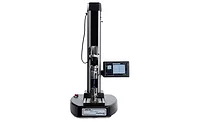
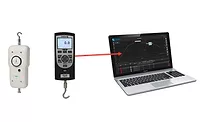
The force tester is the heart of the measurement process. It is important that while performing force testing, the user knows the force tester’s specifications.
The choice of specific adaptors to hold, grip, push, or pull a specimen needs to be factored into the equation of variables.
Make certain that you have solid procedures, processes and tools in place to minimize variations. |
The Key Areas for Uncertainty:
It is important to consider each of the components of the measurement chain to determine the impact of uncertainty on final results.
Force Tester: The force tester is the heart of the measurement process. It is important that while performing force testing, the user knows the force tester’s specifications. Those can be divided into two categories: uncertainty of measurement with a tolerance ± and certainty of measurement as an out of range condition such as operational temperature, min/max force range etc.
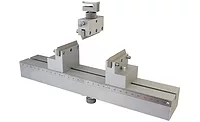
Fixtures, Couplings, Adaptors and Grips: The choice of specific adaptors to hold, grip, push, or pull a specimen needs to be factored into the equation of variables. A poor grip face choice may rip or tear a specimen, while using improper alignment techniques may adversely affect test results.
Human Element: The simple fact is humans are not as consistent or as accurate as machines, so users need to make certain that they have solid procedures, processes and tools in place to minimize variations. Since a person on a good day may have good test results and on a bad day skewed results, controls need to be put in place to prevent the operator “good day / bad day” syndromes that affect test results.
Environment: Vibration, temperature, humidity and electrostatic may also affect test results.
Sample Preparation: If sample sizes vary, then uncertainty will be part of the test results.
The Force Tester
It is important that while performing force testing, the test is within the set parameters and capabilities of the specific tester. PART 1 of the tester’s specifications has the following information to predict uncertainty:
Any specification with a (±) tolerance reflects the uncertainty of measurement. If a specimen breaks at 1,000N and uncertainty is ±10N, the user should assume that the force measured is between 990 and 1,010 N.
PART 2 of the tester’s specifications that should be considered are Pass/Fail or Go/No-Go conditions. For example, if the tester’s recommended operating temperature is between 41 and 95 F and it happens that the tester is operated outside of that specified temperature range, this would not be an issue of uncertainty but a clear Fail or No-Go condition with invalid results.
The Fixtures, Couplings, Adaptors and Grips
Misalignment and play in a fixture, adaptor, coupling or grip are among force testing’s worst enemies. Misalignment, or as it is sometimes called “side loading” or “offset / eccentric loading,” adversely affects the accuracy of the load train. The wider the angle, or non-perpendicularity, of the load train may result in a greater degree of error.
The goal is to have upper and lower adaptors centered to each other so the force train is in a straight line. A couple of degrees of offset may not affect the accuracy of a test but users should always verify offset loading errors with the force tester manufacturer.
Grips are another factor that contributes to test uncertainty. Poor grip choice can result in inaccurate testing. Grips that are too tight for a specimen may trigger premature breaks at the edge of the grip faces or, on the contrary, cause the specimen to slide in the grip. Sliding also may result from selecting the wrong grip face grit.
When testing diverse materials, users are advised to verify potential test scenarios and find the ones that are best suited to the materials and, of course, to also minimize the number of times grip faces are changed. If specimens can’t always be properly aligned, using swivels or compression balls may be the best choice.
The Human Element
The operator also is an essential part of the uncertainty chain. That is the human element. The best control to have in place to minimize uncertainties from operator performance is to have a set of parameters in place that can’t be changed by the operator. Software protection can be used to set passwords that prevent operators from accessing important machine settings and test data. Hardware protection includes having the fixtures in place that ensure specimen testing is done consistently.
When samples are not set in their grips consistently, uncertainty will result. One solution is to use pneumatic grips with aligning tabs instead of mechanical grips to assure consistent positioning of a specimen. Pneumatic grips also better control grip pressure compared with mechanical grips.
The Environment
The environment also plays a key role in the uncertainty chain. Many environmental factors can be controlled through the use of rubber dampeners (vibration), climate control (temperature/humidity) and proper grounding (electro static discharge or ESD).
Sample Preparation
The preparation of test samples in a consistent manner is crucial. Cutting, machining and hand preparation are factors to be considered for the uncertainty chain. Poor sample preparation leads to unpredictable test results. Dies and templates are among the tools used to maintain sample uniformity and to minimize variability between samples. However, if incorrectly prepared, force measurements will vary and result in greater uncertainty.
Conclusion
If various test factors can be identified ahead of time, the uncertainty factor of force test measurement can be predicted and planned for correctly. However, each element that comprises the uncertainty chain needs to be checked, including the force tester; fixtures, couplings adaptors and grips; the human element, the environment and sample preparation. Hopefully, this simple how-to guide helps puts those who use force testers on the road to success with more reliable and predictable test results.
Looking for a reprint of this article?
From high-res PDFs to custom plaques, order your copy today!