Quality Magazine logo
search
cart
facebook twitter linkedin youtube
  • Sign In
  • Create Account
  • Sign Out
  • My Account
Quality Magazine logo
  • NEWS
  • PRODUCTS
    • FEATURED PRODUCTS
    • SUBMIT YOUR PRODUCT
  • CHANNELS
    • AUTOMATION
    • MANAGEMENT
    • MEASUREMENT
    • NDT
    • QUALITY 101
    • SOFTWARE
    • TEST & INSPECTION
    • VISION & SENSORS
  • MARKETS
    • AEROSPACE
    • AUTOMOTIVE
    • ENERGY
    • GREEN MANUFACTURING
    • MEDICAL
  • MEDIA
    • A WORD ON QUALITY PUZZLE
    • EBOOK
    • PODCASTS
    • VIDEOS
    • WEBINARS
  • EVENTS
    • EVENT CALENDAR
    • IMTS
  • DIRECTORIES
    • BUYERS GUIDE >
      • Supplier Insights
    • NDT SOURCEBOOK
    • VISION & SENSORS
    • TAKE A TOUR
  • INFOCENTERS
    • Digital Quality Management Systems
    • NEXT GENERATION SPC & QUALITY ANALYTICS
  • AWARDS
    • ROOKIE OF THE YEAR
    • PLANT OF THE YEAR
    • PROFESSIONAL OF THE YEAR
  • MORE
    • Expert Columns
    • NEWSLETTERS
    • QUALITY STORE
    • INDUSTRY LINKS
    • SPONSOR INSIGHTS
  • EMAG
    • eMAGAZINE
    • ARCHIVES
    • CONTACT
    • ADVERTISE
  • SIGN UP!
NDT

NDT | Back 2 Basics

Fracture Testing in Quality Control

With advances in standardization and analysis software, it can be more reliable and user-friendly than ever.
By Peter Bailey
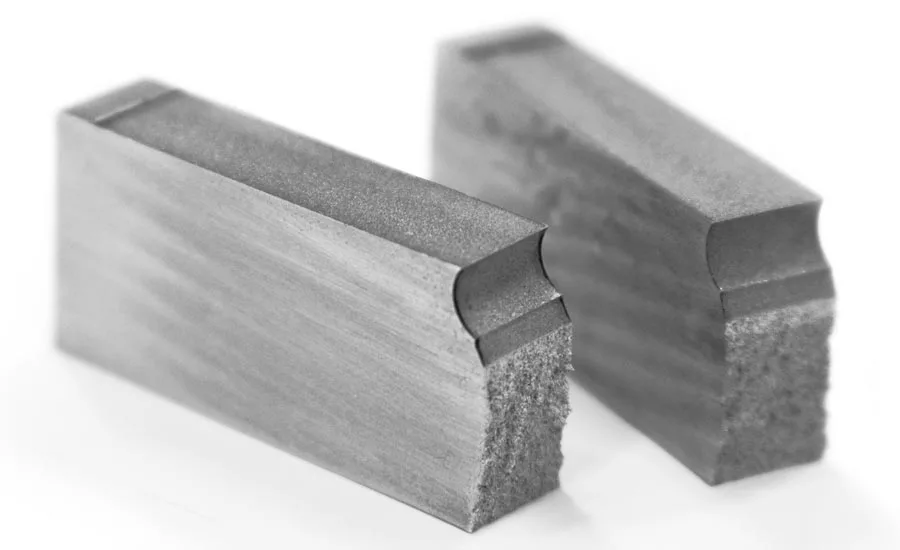
QTY 1121 NDT Back 2 Basics: Fractured Bend Specimen

Image source: Instron

November 8, 2021

Fracture toughness tests are technically demanding but form a crucial part of quality assurance for certain high value products such as aerospace grade aluminum alloys. This article will discuss some of the reasons behind that and how standardization and software tools have evolved to make it more achievable and reliable.
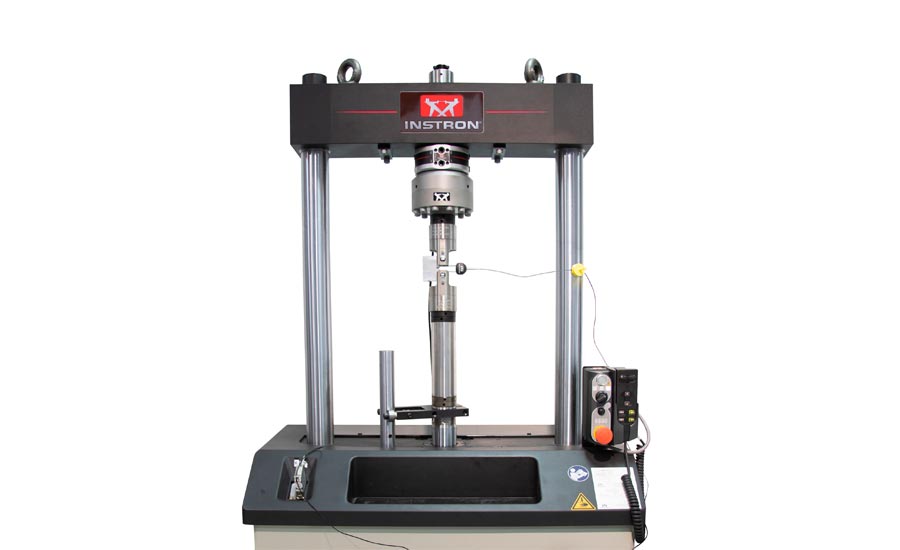

QTY 1121 NDT Back 2 Basics: 8801 Set Up for Fracture with CT Specimen

Set Up for Fracture with CT Specimen Image source: Instron


WHY IS IT DONE?

Aerospace design engineers prefer materials with high strength-to-weight ratios, in which mechanical behavior is very stiff and highly stable almost all the way to failure strength. Your high school definition of a metal includes “ductile behavior,” but many high-strength alloys can actually fail in a very brittle manner if a crack is already present. So, in addition to large safety margins, a key part of the philosophy is defect tolerance – i.e. a minor crack must not be able to grow dangerously before being identified by routine inspections.

Fatigue performance governs how these defects can develop, while the fracture toughness of the material determines how their size will impact the overall strength of a component. Basic properties, such as tensile strength, are far less sensitive to material microstructure and processing, so cannot give adequate quality assurance by themselves.

A fracture toughness measurement provides high sensitivity to all contributing factors, but importantly a single output parameter giving a clear quality metric.  For most common structural materials in aerospace, the parameter KIc (“K one C” critical stress intensity) is typically used and batch testing of aluminum and titanium products has been well-established for some decades. Usually, the ASTM E399 standard method for linear elastic fracture toughness is applied, sometimes in conjunction with ASTM B647 for a specific protocol on aluminum product testing.


WHAT IS THE TEST?

The main test is breaking a notched specimen in tension – seemingly straightforward, but this is not equivalent to impact toughness tests (Charpy or Izod) routinely carried out using a basic machined specimen. In order to get an accurate value, the notch must be “sharp” right down to the atomistic level! This is achieved by fatigue pre-cracking, that is to say applying a cyclic force for many thousands of cycles, which will grow a crack into the specimen, from the tip of the machined notch. Data from this process must also be recorded as it will be used later on in the analysis.

After the test, the calculation of a fracture toughness value (KIc is typically given in MPa√m or ksi√in) requires inputs of a physical measurement of the crack front before fracture, and determination of key characteristics on the force vs. extension plot. An equally significant part of the post-test data processing is to perform a number of calculations to confirm the validity of the measurement.
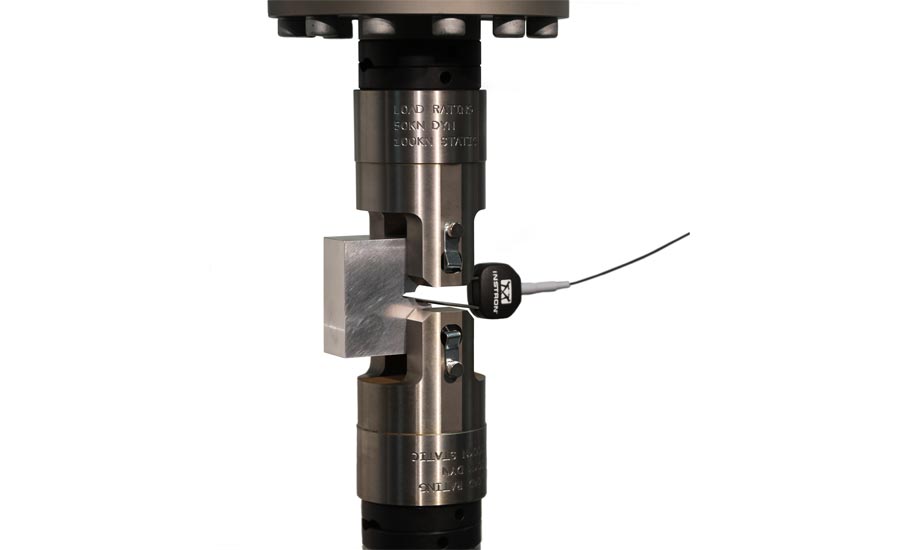

QTY 1121 NDT Back 2 Basics: Aluminium CT Fracture Specimen

Aluminum CT Fracture Specimen Image source: Instron


INTERNATIONAL TEST STANDARDS

Standardization exists with the purpose of ensuring accurate, repeatable and reproducible results, fracture toughness goes beyond the common expectations of rigorous calibration and basic “hygiene factors.” ASTM E399 uses a stringent set of checks (17 different criteria in the 2020 edition) which must be met to qualify the test result as “valid.” These determinations will seem quite convoluted and obscure to many users – e.g., relationships between tensile mechanical properties and specimen dimensions; restrictions on how to grow the fatigue pre-crack – but their job is to ensure a fair test, due to the sensitivity to material microstructure and stress state.

As quality operations seek to be ever leaner, that brings greater need for effectively interchangeable use of different test laboratories – i.e., reproducibility as distinct from repeatability by the same lab – reducing the need for each organization to perform its own verification tests. The standard requirements may sound watertight already, but their core methods depended on graphical analysis – originally using pencil and ruler with the plot from a chart recorder. Unfortunately, that means that two analysts (human or computer) can still get a different final result from the same raw data. The standardization community is increasingly aware of this vulnerability, so test standards are gradually becoming more prescriptive, introducing quality metrics for data and sometimes formalized algorithms.
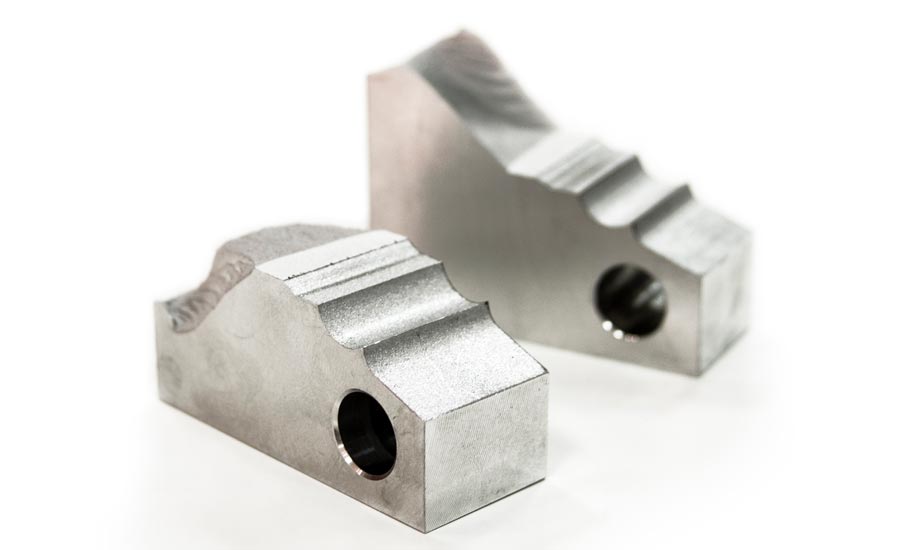

QTY 1121 NDT Back 2 Basics: Fractured Aluminium CT Specimen

Fractured Aluminum CT Specimen Image source: Instron
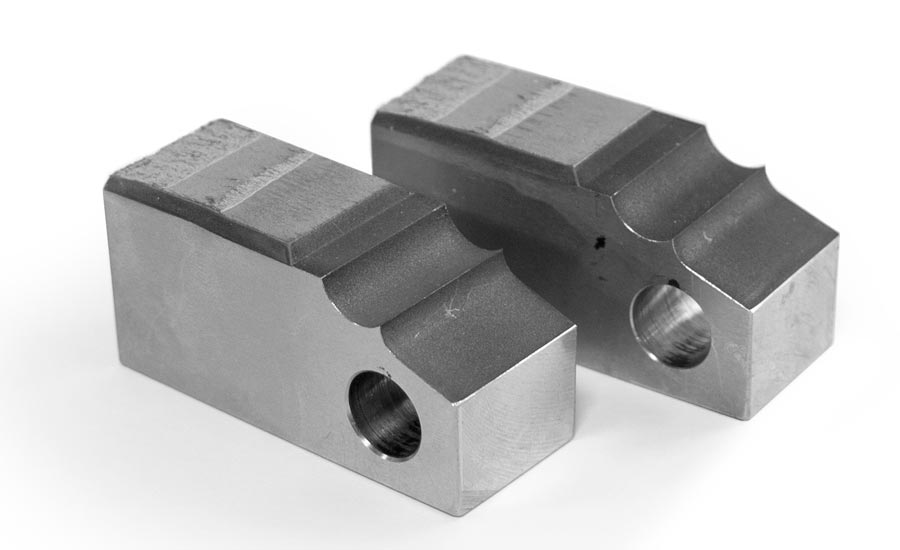

QTY 1121 NDT Back 2 Basics: Fractured Steel CT Specimen

Fractured Steel CT Specimen Image source: Instron


PROPRIETARY SOFTWARE

Modern test and analysis software can streamline the whole process considerably, but also make it more robust and secure for traceability and audit-worthiness. Historically, materials testing software was generally aimed at expert users, who wanted access to all aspects of test control and data acquisition, and then took the raw data away. In modern times, that simply does not meet the needs of a quality control environment with high value data. The latest fracture mechanics software packages provide options for secure, predetermined methods, with clear, guided workflows for less expert operators.

Obviously, a consistent analysis setup will improve repeatability, but the latest software should also be implementing standardized algorithms such as ASTM E3076, which is recommended by E399. They should also make light work of determining all the validity checks and producing full reports as recommended by the standard. As most quality control laboratories today utilize some form of data management system, it is also increasingly possible to automate the transfer of data, for example importing specimen pedigree information and dimensional measurements from machining and exporting results and equipment traceability data back to the database.

Overall, this critical area of advanced quality control is here to stay but advances in standardization and analysis software mean that it can be more reliable and user-friendly than ever.

KEYWORDS: fracture testing manufacturing metrology

Share This Story

Looking for a reprint of this article?
From high-res PDFs to custom plaques, order your copy today!

Dr. Peter Bailey is an applications specialist and principal scientist at Instron Dynamic Systems. An experimental materials scientist focusing on advanced mechanical testing and characterization techniques, he works on all types of material analysis, including high temperature metals. His background includes considerable experience in polymers and composites research and a variety of production and quality control methods for thermoplastics and thermosets. For more information, call +44 7880 187716 or email [email protected].

Recommended Content

JOIN TODAY
to unlock your recommendations.

Already have an account? Sign In

  • 2024 Quality Rookie of the Year Justin Wise 1440x750px banner with "Quality Rookie of the Year" logo inset

    Meet the 2024 Quality Rookie of the Year: Justin Wise

    Justin Wise is an exceptional individual who has been...
    Aerospace
    By: Michelle Bangert
  • Man with umbrella and coat stands outside while it rains at night looking at a building.

    Nondestructive Testing: Is there an ethics problem?

    I was a whistleblower who exposed fraudulent activities...
    NDT
    By: Dale Norwood
  • Unraveling Deflategate: Football stadium with closeup of football on field

    Unraveling the Tom Brady Deflategate

    The Deflategate scandal erupted following the 2014 AFC...
    Measurement
    By: Greg Cenker and Henry Zumbrun
Manage My Account
  • eMagazine Subscriptions
  • Newsletters
  • Online Registration
  • Subscription Customer Service
  • Manage My Preferences

More Videos

Sponsored Content

Sponsored Content is a special paid section where industry companies provide high quality, objective, non-commercial content around topics of interest to the Quality audience. All Sponsored Content is supplied by the advertising company and any opinions expressed in this article are those of the author and not necessarily reflect the views of Quality or its parent company, BNP Media. Interested in participating in our Sponsored Content section? Contact your local rep!

close
  • Key Takeaways for Quality Leaders
    Sponsored byComplianceQuest

    Key Takeaways for Quality Leaders from the 2026 Gartner Magic Quadrant™ for QMS

  • This image shows a person seated next to a Bobcat T66 compact track loader.
    Sponsored byPolyWorks by InnovMetric

    Supercharging Digital Gauging at Bobcat North America

  • Dorsey Calibration Lab photo by Tom LaBarbera Picture this Studios
    Sponsored byDorsey Metrology International

    Ensuring Product Quality in a Competitive Manufacturing Landscape

Popular Stories

This image shows a person seated next to a Bobcat T66 compact track loader.

Supercharging Digital Gauging at Bobcat North America

a professional in the aviation field performing maintenance, repair, and overhaul (MRO) work

Manufacturing Retention: Strategies for Improving Company Culture, Engagement and Skill Development

Dorsey Calibration Lab photo by Tom LaBarbera Picture this Studios

Ensuring Product Quality in a Competitive Manufacturing Landscape

2026 Quality Professional of the Year!

Events

June 22, 2026

Automate 2026

Automate is North America's largest robotics and automation event — and the best place to take your ideas from insight to impact.
 
Our show floor features the world’s leading automation solutions, from AI and robotics to motion control, vision systems, and more. Plus, our educational conference is second to none, led by the brightest minds in automation today.
 
Ready to transform the way you work? Take the next step at Automate.
July 14, 2026

Quality Leaders Forum: Better Communication, Better Quality Data

The Quality Leaders Forum is a quarterly, editor-moderated fireside chat series hosted by Quality Magazine, featuring candid conversations with senior manufacturing and operations executives shaping enterprise-level quality.

View All Submit An Event

Products

Lean Manufacturing and Service Fundamentals, Applications, and Case Studies

Lean Manufacturing and Service Fundamentals, Applications, and Case Studies

See More Products
Quality Podcast Channel Custom Content

Related Articles

  • Fracture Mechanics Testing in Aerospace

    See More
  • Robotics LBR iisy cobot FMO Surface

    Advanced Automation Delivers the Ultimate in Quality Control

    See More
  • QM 0523 Test Inspection HEXAGON MI PRESTO 6

    Quality Automation: The Role Robotics and Sensors Play in Quality Control and Production

    See More
×

Stay in the know with Quality’s comprehensive coverage of
the manufacturing and metrology industries.

Newsletters | Website | eMagazine

JOIN TODAY!
  • RESOURCES
    • Advertise
    • Contact Us
    • Directories
    • Manufacturing Division
    • Store
    • Want More
  • SIGN UP TODAY
    • Create Account
    • eMagazine
    • Newsletters
    • Customer Service
    • Manage Preferences
  • SERVICES
    • Marketing Services
    • Market Research
    • Reprints
    • List Rental
    • Survey/Respondent Access
  • STAY CONNECTED
    • LinkedIn
    • Facebook
    • YouTube
    • X (Twitter)
  • PRIVACY
    • PRIVACY POLICY
    • TERMS & CONDITIONS
    • DO NOT SELL MY PERSONAL INFORMATION
    • PRIVACY REQUEST
    • ACCESSIBILITY

Copyright ©2026. All Rights Reserved BNP Media, Inc. and BNP Media II, LLC.

Design, CMS, Hosting & Web Development :: ePublishing