Quality Magazine logo
search
cart
facebook twitter linkedin youtube
  • Sign In
  • Create Account
  • Sign Out
  • My Account
Quality Magazine logo
  • NEWS
  • PRODUCTS
    • FEATURED PRODUCTS
    • SUBMIT YOUR PRODUCT
  • CHANNELS
    • AUTOMATION
    • MANAGEMENT
    • MEASUREMENT
    • NDT
    • QUALITY 101
    • SOFTWARE
    • TEST & INSPECTION
    • VISION & SENSORS
  • MARKETS
    • AEROSPACE
    • AUTOMOTIVE
    • ENERGY
    • GREEN MANUFACTURING
    • MEDICAL
  • MEDIA
    • A WORD ON QUALITY PUZZLE
    • EBOOKS
    • PODCASTS
    • VIDEOS
    • WEBINARS
  • EVENTS
    • EVENT CALENDAR
    • IMTS
  • DIRECTORIES
    • BUYERS GUIDE >
      • Supplier Insights
    • NDT SOURCEBOOK
    • VISION & SENSORS
    • TAKE A TOUR
  • INFOCENTERS
    • Digital Quality Management Systems
    • NEXT GENERATION SPC & QUALITY ANALYTICS
  • AWARDS
    • ROOKIE OF THE YEAR
    • PLANT OF THE YEAR
    • PROFESSIONAL OF THE YEAR
  • MORE
    • Expert Columns
    • NEWSLETTERS
    • QUALITY STORE
    • INDUSTRY LINKS
    • SPONSOR INSIGHTS
  • EMAG
    • eMAGAZINE
    • ARCHIVES
    • CONTACT
    • ADVERTISE
  • SIGN UP!
Management

ISO 9001 Standards

Why ISO 9001 Still Matters

There’s no one single right way to apply the standard – as long as there is conformance to requirements.

By Denise Robitaille
QM 1122 FT6 Mangement ISO 9001
November 17, 2022

Do you know that if you Google ISO 9001:2015 you get over 76 million hits? If you just type in ISO 9001 (without the date) you get about 209 million hits. That’s not too shabby for a document that’s only 29 pages long and has been around for about 35 years.

Why do organizations even today continue to embark on an ISO 9001 implementation project, joining the 1.2 million others around the globe who are certified to this extraordinary quality management system (QMS) model? What’s the staying power? What’s the value – the appeal? Why does the ISO 9001 certificate still resonate with companies as the qualifying benchmark for managing their supply chains?

The short answer: it works. It delivers on its commitment. It establishes a foundation that is solid yet pliable. It is both adequately generic to be useful across a plethora of industries and service sectors; and, specific enough to provide global homogeneity of some key concepts that are ubiquitous around the world. And, it has ensured its continued relevance over the years through multi-faceted monitoring and timely revisions.

A short overview of ISO 9001 yields its hallmarks for success. The document addresses concepts and processes that pervade all organizations. They include such topics as:

  • Definition of operations
  • Identification of processes
  • Provisions for training and/or qualification of personnel
  • Ability to understand and fulfill customer requirements
  • Controlled design and development activities
  • Maintenance of an adequate infrastructure
  • Supply chain management
  • Performance monitoring and metrics
  • Established practices for dealing with problems
  • Structured and protected documentation


Big or small, single storefront or multi-site operation, simple or complex – these concepts are somehow manifest. The standard accommodates both the companies who fabricate only one product in modest quantities and those who sell millions of skews manufactured by dozens of subcontractors. It is also relevant to service organizations whose services are their “products.” There’s no one single right way to apply the standard – as long as there is conformance to requirements.

The overused mantra “Do what you say and say what you do” may seem hackneyed, but it persists as a core trait of this international standard.  

These activities reflect bits and pieces of the whole that have to be woven into the fabric of an effectively implemented QMS. It merits pointing out that if it isn’t effective or doesn’t create value for the organization, it’s worthless. Monitoring, therefore, emerges as an important component for getting from where we are to where we need to be.

The manner in which organizations monitor the effectiveness of their QMS may vary. If a company says, “Our quality objectives are on-time-delivery and zero rejects,” then those are their performance metrics. A larger corporation may have dashboards that monitor dozens of activities, product attributes, environmental controls, labor standards, customer calls, quotation turnaround rate and their carbon footprint. And that’s okay, too. In each instance, the monitoring methods and resulting analysis have to be appropriate, consistent and reflect reliable and usable data.

Effectiveness can be achieved by adopting the concepts that came to prominence in the current revision, ISO 9001:2015. What follows is a brief summation of some of these concepts.


Risk-based thinking

Language relating to risk is peppered throughout the standard. Risk is dealt with in terms of the potentiality for something to go wrong. Interestingly, it’s paired with opportunity for improvement. In both instances, there is the potential for unexpected consequences and the need to take action to either mitigate a risk or seize an opportunity. The impetus to anticipate a risk or take action is directly linked to the next three concepts – which are themselves interrelated.


Understanding internal and external issues

These are the factors that affect your ability to sustain your organization and to serve your customers. They may be fairly common and ongoing or unique to your industry. They include factors like staffing shortages, equipment obsolescence, new technology or competitive designs. They may be very specific or short-lived like the scarcity of a precious raw material, a drought or the retirement of several key technicians. Or, of course, a pandemic. Failure to address the issues will result in challenges in your ability to get product to market – to, in the words of ISO 9001:2015, “…consistently provide products and services that meet customer and applicable statutory and regulatory requirements.”


Interested parties

Interested parties are also called stakeholders. Internal and external issues don’t exist without interested parties. Think of them as the who to the preceding what (an issue). Interested parties come in three flavors: those who affect the organization, those affected by your organization and those who perceive themselves to be affected by your organization. Examples, in no particular order, include:

  • competitors who slash their prices
  • customers who revise their requirements to address climate change initiatives
  • suppliers who have been negatively impacted by international logistical problems
  • regulators who revise product specifications or material restrictions
  • financial institutions who revamp their lending policies
  • temp employment agencies that discontinue pre-qualification protocols
  • baby boomers retiring
  • local zoning board changing by-laws where you were intending to build a new facility
  • technical school that provides interns going out of business


Through consistency and control, organizations get a better opportunity to identify relevant factors from the ultra-critical to the humdrum. The same applies to interested parties. Through vigilance it creates the potential to mitigate instances in which interested parties inadvertently wreak havoc on your company. Bringing consistency to these monitoring activities is the big benefit to get out of actualizing the requirements related to both internal and external issues, and interested parties. It enables the organization to better manage the output of this monitoring: change.


Change control

Change in and of itself isn’t positive or negative. It can engender either a risk or an opportunity depending on the effect that it has on planned results or intended outputs. The degree to which the output of the change can be planned, with appropriate consideration of internal and external issues, will determine whether the change results in an unforeseen problem or in an actualized opportunity. The standard clearly directs the organization to consider the purpose of the change, potential consequences, availability of resources and the authority and responsibility for the change. Although there is one clause relating specifically to planning changes to the QMS, the concept of change is not relegated to that single clause of the standard, but permeates multiple sections. ISO 9001 comes pretty close to giving companies a blueprint for handling change: decide what’s to be done, determine who’s in charge, delegate authority, provide resources, execute the plan and then check the results – all the while watching for internal and external issues that could mess with your plan or interested parties who might be affected by what you do.

So, as processes change, product goes out the door, there are turnovers in staff and the supply chain shrinks or grows, the perpetual cycle of monitoring issues, processes and interested parties continues.

Putting all of this together, it’s clear that a well-managed ISO 9001 system isn’t just a neat idea. It’s a sound business decision. The standard that was launched in 1987 continues to be an exquisitely elegant but uncomplicated model for achieving the success of your organization while ensuring customer satisfaction.

KEYWORDS: ISO 9001 ISO 9001:2015 quality management software quality management system (QMS)

Share This Story

Looking for a reprint of this article?
From high-res PDFs to custom plaques, order your copy today!

Denise Robitaille is the principal of Robitaille Associates. She has participated internationally in standards development for over 20 years. Denise Robitaille has authored over a dozen books on a variety of quality topic including: ISO 9001:2015 Handbook for Small and Medium-Sized Businesses. She is an internationally recognized speaker and trainer.

Denise has participated internationally in standards development for over 20 years and has served in several leadership roles, including her current position as chair of TC176/SC1 the committee responsible for the development of ISO 9000, the guiding document on quality fundamentals and terminology which is the foundation for ISO 9001. She previously chaired the committee responsible for revising the ISO 19011 guidance standard on auditing quality management systems. She is a Fellow of the American Society for Quality and a certified lead assessor.

She has facilitated the implementation of ISO 9001 for multiple organizations for over 25 years.

Denise can be reached at [email protected].

Recommended Content

JOIN TODAY
to unlock your recommendations.

Already have an account? Sign In

  • 2024 Quality Rookie of the Year Justin Wise 1440x750px banner with "Quality Rookie of the Year" logo inset

    Meet the 2024 Quality Rookie of the Year: Justin Wise

    Justin Wise is an exceptional individual who has been...
    Aerospace
    By: Michelle Bangert
  • Man with umbrella and coat stands outside while it rains at night looking at a building.

    Nondestructive Testing: Is there an ethics problem?

    I was a whistleblower who exposed fraudulent activities...
    NDT
    By: Dale Norwood
  • Unraveling Deflategate: Football stadium with closeup of football on field

    Unraveling the Tom Brady Deflategate

    The Deflategate scandal erupted following the 2014 AFC...
    Measurement
    By: Greg Cenker and Henry Zumbrun
Manage My Account
  • eMagazine Subscriptions
  • Newsletters
  • Online Registration
  • Subscription Customer Service
  • Manage My Preferences

More Videos

Sponsored Content

Sponsored Content is a special paid section where industry companies provide high quality, objective, non-commercial content around topics of interest to the Quality audience. All Sponsored Content is supplied by the advertising company and any opinions expressed in this article are those of the author and not necessarily reflect the views of Quality or its parent company, BNP Media. Interested in participating in our Sponsored Content section? Contact your local rep!

close
  • Key Takeaways for Quality Leaders
    Sponsored byComplianceQuest

    Key Takeaways for Quality Leaders from the 2026 Gartner Magic Quadrant™ for QMS

  • This image shows a person seated next to a Bobcat T66 compact track loader.
    Sponsored byPolyWorks by InnovMetric

    Supercharging Digital Gauging at Bobcat North America

  • Dorsey Calibration Lab photo by Tom LaBarbera Picture this Studios
    Sponsored byDorsey Metrology International

    Ensuring Product Quality in a Competitive Manufacturing Landscape

Popular Stories

iStock-1352825159-jpg.jpg

U.S. Should Substantially Boost Support for Manufacturing USA Program, Issue National Industrial Manufacturing Strategy, Says New Report

a factory floor during what appears to be a training session or a daily briefing

The Root Cause of Defects We Rarely Name or Address

Dorsey Calibration Lab photo by Tom LaBarbera Picture this Studios

Ensuring Product Quality in a Competitive Manufacturing Landscape

2026 Quality Professional of the Year!

Events

June 22, 2026

Automate 2026

Automate is North America's largest robotics and automation event — and the best place to take your ideas from insight to impact.
 
Our show floor features the world’s leading automation solutions, from AI and robotics to motion control, vision systems, and more. Plus, our educational conference is second to none, led by the brightest minds in automation today.
 
Ready to transform the way you work? Take the next step at Automate.
July 14, 2026

Quality Leaders Forum: Better Communication, Better Quality Data

The Quality Leaders Forum is a quarterly, editor-moderated fireside chat series hosted by Quality Magazine, featuring candid conversations with senior manufacturing and operations executives shaping enterprise-level quality.

View All Submit An Event

Products

Lean Manufacturing and Service Fundamentals, Applications, and Case Studies

Lean Manufacturing and Service Fundamentals, Applications, and Case Studies

See More Products
Rookie of the Year Custom Content

Related Articles

  • QM 0823 Management Certification

    The Value of a Certified Quality Management System

    See More
  • QUALITY MEASUREMENT: Why Air Gaging Still Matters

    See More
  • This image shows two engineers in high-visibility safety vests and hard hats inspecting industrial machinery.

    Why Process Variation Control Matters for ISO 9001 and Quality

    See More

Related Products

See More Products
  • H1517.jpg

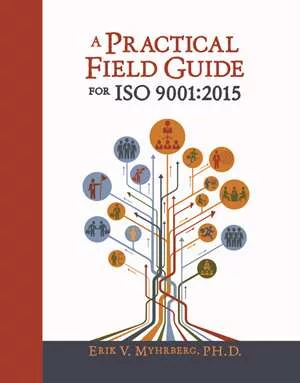
    A Practical Field Guide For ISO 9001:2015

  • 118877.jpg

    How to Audit ISO 9001 2015 A Handbook for Auditors

  • 118122.jpg

    ISO 9001:2015 Internal Audits Made Easy, Fourth Edition

See More Products

Events

View AllSubmit An Event
  • January 15, 2026

    Navigating QMSR, ISO 9001 Updates, and AI Integration

    On Demand This session guides you through preparing your organization for these changes, incorporating AI-driven solutions to ensure your quality management system remains future-ready and resilient.
View AllSubmit An Event

Related Directories

  • isoTracker Solutions Ltd.

    Popular cloud-based QMS software with a global customer base. Ideal for small to medium-sized businesses, with no set-up cost and proactive support. Designed for easy compliance with ISO 9001, ISO 14001, ISO 17025, ISO 13485, ISO 45001, ISO 22000 and other QM standards. Pay only for the features you need and add to them as your business grows.
×

Stay in the know with Quality’s comprehensive coverage of
the manufacturing and metrology industries.

Newsletters | Website | eMagazine

JOIN TODAY!
  • RESOURCES
    • Advertise
    • Contact Us
    • Directories
    • Manufacturing Division
    • Store
    • Want More
  • SIGN UP TODAY
    • Create Account
    • eMagazine
    • Newsletters
    • Customer Service
    • Manage Preferences
  • SERVICES
    • Marketing Services
    • Market Research
    • Reprints
    • List Rental
    • Survey/Respondent Access
  • STAY CONNECTED
    • LinkedIn
    • Facebook
    • YouTube
    • X (Twitter)
  • PRIVACY
    • PRIVACY POLICY
    • TERMS & CONDITIONS
    • DO NOT SELL MY PERSONAL INFORMATION
    • PRIVACY REQUEST
    • ACCESSIBILITY

Copyright ©2026. All Rights Reserved BNP Media, Inc. and BNP Media II, LLC.

Design, CMS, Hosting & Web Development :: ePublishing