The Manufacturing Leadership Council (MLC), the digital transformation arm of the National Association of Manufacturers, has announced the election of six leading figures from industry and academia to the MLC’s Board of Governors.
Digital twin technology helps organizations to use real-time data, mockups, algorithms, and AI to create a virtual depiction of a physical object, process, or service.
May 9, 2022
Experts agree that, among other tools, digital twins are emerging as stars of smart factories. These are 3D duplicates of parts, products, and buildings.
Competing on product quality has never been more urgent as rising raw material and component costs continue to squeeze manufacturers’ margins. At the same time, unpredictable supply chains make it increasingly difficult to maintain consistent product quality and cost visibility.
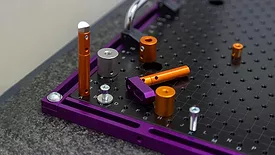
Proper fixturing addresses several key parts of quality: It ensures that inspected parts remain in a repeatable and reproducible orientation on a measuring device.
Manufacturers use predictive maintenance software to help tie the probability of equipment breakdowns, and they can use that knowledge to schedule machine preventive maintenance and manage production.
May 6, 2022
Machine downtime can be expensive. It eats up profits, repair costs, and time that could otherwise be devoted to labor. Organizations can avoid this by proactively observing the condition and performance of their equipment, enabling them to predict and prevent machine failures.
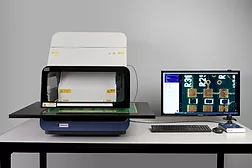
By increasing the frequency of inspections and decreasing the time of inspection throughout the production process, inspecting in or near the production line allows for verification of 100% of components.
May 3, 2022
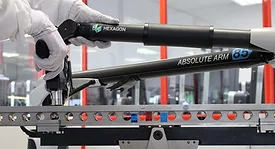
Today’s manufactured components are more multifaceted than ever, requiring more parts, additional updates to those parts and ever tighter tolerances.
America Makes and the American National Standards Institute (ANSI) announced the availability of a Gaps Progress Report tracking efforts by standards developing organizations (SDOs) and others to address the gaps identified in the Standardization Roadmap for Additive Manufacturing (version 2.0, June 2018), published by the America Makes and ANSI Additive Manufacturing Standardization Collaborative (AMSC).