The latest Rules 6th Edition changes represent the most significant enhancement to the IATF certification scheme in nearly a decade. As the industry prepares for the next revision of the IATF 16949 standard, the upgrades appear to be laying a foundation for future requirements in digitalization and sustainability.
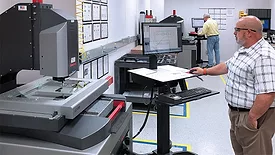
Component Engineers Inc. (CEI) in Wallingford, CT prioritizes quality control by consistently meeting or exceeding customer expectations from quoting to delivery. CEI continuously enhances its processes to adapt to changing requirements and tackles complex manufacturing challenges, solidifying quality as a core business principle.
As global awareness of environmental issues has risen, manufacturers are increasingly under pressure to reduce their environmental impact while maintaining profitability.
The shift from environmental skepticism to optimism is driven by market demands for profitable, sustainable practices. Addressing environmental challenges is now essential for industries, impacting ecosystems, health, and corporate strategies.
The American Association for Laboratory Accreditation (A2LA), a global accreditation body, announced the opening of a second office in Boulder, Colorado.
An exciting new application has emerged for the interface with great potential: running the unmodified CXP protocol over fiber optic lines instead of coaxial cable. Fiber’s high bandwidth, EMI immunity, durability, safety, and compact size make it an ideal addition to CoaXPress.
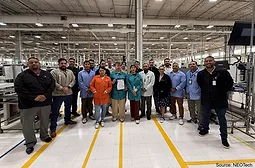
NEOTech, a premier provider of electronic manufacturing services (EMS), integrated design engineering, and advanced supply chain solutions for the aerospace and defense, medical device, and high-tech industrial markets, announced that its Agave 1 manufacturing facility in Juarez, Mexico, has officially received AS9100 certification.
This article explains how a Quality leader can establish external requirements by defining products in a specific region, using medical devices as an example based on FDA regulation Section 201(h) and the 513g Request process. Following this prevents wasting time, funds, and resources on incorrect regulatory assumptions.
Quality management — Requirements for measurement management systemsbetter known as ISO10012: 202? is continuing its journey through the process as the latest revision of the standard.
Proper calibration is essential to ensure these sensors deliver trustworthy data, but data centers face significant challenges when calibrating these devices.
As data centers continue to evolve into vital infrastructure, maintaining environmental compliance and operational reliability are increasingly important.