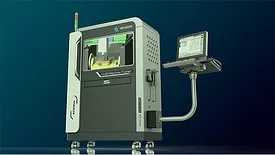
Accurate assessments of military and defense assets, especially ballistics, are crucial for battlefield success. Advanced CT X-ray nondestructive testing (NDT) and robotic systems integration have revolutionized inspections, enhancing quality control and safety.
The manufacturing industry relies on precision for safety and performance. Shaft measurement instruments are crucial for ensuring the functionality of mechanical systems.
George Washington and Thomas Jefferson advocated for weights and measures in the US, and a recent Saturday Night Live episode highlighted the confusion around this topic. This industry impacts everyone today.
Earlier this year, AIAG released updated APQP and Control Plan reference guides, available at www.aiag.org. This release includes the stand-alone control plan document for completing control plans.
Manufacturing is not slowing down. Lead times are tightening, complexity is increasing, and quality control departments need to be able to keep pace with it.
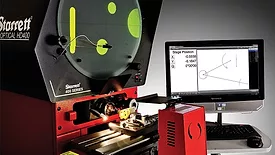
Metrology is the science of inspection. It includes various measurement tools such as calipers, gauges, micrometers, and vision systems, which are often used for quality control in nondestructive testing (NDT).
The manufacturing industry has a significant labor shortage. We need to attract new talent and upskill our existing workforce, especially by embracing candidates without degrees and leveraging technology for training at scale.
There's increasing doubt about the necessity of a four-year degree due to rising college costs, creating more opportunities for trade professionals with advancing technology and higher pay.
Michelle Bangert interviewed Claire Hopkins, a document control specialist and author of a recent "Speaking of Quality" column for Quality magazine. Claire chairs the American Society for Quality's Next Gen Global Committee, comprising individuals under 40 or new to the quality industry.
The sustainability of the organization relies on its ability to monitor the external environment for opportunities, trends and risks, and also its ability to learn, change and innovate.
Sustainable development frameworks encourage businesses to consider their impact and develop tools to demonstrate improvements. Environmental sustainability requires monitoring, learning, and innovating to respond to opportunities and risks.
 RSS
RSS