Management: Strategic Business Improvement in the New Economy
The future is recognition and cultural acceptance of accelerated, technology-driven sustainable strategic improvement with unlimited possibilities, and unlimited competitive rewards for success.

Most organizations are emerging from the largest recession and slow recovery since the Great Depression. Unfortunately, the reactionary and inconsistent leadership responses to the meltdown have become the new cultural norm in organizations, taking culture backward and destroying their ability to improve anything. Organizations have placed a freeze on improvement when they need it the most. The majority of organizations currently find themselves in a derailed state with their Lean Six Sigma initiatives, and a solid foundation of strategic and sustainable improvement in general.
There’s no money in the budget for improvement until 2011-2012.
The time is not quite right for improvement.
Improvement is not in my goals and objectives.
We eliminated our Six Sigma program. It did not work for us, we’re different.
We don’t have the time and resources to improve and do our regular jobs.
Today, many organizations may not openly admit it, but they have traded in their true commitment to Lean Six Sigma for a gamut of leadership behaviors that are driving culture backward, all in the interest of short-term results. True strategic improvement is definitely off-the-tracks and behind the financial statement scene, the hidden waste continues to pile up on a global scale. You can be sure that the Piper will demand payment plus severe consequences from organizations who continue in this short-sighted modus operandi.
There are two facts about waste in organizations: First, waste is dynamic and everywhere, and the growth rate of waste is proportional to executive behaviors and strategic choices about improvement. As the world accelerates, so too must the process of improvement.
Second, when waste is left unattended, it spreads like a cancer through organizations. When people have the perception that improvement is no longer a priority and follow suit with reactionary behaviors, the organization fails to recognize the obvious-the only way to get better is to improve the current state.
Historically there has been this disturbing birth-death cycle of improvement. When things are good, improvement is the first casualty because it is perceived to be no longer necessary. When things are bad, improvement is the first casualty because people do not have the time and resources to improve and do their regular firefighting jobs.
Between these two extremes, improvement has been supported by temporary and wavering commitments, token agreements, fad programs, massive training and symbolic motions of improvement. Improvement always fades away as an expected core value and enabler of business and cultural success because organizations are missing the core competency of keeping the word continuous in continuous improvement.
This sounds so simple and logical-take the improvement methodologies already available to us, adapt the process of improvement to the changing economy and evolving global requirements, and build a permanent and sustainable capability to continuously improve how we improve and stay the course this time. However, Improvement Excellence is a legitimate core competency that is missing in most organizations.
The Improvement Excellence framework recognizes this need for dynamic and adaptive strategic improvement, continuously evolving to specific market, customer and enterprise needs. Strategic improvement is deeply engrained in culture via sustainable infrastructure and incorporates the characteristics that follow.
The focus of Scalable Lean Six Sigma is on the efficient process of improvement rather than the naive application of DMAIC (define, measure, analyze, improve and control) or specific tools, and the scope is limited to the three to five critical issues that keep everyone up at night vs. mass, non value-added improvement activity for activity’s sake. Scalable Lean Six Sigma is a strategically targeted and scalable approach, achieving rapid deployment and of course, rapid quantifiable and sustainable results.
Reinvent and reset leadership, improvement strategy and vision
Develop a robust deployment plan
Provide customized education and development
Communicate, communicate, communicate
Launch with the best in mind
Provide strong extensive mentoring support
DMAIC the deployment process regularly
Accelerate individual project paths
Complete the C in DMAIC
Practice concurrent continuous deployment
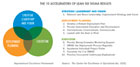
Collectively, the 10 accelerators of Lean Six Sigma results address the true improvement challenges of the new economy. These accelerators are not limited to Lean Six Sigma; many of the accelerator concepts are directly transportable to many other strategic initiatives such as improving outsourcing processes, mergers and acquisitions, reducing costs of Sorbanes-Oxley compliance, product and portfolio rationalization, building a new facility in China, IT strategy and deployment, or rationalizing global supply chains.
The Convergence of Enabling Technology and Strategic Improvement
In the new economy, technology is enabling the warp speed transformation of organizations into global, multilevel networks of transactional enterprises. Unlike manufacturing improvement, transactional improvement is transparent and comprised of key business processes, information flows, knowledge and decisions. Further, there are literally hundreds of people managing thousands of dynamic process touch points, a continuous churn in requirements, specific country requirements, time constraints, communications issues and exponentially greater opportunities for waste, variation and bad decisions.
Accordingly, technology and business process knowledge have become much more important to the success of the next levels of Lean Six Sigma and strategic improvement in general. No longer is the notion of enabling technology and process improvement mutually exclusive or sequential. Technology is the integrated process architecture and critical enabler of transactional enterprise improvement in this rapidly developing global environment.
The silver lining to all the negativity of the past 18 months is that there are more global opportunities for improvement and competitive success than any other time in history. It is time for organizations to get serious with strategic improvement, use what is already available to us effectively, inject creativity, velocity and a renewed focus into the process of improvement, and improve how they improve.
Some organizations get it and are well into their new journey of improving how they improve, integrating technology with a well structured, targeted and scalable improvement process. Many of these organizations also stayed the course of improvement through the meltdown and recovery, and are now in a strong offensive and proactive position of strategic improvement. This is the future-the recognition and cultural acceptance of accelerated, technology-driven sustainable strategic improvement with unlimited possibilities, and unlimited competitive rewards for success. Q
Improvement excellence is the mastery of developing and implementing successful strategic and continuous business improvement initiatives, transforming culture and enabling organizations to “improve how they improve.”
Executives must now make the right new choices about improving how they improve in this nonstop global economy, or they will fall behind at an increasingly rapid rate.
Technology is the integrated process architecture and critical enabler of transactional enterprise improvement in this rapidly developing global environment.
Most organizations are emerging from the largest recession and slow recovery since the Great Depression. Unfortunately, the reactionary and inconsistent leadership responses to the meltdown have become the new cultural norm in organizations, taking culture backward and destroying their ability to improve anything. Organizations have placed a freeze on improvement when they need it the most. The majority of organizations currently find themselves in a derailed state with their Lean Six Sigma initiatives, and a solid foundation of strategic and sustainable improvement in general.
The Evolution of Meltdown Mania
Through the economic meltdown and recovery, there is no doubt that executives have moved formal improvement initiatives such as Lean Six Sigma further down on their priority list. The recent meltdown and stalled recovery continues to spawn many interesting attitudes about improvement reflected in a few actual comments:There’s no money in the budget for improvement until 2011-2012.
The time is not quite right for improvement.
Improvement is not in my goals and objectives.
We eliminated our Six Sigma program. It did not work for us, we’re different.
We don’t have the time and resources to improve and do our regular jobs.
Today, many organizations may not openly admit it, but they have traded in their true commitment to Lean Six Sigma for a gamut of leadership behaviors that are driving culture backward, all in the interest of short-term results. True strategic improvement is definitely off-the-tracks and behind the financial statement scene, the hidden waste continues to pile up on a global scale. You can be sure that the Piper will demand payment plus severe consequences from organizations who continue in this short-sighted modus operandi.
There are two facts about waste in organizations: First, waste is dynamic and everywhere, and the growth rate of waste is proportional to executive behaviors and strategic choices about improvement. As the world accelerates, so too must the process of improvement.
Second, when waste is left unattended, it spreads like a cancer through organizations. When people have the perception that improvement is no longer a priority and follow suit with reactionary behaviors, the organization fails to recognize the obvious-the only way to get better is to improve the current state.
Historically there has been this disturbing birth-death cycle of improvement. When things are good, improvement is the first casualty because it is perceived to be no longer necessary. When things are bad, improvement is the first casualty because people do not have the time and resources to improve and do their regular firefighting jobs.
Between these two extremes, improvement has been supported by temporary and wavering commitments, token agreements, fad programs, massive training and symbolic motions of improvement. Improvement always fades away as an expected core value and enabler of business and cultural success because organizations are missing the core competency of keeping the word continuous in continuous improvement.
The Next Generation of Improvement
The next generation of improvement is Improvement Excellence: The mastery of developing and implementing successful strategic and continuous business improvement initiatives, transforming culture and enabling organizations to “improve how they improve.”This sounds so simple and logical-take the improvement methodologies already available to us, adapt the process of improvement to the changing economy and evolving global requirements, and build a permanent and sustainable capability to continuously improve how we improve and stay the course this time. However, Improvement Excellence is a legitimate core competency that is missing in most organizations.
The Improvement Excellence framework recognizes this need for dynamic and adaptive strategic improvement, continuously evolving to specific market, customer and enterprise needs. Strategic improvement is deeply engrained in culture via sustainable infrastructure and incorporates the characteristics that follow.
Permanent and Sustainable Infrastructure Matters
Sustainable continuous improvement is built into organizational culture via a very structured and formal infrastructure. The elements of this infrastructure include strategic leadership and vision, deployment planning and execution. This formal infrastructure keeps the notion of improving how we improve in the forefront of the typical ongoing changes in executives and leadership directions, conflicting priorities, political motivations, a focus on short-term performance and other potential distractions to strategic improvement. Infrastructure links and closes the loop between individual improvement success and global business success.An Adaptive and Nimble Process of Improvement
The process of improvement is customer-centric, adaptive and more nimble. Improvement Excellence uses a methodology called Scalable Lean Six Sigma, which is a simplified but high impact alternative to the traditional top down, mandated, overhead intensive, single point, train-the masses approach to improvement.The focus of Scalable Lean Six Sigma is on the efficient process of improvement rather than the naive application of DMAIC (define, measure, analyze, improve and control) or specific tools, and the scope is limited to the three to five critical issues that keep everyone up at night vs. mass, non value-added improvement activity for activity’s sake. Scalable Lean Six Sigma is a strategically targeted and scalable approach, achieving rapid deployment and of course, rapid quantifiable and sustainable results.
Ten Proven Accelerators of Success
Today improvement is all about rapid deployment and rapid results. This is achieved through the 10 accelerators embedded within the Improvement Excellence infrastructure of strategic leadership and vision, deployment planning and execution. These specific and deliberate activities accelerate the process of improvement and include the following:Reinvent and reset leadership, improvement strategy and vision
Develop a robust deployment plan
Provide customized education and development
Communicate, communicate, communicate
Launch with the best in mind
Provide strong extensive mentoring support
DMAIC the deployment process regularly
Accelerate individual project paths
Complete the C in DMAIC
Practice concurrent continuous deployment
Collectively, the 10 accelerators of Lean Six Sigma results address the true improvement challenges of the new economy. These accelerators are not limited to Lean Six Sigma; many of the accelerator concepts are directly transportable to many other strategic initiatives such as improving outsourcing processes, mergers and acquisitions, reducing costs of Sorbanes-Oxley compliance, product and portfolio rationalization, building a new facility in China, IT strategy and deployment, or rationalizing global supply chains.
The Convergence of Enabling Technology and Strategic Improvement
In the new economy, technology is enabling the warp speed transformation of organizations into global, multilevel networks of transactional enterprises. Unlike manufacturing improvement, transactional improvement is transparent and comprised of key business processes, information flows, knowledge and decisions. Further, there are literally hundreds of people managing thousands of dynamic process touch points, a continuous churn in requirements, specific country requirements, time constraints, communications issues and exponentially greater opportunities for waste, variation and bad decisions.
Accordingly, technology and business process knowledge have become much more important to the success of the next levels of Lean Six Sigma and strategic improvement in general. No longer is the notion of enabling technology and process improvement mutually exclusive or sequential. Technology is the integrated process architecture and critical enabler of transactional enterprise improvement in this rapidly developing global environment.
Time to Move from Recovery to Discovery
The impulsive leadership actions to the 2008 meltdown are a natural response to disaster, leaving executives and organizations vulnerable to bad choices. There are no shortcuts to successful strategic improvement, and the expediency of impulsive actions only trumps the propriety of logical improvement thinking, resulting in a dazzling display of illusive success. What is done is done, and that is yesterday’s rain. Today, executives must now make the right new choices about improving how they improve in this nonstop global economy, or they will fall behind at an increasingly rapid rate.The silver lining to all the negativity of the past 18 months is that there are more global opportunities for improvement and competitive success than any other time in history. It is time for organizations to get serious with strategic improvement, use what is already available to us effectively, inject creativity, velocity and a renewed focus into the process of improvement, and improve how they improve.
Some organizations get it and are well into their new journey of improving how they improve, integrating technology with a well structured, targeted and scalable improvement process. Many of these organizations also stayed the course of improvement through the meltdown and recovery, and are now in a strong offensive and proactive position of strategic improvement. This is the future-the recognition and cultural acceptance of accelerated, technology-driven sustainable strategic improvement with unlimited possibilities, and unlimited competitive rewards for success. Q
Tech Tips
Many organizations have traded in their true commitment to Lean Six Sigma for a gamut of leadership behaviors that are driving culture backward, all in the interest of short-term results.Improvement excellence is the mastery of developing and implementing successful strategic and continuous business improvement initiatives, transforming culture and enabling organizations to “improve how they improve.”
Executives must now make the right new choices about improving how they improve in this nonstop global economy, or they will fall behind at an increasingly rapid rate.
Technology is the integrated process architecture and critical enabler of transactional enterprise improvement in this rapidly developing global environment.
Looking for a reprint of this article?
From high-res PDFs to custom plaques, order your copy today!



.webp?height=200&t=1766182668&width=200 "Nieves_Q-Cast_Image (1).jpg")