Brain Teasers: Conveying the Right Messages

Source: James P. Hohner Jr.
Anyone who has faced a production problem with a need to solve it by using production data can relate to the notion of a brain teaser. The brain teasers presented here are based on real-world situations encountered by workers in manufacturing environments. The brain teasers have three parts: (1) the situation, (2) available data or other supporting information and (3) questions that various workers need answered for continual improvement. Recommended solutions follow in the next issue and on the Web.

Situation
When he was engineering manager for a glass manufacturer, Carlos regularly used data and prepared summary reports with charts for meetings with upper management. Now that he has assumed the role of division manager for specialty glass products, Carlos is overwhelmed with reports that have pages of data tables and few, if any, graphs. He does not have time to review tables of data and needs summaries that convey the critical messages clearly and quickly.At a recent division management meeting, he requested that reports contain only numerical and graphical summaries of critical information and that supporting tables be available if requested. This change in the format of reports is causing some confusion among the plant managers who work in the specialty glass division. Specifically, the management of Plant 49 feels challenged by this request.
Available data
An example of a table of data that typically appeared in one of the reports Carlos received is given in the table, “Production Yields for Plant 49.” These data are for a two-week period in August 2007.Questions
1. What are the critical messages that the management of Plant 49 needs to convey clearly and effectively to Carlos using these two weeks of production data?2. Prepare a graphical summary that can be annotated with notes to communicate these messages.
3. What graphs will be used? How can these graphs be enhanced with numerical summaries?
4. What questions might Carlos have for the plant management team? Which of these can be answered using the proposed graphical summaries?

Answers to September Brain Teaser
Short-run capability studies often are used to test critical characteristics of new product designs at Lidia’s company. As a process engineer, she is in charge of these studies for many new products. Typically, these studies are conducted with nine, 18 or 30 units, but Lidia would like to set up a method whereby she can select the number of units specifically for each study. Her current assignment is to determine the capability of the diameter of a shaft that has specifications of 1.100 inch ±0.008 inch.Q: Based on a standard deviation of 0.002 inch, how large a sample does Lidia need to detect a shift in the average diameter of 0.0015? Hint: Check the reference texts for sample size formulas. These will ask you to select an alpha value to use. Use alpha values of 0.05 and 0.01 to compare the amount of data required. Alpha is the chance of getting an unusual value in the data when there is no underlying change.
A: For a single sample of data with the standard deviation, s, calculated from data, the formula is

Q: Lidia met with the product design team and found that they had completed a run of nine prototype shafts. She decided to use the data for a preliminary capability study and to check the sample size she needs to use in the next study. The nine data values are 1.100, 1.099, 1.097, 1.100, 1.101, 1.101, 1.099, 1.098 and 1.092. What can she learn about the capability of the diameter of the shafts using these data?
A: If Lidia calculated the capability indexes using the nine data values as a single set without considering the time order of the data, she will get values of Pp = 0.956 and Ppk = 0.784. The Pp and Ppk designation is used to indicate that the standard deviation in the formula is the global
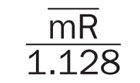

Q: How much data would Lidia need if she wanted to detect a shift of 0.0015 in the average shaft diameter with a power of 0.8 or 0.9? Use available software packages to do this calculation.
A: Using the power and sample size functions in Minitab, sample sizes for power of 0.8 and 0.9 with alpha of 0.05 and 0.01 are given in the table, “Sample Sizes for Short-Run Capability Studies.
Looking for a reprint of this article?
From high-res PDFs to custom plaques, order your copy today!