
Articles Tagged with ''lean manufacturing''
Management
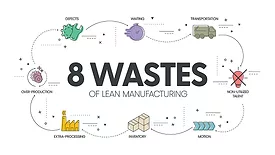
The 8th Waste in Modern Environments
How a car rental experience revealed Lean’s hidden opportunities
Read More
Management
A Modern Manufacturing System Requires Sustainable Continuous Improvement Methods Beyond Lean Six Sigma
The traditional manufacturing environment of predictable supply chains alongside stable customer demand and patient improvement cycles no longer exists in modern industry operations.
Read More

Management
It’s Time to Get Real About AI
Companies are under increasing pressure to deploy AI as a substitute for human labor. It’s critical, therefore, for managers at all levels to understand AI’s strengths and limitations.
Read More

Management
Don’t Ignore Gravity: Lean Management Laws for Better Problem-Solving
If we anchor problem-solving in things that are undeniably true, we avoid the doom loop of opinion vs. opinion.
Read More


Management
Good Enough is a Great Place to Start
As soon as we told his team “Good enough is a good place to start” the participation went through the roof.
Read More

Management
Secure by Design, Driven by Strategy
How Lean, Six Sigma, and Theory of Constraints elevate cybersecurity to a business enabler.
Read More
