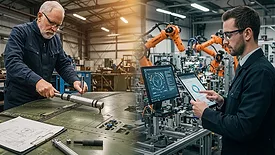
Industries like aerospace and automotive now require stringent quality assurance, focusing on proactive measures throughout the product lifecycle to ensure safety and continuous improvement.
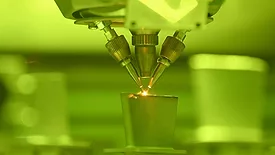
Traditional maintenance models in the aviation and aerospace industries often rely on costly part replacements with long lead times. New manufacturing technologies, especially additive manufacturing (AM) and Directed Energy Deposition (DED), are being reconsidered for repair applications.
Manufacturing Quality starts at the quoting stage, including quality costs. Don’t miss any critical requirements. It may be too late when you get the purchase order…
As CEO of GrowthHive, I assist manufacturers in overcoming growth challenges. Over the past decade, I've realized that requests for quotes on parts and assemblies increasingly involve tighter tolerances, extensive documentation, and difficult-to-spot “flow-down” requirements on 2D prints and 3D models.
Factories are increasingly using laser measurement systems for improved quality control, replacing manual inspections with faster and more accurate tools. Industries like automotive, aerospace, and medical are seeing significant benefits, especially in precision and waste reduction.
The aerospace industry is grappling with a shortage of auditors for AS9100 Quality Management Systems certification, crucial for safety and compliance, as demand for aircraft and services increases in 2025. This shortage affects manufacturers and suppliers globally, emphasizing the need for improved recruitment and retention in auditing.
Quality is crucial in the automotive and aerospace industries, underpinning customer satisfaction, efficiency, and safety. Upholding high standards reduces defects and waste, while evolving mobility standards are essential for adapting to technology and competition.
Quality assurance in aerospace has shifted from hands-on inspections to digital checklists, creating potential lapses in verification, as demonstrated by incidents like the Alaska Airlines door blowout. Despite tracking compliance, digital records do not guarantee that physical checks were performed.
Certification as a supplier boosts reputation and efficiency in the aerospace market by ensuring quality and compliance. This leads to better communication, change management, and higher customer satisfaction.
By leveraging AI tools, manufacturers can achieve the critical balance between efficiency and the aerospace industry’s strict regulatory and safety standards.
The aerospace industry faces a challenging task in balancing cost reduction with stringent quality standards. The rise of artificial intelligence (AI) offers transformative solutions in manufacturing and metrology, enabling manufacturers to optimize production processes while ensuring compliance with safety regulations and maintaining high-quality outputs.
Dr. Ben Tomic is our 2025 Quality Professional of the Year. With nineteen competencies on his CV and 50 skills on LinkedIn, he is a valuable asset as a certified quality engineer (CQE) or AS9100 lead auditor. He also highlights the importance of emotional intelligence in his work.