Quality Magazine logo
search
cart
facebook twitter linkedin youtube
  • Sign In
  • Create Account
  • Sign Out
  • My Account
Quality Magazine logo
  • NEWS
  • PRODUCTS
    • FEATURED PRODUCTS
    • SUBMIT YOUR PRODUCT
  • CHANNELS
    • AUTOMATION
    • MANAGEMENT
    • MEASUREMENT
    • NDT
    • QUALITY 101
    • SOFTWARE
    • TEST & INSPECTION
    • VISION & SENSORS
  • MARKETS
    • AEROSPACE
    • AUTOMOTIVE
    • ENERGY
    • GREEN MANUFACTURING
    • MEDICAL
  • MEDIA
    • A WORD ON QUALITY PUZZLE
    • EBOOK
    • PODCASTS
    • VIDEOS
    • WEBINARS
  • EVENTS
    • EVENT CALENDAR
    • IMTS
  • DIRECTORIES
    • BUYERS GUIDE >
      • Supplier Insights
    • NDT SOURCEBOOK
    • VISION & SENSORS
    • TAKE A TOUR
  • INFOCENTERS
    • Digital Quality Management Systems
    • NEXT GENERATION SPC & QUALITY ANALYTICS
  • AWARDS
    • ROOKIE OF THE YEAR
    • PLANT OF THE YEAR
    • PROFESSIONAL OF THE YEAR
  • MORE
    • Expert Columns
    • NEWSLETTERS
    • QUALITY STORE
    • INDUSTRY LINKS
    • SPONSOR INSIGHTS
  • EMAG
    • eMAGAZINE
    • ARCHIVES
    • CONTACT
    • ADVERTISE
  • SIGN UP!
Vision & Sensors

Vision Improves with 3-D

By Jens Klattenhoff
September 1, 2009


Digital 3-D cameras are extending the potential of existing 3-D imaging technology for robotic guidance and material handling systems. Equipped with integrated time of flight (ToF) sensors, these cameras deliver rapid spatial capture of objects and components. Three-dimensional cameras quickly provide data on target dimensions and position with a single snapshot that captures and displays both a distance and a gray-scale image.

These cameras are used on robotic arms, in robotic pick-and-place systems, on automated material handling lines and in logistics systems where machine vision is essential. The cameras can be used for volume and area identification, part location and positioning, presence and completion checks, palletizing, luggage and package sorting, and collision detection. Industries potentially using these 3-D cameras include automotive assembly, warehousing, packaging and security surveillance.

Capturing 3-D images in automated industrial systems is particularly important when the dimensions or the exact location of objects are unknown. For example, in robotic applications, parts are picked up from inexact locations, and then must be accurately placed in a target location such as a pallet or on floor space in a warehouse. In logistics systems where thousands of packages are classified or airports where cases and bags are sorted and controlled, spatial images are critical to the success of the system.

A 3-D camera can measure the distance for each pixel in parallel, as well as provide a distance and an intensity or gray scale image simultaneously. Here, 3-D data is evaluated to determine the volume and coordinates. Source: Baumer

Existing 3-D Imaging Techniques

A number of different techniques have historically been used to capture 3-D images. All use different equipment and require various amounts of time to generate a 3-D image that can be analyzed or visualized by a standard PC system.

In 1840, Sir Charles Wheatstone developed stereoscopy, one of the oldest 3-D imaging techniques. Present-day industrial machine vision systems still use stereoscopy, which imitates the function of human vision, to capture 3-D images of objects. Stereoscopy involves setting two 2-D cameras slightly apart from each other, typically 50 centimeters to 1 meter, depending on the size of the target.
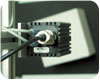


Real-time applications where the camera acts like a human eye benefit most from 3-D camera technology-such as this top view of a conveyor belt inspection application. Source: Baumer

While the stereoscopy process delivers results relatively quickly with just one image, the equipment requires a significant amount of floor space. Dimensional information also is difficult to distinguish for monochrome targets with this technique. To enhance reliability and improve the 3-D image, stereoscopy often is combined with a secondary technique called structured light projection.

In structured light projection, a pattern of stripes or arbitrary fringes is projected onto the surface of a target object, and the object’s surface shape causes the light pattern to appear distorted. In order to accurately determine the shape of the object, three to four different patterns must be projected onto the target, a scanning process that can be time consuming. As the patterns are projected, 2-D cameras take images of the light distortion on the object’s surface and send the images back to a PC. Comprehensive software is used to compute the 3-D image based on the displacement of the light patterns.

Structured light projection requires the use of a stripe projector and at least one, but most often two, 2-D cameras positioned effectively around an object. The required equipment takes up a substantial amount of floor space and system integration is complicated. As the scanning process is lengthy, the production or sorting function is prolonged.

In light sectioning, an alternative 3-D imaging technique, laser planes are projected onto an object’s surface. For the scanning process to be completed, either the target object moves through the laser or the laser moves over the object. During the scanning process, a digital camera takes images that show the contour of the target object in that position. After capturing enough lines along the surface, the whole object structure is available for processing.

Software evaluates the observed lateral displacement of the object at all points and calculates the dimensions of the object. Since acquiring all the necessary 3-D images may take several seconds, light sectioning may be too slow a process for time-critical applications.

Based on time of flight measurement, as demonstrated here, 3-D cameras are equipped with special lock-in image sensors that read dimensions based on reflected light. Source: Baumer

Digital 3-D Camera Technology

New 3-D cameras are revolutionizing spatial detection of objects and components by rapidly providing information on an object’s dimensions and location using a single image. These cameras have no moving parts and determine the dimensions of a target without requiring a scanning process.

Based on ToF measurement, 3-D cameras are equipped with special lock-in image sensors that read dimensions based on reflected light. Light is projected from the camera’s integrated LED light source located around the lens. Using active illumination, light modulated at a well-known frequency is emitted from the camera in a sinusoidal shape. The emitted light is synchronized with the image sensor and reflected at the surface of the target object. The sensor measures distance by calculating the time required for light to travel from the camera to the object and back. The reflected signal is sampled four times in a specified time period, phase-shifted each time by 90 degrees.

Since 3-D cameras can measure the distance for each pixel in parallel, they can provide a distance and an intensity or gray scale image simultaneously with up to 54 full frames per second, depending on the ToF sensor technology specified for the camera.

Real-time applications where the camera acts like a human eye benefit most from 3-D camera technology. In a range of applications, digital 3-D cameras are extending the potential of existing 3-D imaging technology. While various techniques have been used to capture 3-D images, the emergence of 3-D cameras can be a benefit to the vision systems in industries from automotive to security. V&S
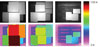
Intensity and color-coded distance images are shown for a de-palletizing process. Source: Baumer

Tech Tips

  • 3-D cameras are used on robotic arms, in robotic pick-and-place systems, on automated material handling lines and in logistics systems where machine vision is essential.

  • The cameras can be used for volume and area identification, part location and positioning, presence and completion checks, palletizing, luggage and package sorting, and collision detection.

  • Industries potentially using 3-D cameras include automotive assembly, warehousing, packaging and security surveillance.
  • Share This Story

    Looking for a reprint of this article?
    From high-res PDFs to custom plaques, order your copy today!

    Jens Klattenhoff is head of market and product management – digital imaging at Baumer Group (Frauenfeld, Switzerland). For more information, call (800) 937-9336, e-mail [email protected] or visit www.baumergroup.com.

    Recommended Content

    JOIN TODAY
    to unlock your recommendations.

    Already have an account? Sign In

    • 2024 Quality Rookie of the Year Justin Wise 1440x750px banner with "Quality Rookie of the Year" logo inset

      Meet the 2024 Quality Rookie of the Year: Justin Wise

      Justin Wise is an exceptional individual who has been...
      Aerospace
      By: Michelle Bangert
    • Man with umbrella and coat stands outside while it rains at night looking at a building.

      Nondestructive Testing: Is there an ethics problem?

      I was a whistleblower who exposed fraudulent activities...
      NDT
      By: Dale Norwood
    • Unraveling Deflategate: Football stadium with closeup of football on field

      Unraveling the Tom Brady Deflategate

      The Deflategate scandal erupted following the 2014 AFC...
      Measurement
      By: Greg Cenker and Henry Zumbrun
    Manage My Account
    • eMagazine Subscriptions
    • Newsletters
    • Online Registration
    • Subscription Customer Service
    • Manage My Preferences

    More Videos

    Sponsored Content

    Sponsored Content is a special paid section where industry companies provide high quality, objective, non-commercial content around topics of interest to the Quality audience. All Sponsored Content is supplied by the advertising company and any opinions expressed in this article are those of the author and not necessarily reflect the views of Quality or its parent company, BNP Media. Interested in participating in our Sponsored Content section? Contact your local rep!

    close
    • This image shows a person seated next to a Bobcat T66 compact track loader.
      Sponsored byPolyWorks by InnovMetric

      Supercharging Digital Gauging at Bobcat North America

    • Dorsey Calibration Lab photo by Tom LaBarbera Picture this Studios
      Sponsored byDorsey Metrology International

      Ensuring Product Quality in a Competitive Manufacturing Landscape

    • This image displays a Eddyfi Technologies Cypher portable inspection instrument alongside a scanner for non-destructive testing (NDT).
      Sponsored byEddyfi Technologies

      A Safer, Smarter Approach to Weld Inspection: Why Advanced Ultrasonic Testing Is Redefining Industry Standards

    Popular Stories

    a titanium diaphragm speaker driver

    The One Thing Elon Gets Right Is Designed to Scare You

    This image shows a person seated next to a Bobcat T66 compact track loader.

    Supercharging Digital Gauging at Bobcat North America

    Dorsey Calibration Lab photo by Tom LaBarbera Picture this Studios

    Ensuring Product Quality in a Competitive Manufacturing Landscape

    2026 Quality Professional of the Year!

    Events

    June 9, 2026

    Future-Proof your Quality Processes with Advanced 3D Optical CMM Technology

    Discover how to effortlessly capture complex data, leverage true multi-sensor automation, and ensure continuous operation without creating inspection delays.

    June 22, 2026

    Automate 2026

    Automate is North America's largest robotics and automation event — and the best place to take your ideas from insight to impact.
     
    Our show floor features the world’s leading automation solutions, from AI and robotics to motion control, vision systems, and more. Plus, our educational conference is second to none, led by the brightest minds in automation today.
     
    Ready to transform the way you work? Take the next step at Automate.
    View All Submit An Event

    Products

    Lean Manufacturing and Service Fundamentals, Applications, and Case Studies

    Lean Manufacturing and Service Fundamentals, Applications, and Case Studies

    See More Products
    Quality Podcast Channel Custom Content

    Related Articles

    • Quality 101: Back to Basics with 3-D Optical Measurement

      See More
    • Quality Test & Inspection: Working with 3-D Data Can Be Easy

      See More
    • Improve PV Solar Cell Efficiency with 3-D Surface Profiling

      See More

    Related Products

    See More Products
    • Quality Improvement Through Planned Experimentation 3/E

    • Orlicky's Material Requirements Planning 3/E

    • Online Ad - 3 months

    See More Products
    ×

    Stay in the know with Quality’s comprehensive coverage of
    the manufacturing and metrology industries.

    Newsletters | Website | eMagazine

    JOIN TODAY!
    • RESOURCES
      • Advertise
      • Contact Us
      • Directories
      • Manufacturing Division
      • Store
      • Want More
    • SIGN UP TODAY
      • Create Account
      • eMagazine
      • Newsletters
      • Customer Service
      • Manage Preferences
    • SERVICES
      • Marketing Services
      • Market Research
      • Reprints
      • List Rental
      • Survey/Respondent Access
    • STAY CONNECTED
      • LinkedIn
      • Facebook
      • YouTube
      • X (Twitter)
    • PRIVACY
      • PRIVACY POLICY
      • TERMS & CONDITIONS
      • DO NOT SELL MY PERSONAL INFORMATION
      • PRIVACY REQUEST
      • ACCESSIBILITY

    Copyright ©2026. All Rights Reserved BNP Media, Inc. and BNP Media II, LLC.

    Design, CMS, Hosting & Web Development :: ePublishing