Turnkey Machine Vision: Ready to Go
Turnkey machine vision systems allow manufacturers to leave the vision application to the experts.
Searching for a product online, punching in your credit card information and then having it delivered doesn’t mean that you know how to use it once it arrives. Machine vision applications often work the same way. The components will only get results once they are tailored to your application. This method may cost more, but the idea is that it will actually work; you are paying for the engineering help, not just the products. Just as purchasing something doesn’t mean you know how to use it, buying machine vision components is not the same thing as buying a solution.

And more people are going the turnkey route, according to machine vision consultants and integrators. Consider the benefits of not doing it yourself. You receive a system made for you, eliminate risk, and have long-term support. In addition, you won’t lose expertise if an internal staff member leaves.
“My advice always has been if you can buy a turnkey system that’s the best way to go,” says Perry West, a machine vision consultant and president of Automated Vision Systems Inc. (San Jose, CA). “If there is a trend, I would see a trend away from vision end users trying to develop their own applications.”
While internally created machine vision systems do work out well for some companies, West has seen innovative systems abandoned once the developer leaves. The orphaned machine vision system often isn’t used much longer.
Robert Eastlund, vice president of sales at Graftek Imaging Inc. (Austin, TX), agrees. Internally created systems are great job security for the person who put it together. He receives phone calls every year from companies looking to figure out what an internal person did, though this issue can also be true of integration companies. The key is to find someone who will stick around for maintenance later.
And even if someone at the company is able to put together an internal machine vision solution, this isn’t an easy task. After watching some instructions on YouTube and trying to re-caulk his bathroom (“What a mess”), Eastlund realized how his customers might feel doing something on their own. Software might look easy to use, but may not actually be, a sentiment echoed by other integrators.
“Vision can be quite technically challenging,” says Ross Rawlings, president and CEO of Radix Controls Inc. (Oldcastle, Ontario, Canada). “We’ve simplified all of the black magic and wizardry, so they don’t see that kind of plumbing. The key thing is to involve the customer, engage the customer as you’re creating the vision solution.” And explain the costs. Though some added capabilities-like remote internet access to the system-may seem like just an added expense, this may be worth it. “The costs may be more than they’d like to see,” Rawlings says. “But then they don’t need to call someone to come out and change the code every two weeks.”
Though turnkey systems are often more expensive, it helps to examine the long-term costs. “It’s much more cost effective to use an integrator than to do it yourself a lot of times,” says Gerald Budd, president of Phoenix Imaging (Livonia, MI). “The machine vision integrator knows what they are doing.”
He explains the time that another company’s low bid-about half of the $20,000 he had quoted the customer-earned them the business. The other company was basically offering just a smart camera and a light. Though he lost out on that job, he was called in to the manufacturer later for another assignment and asked how the original job had worked out. The manufacturer groaned, said it didn’t work, had required an engineer to work on it for a year (a $50,000 expense), and still they had gotten nowhere after spending $60,000 on it. “Obviously our cost was too high for them, but it turned out to be a bargain that they missed,” Budd says. “People can go online, buy the parts, find these keywords, and look at the components, but unless you know how to put those components together correctly, that’s not the solution.”
In his 32 years in the business, Bob Rongo, owner and chief engineer of Decision Technology LLC (Avon, IN), has seen his share of customers trying to do complex projects themselves. This supposed cost-saving measure can have mixed results. He asks, “If they don’t succeed, did they save any money?”
And complex jobs may require outside expertise. Ernie Kenneway, general manager of Dunkley International (Kalamazoo, MI), says today’s manufacturing climate means that hiring an outside expert may be best. “More and more, people don’t have the engineering staff they had in the old days,” Kenneway says. Integrators can provide a complex system to deal with high volume applications, especially useful in the pharmaceutical and medical device industries. The machine vision end users need to receive quality that justifies the cost of the equipment over the life of the project. “If they don’t have the volume to pay for system over a reasonable amount, they go back to quality control on a sampling basis,” Kenneway says. “But what’s happening is customers are saying, ‘That’s not good enough. We want to know every piece has been inspected.’”
But even if you go the turnkey route, there are caveats. Once the job is completed and the integrator leaves, the company should be aware of how to maintain the system. Walker says customer should have someone who is trained on the system. “The biggest tip I have is that the customer would have someone at their plant who is trained in the use and maintenance of the vision system, and have a good understanding of how it works, and make performance adjustments if needed.”
This could be something as simple as being able to clean the lens, or simply realize that the lens is dirty. He has seen customers send images they are having problems with, and realize it’s because they need to clean the lens. Walker explains that there are two types of problems that crop up when using a machine vision system: “those who are hesitant to touch it and make changes, or they are quick to change it.”
The decision to purchase a turnkey machine vision may seem like the easy way out. Though there are numerous benefits, sometimes customers can do it on their own. But over the long term, whether you are working on a home improvement project or a machine vision application, it might be cheaper and faster to hire an outside expert. V&S
Customers receive a system made for them, eliminate risk, and have long-term support.
It allows companies to maintain a vision system even if an internal staff member leaves.
Two of vision engineers test a high-speed inspection for cylindrical casings. Source: Epic Systems Inc.
Searching for a product online, punching in your credit card information and then having it delivered doesn’t mean that you know how to use it once it arrives. Machine vision applications often work the same way. The components will only get results once they are tailored to your application. This method may cost more, but the idea is that it will actually work; you are paying for the engineering help, not just the products. Just as purchasing something doesn’t mean you know how to use it, buying machine vision components is not the same thing as buying a solution.
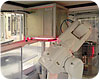
A six-axis robot inserts a 200-mm wafer into a turnkey vision system installed in a semiconductor fabrication plant. Each wafer is inspected 100% for defects without any impact on the throughput of the manufacturing process. This system replaces a manual inspection step that would slow down the process by hours. Source: Graftek Imaging
Turnkey Explained
If you’re looking for a machine vision solution, you could purchase a partial assembly or just components or go the turnkey route. As the name implies, a turnkey machine vision system is a complete system delivered ready to go.And more people are going the turnkey route, according to machine vision consultants and integrators. Consider the benefits of not doing it yourself. You receive a system made for you, eliminate risk, and have long-term support. In addition, you won’t lose expertise if an internal staff member leaves.
“My advice always has been if you can buy a turnkey system that’s the best way to go,” says Perry West, a machine vision consultant and president of Automated Vision Systems Inc. (San Jose, CA). “If there is a trend, I would see a trend away from vision end users trying to develop their own applications.”
While internally created machine vision systems do work out well for some companies, West has seen innovative systems abandoned once the developer leaves. The orphaned machine vision system often isn’t used much longer.
Robert Eastlund, vice president of sales at Graftek Imaging Inc. (Austin, TX), agrees. Internally created systems are great job security for the person who put it together. He receives phone calls every year from companies looking to figure out what an internal person did, though this issue can also be true of integration companies. The key is to find someone who will stick around for maintenance later.
And even if someone at the company is able to put together an internal machine vision solution, this isn’t an easy task. After watching some instructions on YouTube and trying to re-caulk his bathroom (“What a mess”), Eastlund realized how his customers might feel doing something on their own. Software might look easy to use, but may not actually be, a sentiment echoed by other integrators.
“Vision can be quite technically challenging,” says Ross Rawlings, president and CEO of Radix Controls Inc. (Oldcastle, Ontario, Canada). “We’ve simplified all of the black magic and wizardry, so they don’t see that kind of plumbing. The key thing is to involve the customer, engage the customer as you’re creating the vision solution.” And explain the costs. Though some added capabilities-like remote internet access to the system-may seem like just an added expense, this may be worth it. “The costs may be more than they’d like to see,” Rawlings says. “But then they don’t need to call someone to come out and change the code every two weeks.”
A six-axis robot inserts a 200-mm wafer into a turnkey vision system installed in a semiconductor fabrication plant. Each wafer is inspected 100% for defects without any impact on the throughput of the manufacturing process. This system replaces a manual inspection step that would slow down the process by hours. Source: Graftek Imaging
Consider Costs
Cost is often a deciding factor in selecting a machine vision system. Chris Walker, a project manager with Epic Systems Inc. (St. Louis), says customers are willing to invest in machine vision after paying for a recall or quality defects. They find the costs of a turnkey machine vision system are worth it.Though turnkey systems are often more expensive, it helps to examine the long-term costs. “It’s much more cost effective to use an integrator than to do it yourself a lot of times,” says Gerald Budd, president of Phoenix Imaging (Livonia, MI). “The machine vision integrator knows what they are doing.”
He explains the time that another company’s low bid-about half of the $20,000 he had quoted the customer-earned them the business. The other company was basically offering just a smart camera and a light. Though he lost out on that job, he was called in to the manufacturer later for another assignment and asked how the original job had worked out. The manufacturer groaned, said it didn’t work, had required an engineer to work on it for a year (a $50,000 expense), and still they had gotten nowhere after spending $60,000 on it. “Obviously our cost was too high for them, but it turned out to be a bargain that they missed,” Budd says. “People can go online, buy the parts, find these keywords, and look at the components, but unless you know how to put those components together correctly, that’s not the solution.”
In his 32 years in the business, Bob Rongo, owner and chief engineer of Decision Technology LLC (Avon, IN), has seen his share of customers trying to do complex projects themselves. This supposed cost-saving measure can have mixed results. He asks, “If they don’t succeed, did they save any money?”
And complex jobs may require outside expertise. Ernie Kenneway, general manager of Dunkley International (Kalamazoo, MI), says today’s manufacturing climate means that hiring an outside expert may be best. “More and more, people don’t have the engineering staff they had in the old days,” Kenneway says. Integrators can provide a complex system to deal with high volume applications, especially useful in the pharmaceutical and medical device industries. The machine vision end users need to receive quality that justifies the cost of the equipment over the life of the project. “If they don’t have the volume to pay for system over a reasonable amount, they go back to quality control on a sampling basis,” Kenneway says. “But what’s happening is customers are saying, ‘That’s not good enough. We want to know every piece has been inspected.’”
Even a Turnkey System Needs Attention
Sometimes if you have a basic system you can get away with designing it yourself. Or, say, you have proprietary technology that you would prefer to remain in-house.But even if you go the turnkey route, there are caveats. Once the job is completed and the integrator leaves, the company should be aware of how to maintain the system. Walker says customer should have someone who is trained on the system. “The biggest tip I have is that the customer would have someone at their plant who is trained in the use and maintenance of the vision system, and have a good understanding of how it works, and make performance adjustments if needed.”
This could be something as simple as being able to clean the lens, or simply realize that the lens is dirty. He has seen customers send images they are having problems with, and realize it’s because they need to clean the lens. Walker explains that there are two types of problems that crop up when using a machine vision system: “those who are hesitant to touch it and make changes, or they are quick to change it.”
A wafer is positioned by the robot in the vision system and inspected. A unique lighting scheme allows for detection of defects and their location on the wafer that are then reported to an advanced process control software. Source: Graftek Imaging
The Latest and Greatest
Hiring an expert to put together a system often means that you will receive the benefits of expertise in the latest technology. For example, in the last few years, Budd has seen an increase in predictive types of inspections. Rather than finding rejects, the system will spit data out to prevent the making of bad parts. For example, the system will alert operators that it will start making bad parts. He also anticipates more robots and cameras. Rather than buying dozens of $4,000 cameras, the manufacturer can spend $15,000 on a robot and move it around instead.The decision to purchase a turnkey machine vision may seem like the easy way out. Though there are numerous benefits, sometimes customers can do it on their own. But over the long term, whether you are working on a home improvement project or a machine vision application, it might be cheaper and faster to hire an outside expert. V&S
Tech Tips
Turnkey machine vision systems are increasingly popular.Customers receive a system made for them, eliminate risk, and have long-term support.
It allows companies to maintain a vision system even if an internal staff member leaves.
Looking for a reprint of this article?
From high-res PDFs to custom plaques, order your copy today!