Quality Magazine logo
search
cart
facebook twitter linkedin youtube
  • Sign In
  • Create Account
  • Sign Out
  • My Account
Quality Magazine logo
  • NEWS
  • PRODUCTS
    • FEATURED PRODUCTS
    • SUBMIT YOUR PRODUCT
  • CHANNELS
    • AUTOMATION
    • MANAGEMENT
    • MEASUREMENT
    • NDT
    • QUALITY 101
    • SOFTWARE
    • TEST & INSPECTION
    • VISION & SENSORS
  • MARKETS
    • AEROSPACE
    • AUTOMOTIVE
    • ENERGY
    • GREEN MANUFACTURING
    • MEDICAL
  • MEDIA
    • A WORD ON QUALITY PUZZLE
    • EBOOK
    • PODCASTS
    • VIDEOS
    • WEBINARS
  • EVENTS
    • EVENT CALENDAR
    • IMTS
  • DIRECTORIES
    • BUYERS GUIDE >
      • Supplier Insights
    • NDT SOURCEBOOK
    • VISION & SENSORS
    • TAKE A TOUR
  • INFOCENTERS
    • Digital Quality Management Systems
    • NEXT GENERATION SPC & QUALITY ANALYTICS
  • AWARDS
    • ROOKIE OF THE YEAR
    • PLANT OF THE YEAR
    • PROFESSIONAL OF THE YEAR
  • MORE
    • Expert Columns
    • NEWSLETTERS
    • QUALITY STORE
    • INDUSTRY LINKS
    • SPONSOR INSIGHTS
  • EMAG
    • eMAGAZINE
    • ARCHIVES
    • CONTACT
    • ADVERTISE
  • SIGN UP!
ManagementGreen Manufacturing

Face of Quality

Organizational Culture and Work

Understand the variables that affect employee self-determination.

By Jim L. Smith
May 2, 2013
As the author of Quality’s Jim’s Gems blog, which appears weekly at www.qualitymag.com, I am often contacted about some of the featured pieces. Recently a discussion centered on organizational empowerment, its relationship to employee self-determination, and the impact on opportunity. The following is a summary of a recent conversation with one of our readers.
 
Though further investigation is needed to measure the impact employee determination has on the field of quality and, more specifically, organizational results, it is possible to identify what organizational culture and work process variables have the greatest impact on employee self-assurance, self-determination, self-worth and opportunity.
 
Employees choose to align their behaviors and attitudes with an organization’s strategic direction based on the following three characteristics.
  1. Organizational purpose when the primary strategic elements of vision, mission and guiding principles are substantive and sustainable. 
  2. Individual effort when the objectives are challenging but attainable and knowledge and skills continuously supported by management and learned.
  3. Work activity when the process is manageable, stimulating and consistent.
Organizational purpose is the strategic element that empowers and engages employees from the top down. People internalize visions, mission statements and guiding principles (organizational values) that are substantive and sustainable. Substantive means the visions, mission statements and guiding principles have significance to employees. The strategic elements need to have relevance to employees’ personal vision, mission and core values so they positively impact the quality of work and work-life experience. Sustainable means the vision, mission and guiding principles have long-term implications for the successful operation of the organization.
 
Employee self-assurance and self-determination is enhanced when organizations anticipate the need for the ever present workplace change and use change to bolster organizational certainty and integrity, thereby increasing an employee’s feeling of safety needs and a sense of belonging. 
 
Individual effort follows organizational purpose and has implications for employees aligning their personal behavior and attitudes with the organizational primary strategic elements. 
 
Employees internalize individual objectives that are challenging but attainable. The outcomes that result from meeting these objectives must be perceived as having value to the employee. Additionally the employee must expect their efforts will lead to those outcomes. 
 
When not meeting desired outcomes, corrective action must be presented in a positive manner to maintain and even increase an employee’s self-worth. Dr. W. Edwards Deming’s #8 point of his 14 Principles of Management said that organizations must drive fear out of the workplace so that everyone may work effectively. Individual and organizational effectiveness will occur as this happens. Employees have experienced the importance of continuous improvement from a lifetime of success and struggle, and understand continuous learning is necessary to maintain and enhance personal power.
 
Work activity must have relevance to the work being performed and expectation of attachment to the objectives. Employees internalize work processes that are manageable, stimulating and consistent. 
 
Dr Joseph M. Juran taught us that truly effective workers have full mastery over the attainment of planned results. He said that organizations should put the employee into a state of self-control but to be in that state people must be provided with three things: knowledge of what to do; knowledge of their performance; and a means of regulating performance. Sadly, regardless of what many organizations believe, most have not established that state of self-control.
 
When employees experience that work activities or process steps are under their control and they have the ability to regulate or adjust their performance to achieve maximum outcomes, employees begin to feel a sense of ownership. The work itself becomes meaningful and exciting enough to tap their potential.
 
Opportunity is maintained and enhanced when individual differences are valued. While some employees are deep thinkers, others are deep feelers. Extroverted employees want social interdependence; introverted employees want social independence. Employees do not all prefer to work the same way, yet they all prefer to reach their own unique levels of excellence. For instance, employees inclined to be extroverted as a means to personal excellence likely favor being on teams, while introverted employees tend not to enjoy working on teams.
 
An employee’s unique level of excellence is achieved when he or she has the personal power to choose how best to achieve results, and ultimately affects their self-determination. Personal power does not have to be instilled in the employees by their organizations. Employees gain their own personal power through lifetimes of struggle and success. Organizations only need to ensure that culture and work processes are free of barriers that might diminish personal power. Personal power arises when employees are certain the organization is free of barriers, are valued for what they contribute, and are allowed to express themselves, without fear.
 
Employees may then use their need for self-determination to achieve performance excellence. No longer restricted by organizational barriers, the potential for enhanced individual and organizational effectiveness is unlimited because employees can use their self-assurance, self-worth and opportunity.
KEYWORDS: Deming organizational strategy

Share This Story

Looking for a reprint of this article?
From high-res PDFs to custom plaques, order your copy today!

Qm0222 clmn face p2 author jim smith

Jim L. Smith has more than 45 years of industry experience in operations, engineering, research and development and quality management. You can reach Jim at [email protected]

Recommended Content

JOIN TODAY
to unlock your recommendations.

Already have an account? Sign In

  • 2024 Quality Rookie of the Year Justin Wise 1440x750px banner with "Quality Rookie of the Year" logo inset

    Meet the 2024 Quality Rookie of the Year: Justin Wise

    Justin Wise is an exceptional individual who has been...
    Aerospace
    By: Michelle Bangert
  • Man with umbrella and coat stands outside while it rains at night looking at a building.

    Nondestructive Testing: Is there an ethics problem?

    I was a whistleblower who exposed fraudulent activities...
    NDT
    By: Dale Norwood
  • Unraveling Deflategate: Football stadium with closeup of football on field

    Unraveling the Tom Brady Deflategate

    The Deflategate scandal erupted following the 2014 AFC...
    Measurement
    By: Greg Cenker and Henry Zumbrun
Manage My Account
  • eMagazine Subscriptions
  • Newsletters
  • Online Registration
  • Subscription Customer Service
  • Manage My Preferences

More Videos

Sponsored Content

Sponsored Content is a special paid section where industry companies provide high quality, objective, non-commercial content around topics of interest to the Quality audience. All Sponsored Content is supplied by the advertising company and any opinions expressed in this article are those of the author and not necessarily reflect the views of Quality or its parent company, BNP Media. Interested in participating in our Sponsored Content section? Contact your local rep!

close
  • Key Takeaways for Quality Leaders
    Sponsored byComplianceQuest

    Key Takeaways for Quality Leaders from the 2026 Gartner Magic Quadrant™ for QMS

  • This image shows a person seated next to a Bobcat T66 compact track loader.
    Sponsored byPolyWorks by InnovMetric

    Supercharging Digital Gauging at Bobcat North America

  • Dorsey Calibration Lab photo by Tom LaBarbera Picture this Studios
    Sponsored byDorsey Metrology International

    Ensuring Product Quality in a Competitive Manufacturing Landscape

Popular Stories

a titanium diaphragm speaker driver

The One Thing Elon Gets Right Is Designed to Scare You

This image shows a person seated next to a Bobcat T66 compact track loader.

Supercharging Digital Gauging at Bobcat North America

Dorsey Calibration Lab photo by Tom LaBarbera Picture this Studios

Ensuring Product Quality in a Competitive Manufacturing Landscape

2026 Quality Professional of the Year!

Events

June 9, 2026

Future-Proof your Quality Processes with Advanced 3D Optical CMM Technology

Discover how to effortlessly capture complex data, leverage true multi-sensor automation, and ensure continuous operation without creating inspection delays.

June 22, 2026

Automate 2026

Automate is North America's largest robotics and automation event — and the best place to take your ideas from insight to impact.
 
Our show floor features the world’s leading automation solutions, from AI and robotics to motion control, vision systems, and more. Plus, our educational conference is second to none, led by the brightest minds in automation today.
 
Ready to transform the way you work? Take the next step at Automate.
View All Submit An Event

Products

Lean Manufacturing and Service Fundamentals, Applications, and Case Studies

Lean Manufacturing and Service Fundamentals, Applications, and Case Studies

See More Products
Quality Podcast Channel Custom Content

Related Articles

  • Organizational Culture

    See More
  • QM 0623 Quality 101 Culture

    Building Blocks to Improve Organizational Culture

    See More
  • QM 1023 TQS Grace Duffy podcast feature image

    The Quality Show Preview: The Building Blocks of Organizational Culture

    See More

Related Products

See More Products
  • The Process Improvement Handbook: A Blueprint for Managing Change and Increasing Organizational Performance

  • certified.jpg

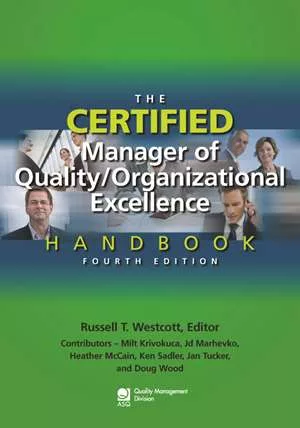
    The Certified Manager of Quality / Organizational Excellence Handbook, 4th Edition

  • Kaizen Event Fieldbook: Foundation, Framework, and Standard Work...

See More Products
×

Stay in the know with Quality’s comprehensive coverage of
the manufacturing and metrology industries.

Newsletters | Website | eMagazine

JOIN TODAY!
  • RESOURCES
    • Advertise
    • Contact Us
    • Directories
    • Manufacturing Division
    • Store
    • Want More
  • SIGN UP TODAY
    • Create Account
    • eMagazine
    • Newsletters
    • Customer Service
    • Manage Preferences
  • SERVICES
    • Marketing Services
    • Market Research
    • Reprints
    • List Rental
    • Survey/Respondent Access
  • STAY CONNECTED
    • LinkedIn
    • Facebook
    • YouTube
    • X (Twitter)
  • PRIVACY
    • PRIVACY POLICY
    • TERMS & CONDITIONS
    • DO NOT SELL MY PERSONAL INFORMATION
    • PRIVACY REQUEST
    • ACCESSIBILITY

Copyright ©2026. All Rights Reserved BNP Media, Inc. and BNP Media II, LLC.

Design, CMS, Hosting & Web Development :: ePublishing