Plastics Analysis for Automotive Applications
How do we select the right material that provides the best performance and the highest quality?
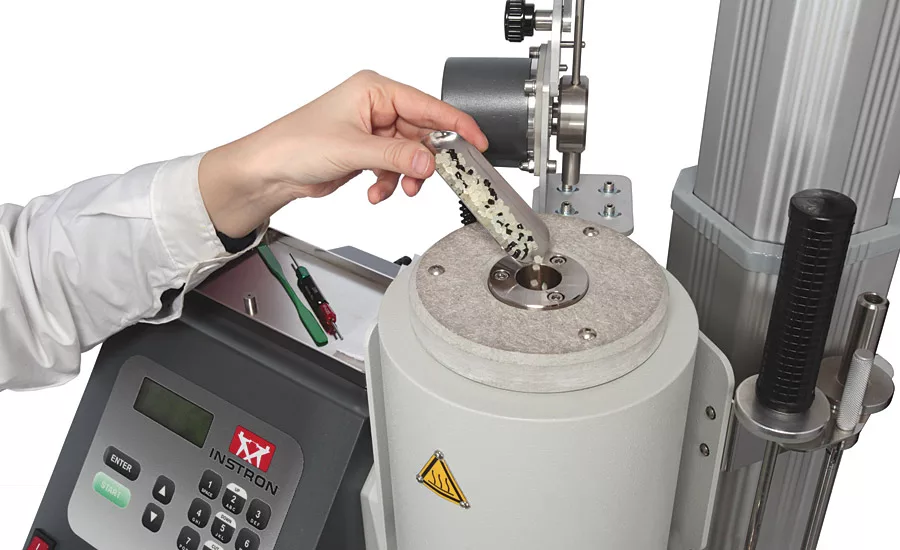
Melt flow test. Source: Instron
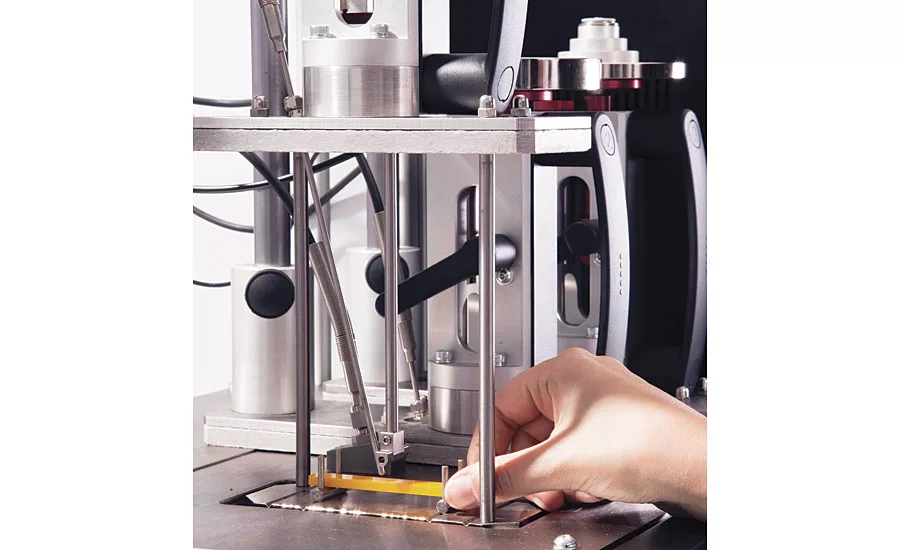
HDT Vicat test. Source: Instron
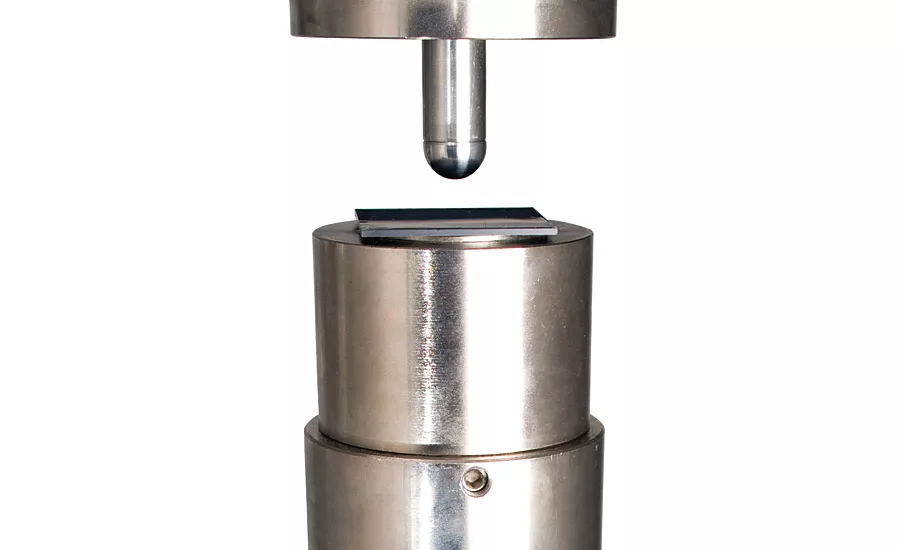
Impact test. Source: Instron
The automotive sector is one of the leading industries driving the rapid technology development in the United States. Automotive part suppliers are often directly involved in the design and development of new products, wherein replacement of traditional metal alloys with high-performance polymers has become a fairly standard practice due to their superior mechanical strength, chemical resistance and higher strength to weight properties. As an example, carbon fiber reinforced composites are 50% lighter than conventional steel and 30% lighter than aluminum while retaining the strength properties on par with steel and aluminum, making them an attractive alternative for parts suppliers and manufacturers.
The advanced polymers also help to achieve better fuel efficiency while allowing engineers to create innovative designs that add aesthetic value and yet are extremely durable and strong. Plastics and polymer composites not only provide weight savings to vehicles, but their high energy-absorption qualities enable them to meet very stringent safety standards that simulate collisions and other accidents. Taking into consideration the proposed laws for car emissions limits and given the several advantages of polymer composites, a steady growth is predicted for their applications in the automotive industry for the next several years.
Tech TipsUnderstanding material failure properties helps engineers resolve and prevent failures by identifying the causes of degradation, damage, aging, stresses and processing issues. The automotive industry has stringent safety standards where every single critical component has to be tested and be in accordance with precise technical specifications. Strength, durability, and safety-related characteristics are the main properties that are repeatedly tested. |
Having established that polymers and polymer composites are the drivers for growth, how do we select the right material that provides the best performance and the highest quality?
Plastics such as PA, PP, ABS, and PC are used in several automotive components: from the dashboard to door panels, from engine components to lighting. High-performance polymers, such as PVC, PEEK, PPS, and PEI, are expensive and have a higher processing cost. It, therefore, becomes imperative to avoid design and processing errors in order to maintain low manufacturing costs, and hence all the material properties reported on technical data sheets must be carefully evaluated to differentiate between many different polymers and choose the ones most suitable for automotive applications.
In addition to evaluating the processability, QC labs need to specifically characterize mechanical and thermo-mechanical properties in order to control the quality of polymers. The polymer characterization is further useful to provide information to R&D enabling them to quantify the properties and provide guidelines for future product development. By 2030, the automotive industry is geared to embrace plastics and composite materials as ideal solutions that meet performance and sustainability requirements.
MELT & PROCESSABILITY PROPERTIES
The raw material producers must control the quality of polymers they produce to assure their customers that the supplied polymers meet the requirement for specific applications. One of the key properties related to the processability is the Melt Flow Rate (MFR), which can be determined using a melt flow tester. The MFR is described as the mass of a material flowing through a die in a certain amount of time, at a specified temperature and the value of which is reported in g/10 minutes. Simply put, it measures how easily a melted polymer flows. The Melt Flow Tester is an easy-to-use tool to check the quality of a polymer, helps with selecting the best grade of polymer and predicts the polymer behavior in a number of processing techniques.
Following ASTM D1238 and ISO 1133 standards, polymer producers and manufacturers can verify the quality of the product they receive from their supplier. Both these international standards describe the testing procedure and accuracy of test measurement in detail. A polymer sample is melted in a heated barrel and a specific load is applied onto the sample with the aid of a piston which pushes the material to flow through a standard specified capillary die. The amount of sample flowing out in 10 minutes is measured. When a polymer has a low MFR, its material processability is deemed lower, while a higher MFR value represents easier processability.
THERMO-MECHANICAL PROPERTIES
Heat Deflection Temperature (HDT) and Vicat Softening Temperature (VST) tests are usually performed to evaluate the ability of engineered and high-performance polymers to retain their mechanical properties at high temperatures. ASTM D648 and D1525 provide detailed testing procedures for this material property measurement. The polymer specimen is immersed in a fluid bath whose temperature is raised uniformly at a specific temperature rate. A predefined load or stress is applied to the specimen in order to measure the temperature at which it shows a set deflection (HDT test) or penetration (VST test).
ASTM D648 standard describes HDT as the temperature at which a deflection of 0.25 mm (0.010 in) occurs under a predefined applied stress of 0.455 MPa (66 psi) or 1.82 MPa (264 psi). The testing specimen is placed in an edgewise position in a three-point bend fixture and the assembly is immersed in a silicon oil bath whose temperature is raised uniformly at the rate of 120°C/h. ASTM D1525 standard defines VST as the temperature at which a needle tip of the fixture penetrates into the sample to a depth of 1 mm. This standard allows for two different mass applications: 10 N or 50 N and two different temperature rates: 50°C/h or 120°C/h.
Consider this scenario as a simple example of the value of HDT testing to your everyday living: a heavy shopping bag is left on the dashboard of your car on a hot summer day when the temperatures inside the car could reach up to 50°C (122°F). If the material used to make the dashboard cannot support the weight of the bag at this temperature, the dashboard can potentially deform and be damaged.
Higher HDT and VST values obtained in a test signify that the tested material is suitable for high-temperature applications, making it a preferable material for automotive applications. But in addition to the bulk properties, HDT and VST test results also provide input on the surface properties of a polymer. At temperatures higher than those established by an HDT or VST test, it can be anticipated that the polymer sample undergoes permanent deformation generating further surface defects.
MECHANICAL PROPERTIES
Understanding material failure properties helps engineers resolve and prevent failures by identifying the causes of degradation, damage, aging, stresses and processing issues. The automotive industry has stringent safety standards where every single critical component has to be tested and be in accordance with precise technical specifications. Strength, durability, and safety-related characteristics are the main properties that are repeatedly tested. For example, car dashboards are designed to absorb shocks and require impact-resistant polymer components, designed such that in the case of an accident, the dashboard area will absorb a significant amount of the impact energy.
Impact testing on plastics and composite components becomes significant and is often used to help understand material failure properties and characterize mechanical resistance of polymer components to impact. Impact resistance is a critical measure of service life and is primarily responsible for ensuring product safety.
Impact testing makes it possible to distinguish between brittle and ductile polymers and simulate material behavior at different temperatures and/or at different impact speeds. The testing is standardized in accordance with various ASTM and ISO standards to ensure compliance of polymer components in automotive applications. The standards detail the testing requirements and test procedures, and also help establish the criteria for the amount of energy required to break a material. The most common impact tests are Izod and Charpy tests complying with ASTM D256, D4812, D6110 and ISO 179 & 180 standards. Both Izod and Charpy tests involve striking a standard sample with a controlled weight pendulum at a defined velocity. The amount of absorbed energy is measured as described in the method and gives a quick reference check for the QC/QA labs of automotive suppliers. Another test suitable for both QC and R&D labs is the drop weight impact test. It can be carried out on a standard specimen of raw polymers or finished components, to accurately measure the absorbed energy and impact resistance.
The key to a sustainable and thriving automotive industry is the quality of components, and this must be kept in check from selection and evaluation of raw materials to the performance and properties of the finished products. The quality of material used to manufacture vehicles reflects their integrity, performance and in turn, their market worth, which ultimately results in further technological advances. Q
Looking for a reprint of this article?
From high-res PDFs to custom plaques, order your copy today!