Layered Process Audit Programs: A Fast-Track Strategy for Reducing Cost of Quality
The trick is managing the complexity of these unique audits. By Eric Stoop

What matters to customers is whether you use LPAs to drive continuous improvement—and having the documentation to prove it.
LPA software allows any size company to produce results quickly, even with limited resources.
Beyond just dollars and cents, layered process audits also help companies develop a culture of quality.
In automotive manufacturing, reducing quality costs can be like trying to bail out a leaking boat. You can empty bucket after bucket over the side, but you can’t get above water until you plug the leaks themselves. A new leak often appears the moment you fix another one, and the fixes themselves might only be temporary.
Manufacturers are finding that layered process audits (LPAs)—a type of high-frequency audit involving all layers of management—are a singularly powerful method for permanently repairing those leaks.
LPAs have helped automotive suppliers achieve significant quality cost reductions in just a few months, also providing a structured framework that fosters a culture of quality. The trick is managing the complexity of these unique audits, an area where automation is helping companies make huge strides with limited resources.
What Are Layered Process Audits?
LPAs reduce variation and defects through repeat verification that operators are following standardized processes. According to a study in 2016 by Applied Logistics, a full 75% of manufacturing defects result from non-conformance with processes, which is why LPA programs are so effective at reducing quality costs.
The audits are short and fast, with a set of yes or no questions that take about ten minutes to complete. Their simplicity makes them accessible to people unfamiliar with process details, including those from other departments. A cross-functional LPA team identifies and updates audit questions based on items such as:
- Past quality issues or defects and resulting corrective action
- Process failure modes and effects analysis (PFMEA) forms
- Procedures critical to product quality and/or customer satisfaction
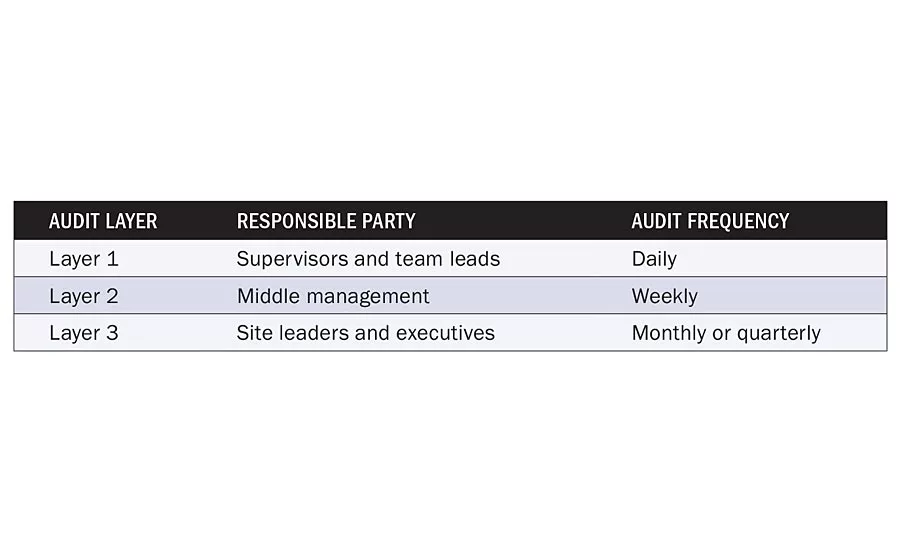
Auditors participate at a frequency corresponding to their level of authority, with audits taking place multiple times daily.
Automotive original equipment manufacturers (OEMs) like GM and Fiat Chrysler require their suppliers to conduct LPAs, which are also recommended by Ford. As a proactive approach to reducing risk that makes management accountable for quality, LPAs also help demonstrate compliance with standards such as ISO 9001 and IATF 16949.
Bigger, Faster Quality Cost Reductions
Compared to traditional inspections and audits, LPAs provide added layers of security to catch process variations before they cause defects or safety incidents. By generating large volumes of data, LPAs also increase visibility into the drivers of quality costs.
In our experience, metrics where LPAs have the biggest impact include:
- Scrap and rework: Companies that implement LPAs have been able to cut scrap costs in half over the course of several months.
- Customer returns: LPA implementation has been tied to a more than 50% reduction in customer defects in some organizations. Other companies have reported going months or longer without any customer returns.
- Total cost of quality: Reducing quality costs has a direct impact on bottom-line revenue growth. One reason is that quality costs increase exponentially as you move from prevention to detection to correction of actual failures.
How Layered Process Audits Benefit Quality Culture
Beyond just dollars and cents, LPAs also help companies develop a culture of quality. When fully implemented, LPA programs enable:
- Company-wide engagement: LPAs break quality out of its administrative silo, involving people from departments such as operations, human resources and finance.
- Proactive risk management: LPAs identify issues that impact customer satisfaction upstream, rather than at the point of manufacture. Their structure also supports the central goal of corrective action, which is permanently reducing risk.
- Top-level prioritization: Making management a visible presence on the plant floor is powerful evidence of an authentic commitment to quality. LPAs are a daily activity, keeping everyone focused on quality and proactive improvement.
- Ongoing communication: LPAs give operators the chance to share observations and suggestions directly with management. When people see leadership cares enough to be present and fix problems, they’re more likely to speak up.
- Accountability: LPAs give you the hard data you need to see who’s participating and who’s falling behind on their responsibilities. It also makes it easier to identify individuals for special recognition.
Cultural benefits aren’t always as tangible, but they’re essential building blocks for achieving any ambitious quality cost reductions.
Challenges of Layered Process Audit Implementation
While manufacturers may see the benefits of LPAs, many struggle with implementation due to the inefficiency of paper-based or spreadsheet-based tracking systems. Some common stumbling blocks with LPA programs are:
- Inefficient scheduling: A given plant may need to conduct upwards of 1,000 audits annually to meet LPA requirements. Companies often need to devote full-time resources just to plan and schedule the audits.
- Low audit completion rates: Organizations often struggle to keep up with the high frequency of audits required. A number of companies report only completing about 10% of scheduled audits.
- Data integrity problems: Getting good data from LPAs is impossible if people are flying through the audits and automatically checking ‘yes’ for all items, commonly known as ‘pencil-whipping.’ This problem is rampant with paper checklists, with little visibility into who’s doing it.
- Analytical bottlenecks: Manual data entry and analysis can be time-consuming, leading to delays in viewing LPA data of weeks or longer. The risk to companies is not finding problems until large volumes of defective product are already delivered to customers.
- Outdated checklists: LPAs require continuous updates to checklist questions to account for changing risks and lessons learned. Recalling old checklists and distributing new ones is one of the first tasks to go when people get busy.
The problem for manufacturers is that LPAs aren’t just about checking some boxes. There’s no such thing as ‘A for effort’ in the automotive industry, and you won’t get credit just for having an LPA program. What matters to customers is whether you use LPAs to drive continuous improvement—and having the documentation to prove it.
So if a customer audits you and finds a stack of checklists with unprocessed data, it’s not going to look good. In fact, automotive suppliers have learned the hard way that it can put their most important contracts at risk.
Overcoming Complexity Through Automation
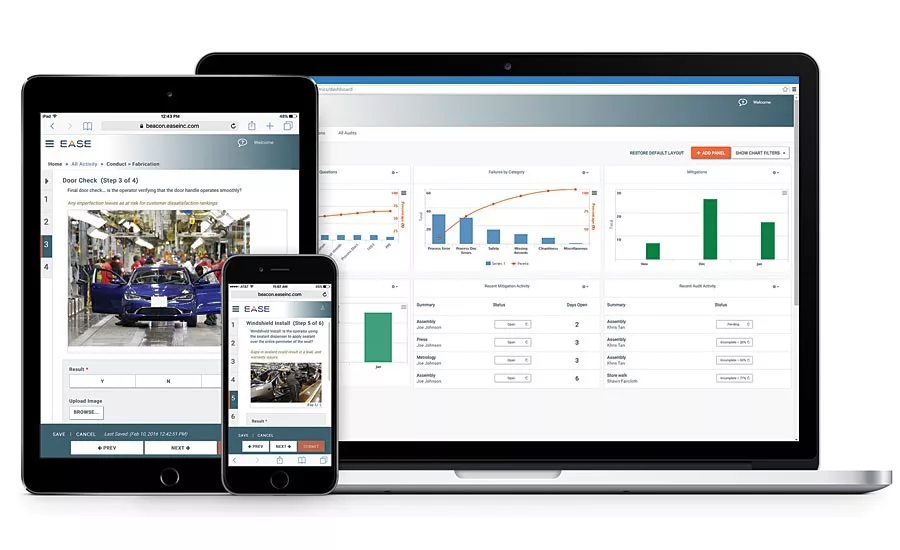
For companies that start with paper-based or LPA tracking, keeping up with the high frequency of audits may require transitioning to an automated system. One of the biggest advantages of LPA software is that it allows any size company to produce results quickly, even with limited resources.
Automated LPA software built around the Automotive Industry Action Group (AIAG) CQI-8 Layered Process Audits Guideline allows organizations to:
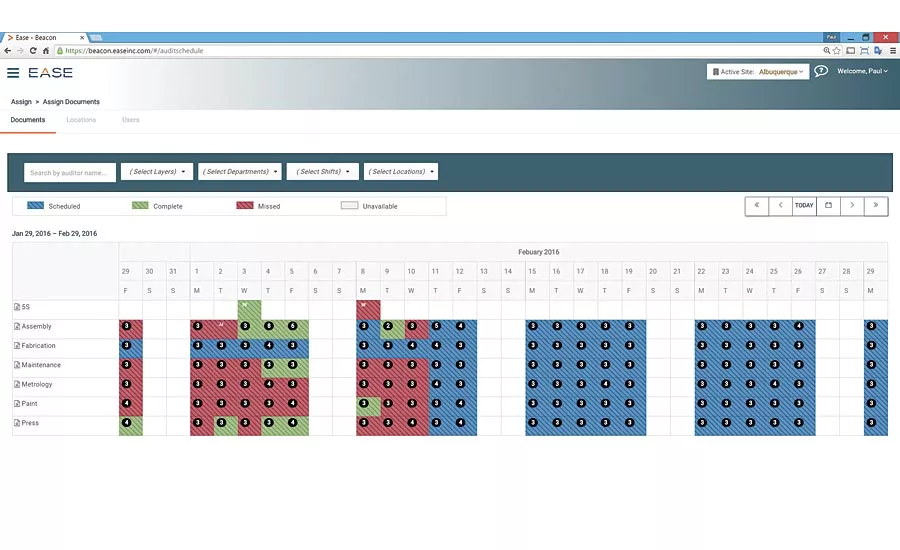
- Reduce administrative overhead: Companies schedule audits for 50 people in less than ten minutes while accounting for when people are away from work. Email reminders go out automatically, with direct links to electronic checklists. Even for large facilities, this amounts to an 85-90% reduction in administrative overhead for LPA scheduling.
- Improve resource efficiency: Depending on plant size, it’s common to be able to reallocate as many as two full-time employees to value-added activities that drive strategic value.
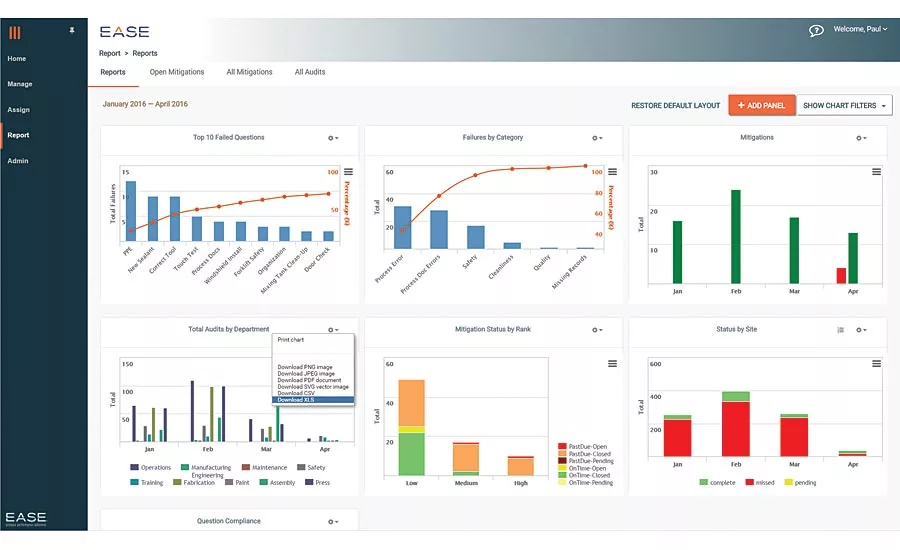
- Get instant visibility into data: Mobile audits via smartphone or company-issued tablets make audit data immediately available. This helps pinpoint problems faster to reduce defects and quality costs, as well as helping inform predictive quality indicators.
- Increase audit completion rates: Real-time dashboards let organizations communicate LPA results. It’s common to see departments competing on audit completion rates and other metrics, unleashing healthy competition to improve quality.
- Protect data integrity: Question randomization and the ability to require photos make it harder for people to pencil-whip audits. Time-stamped records that include audit duration also help identify if individuals are engaging in this sort of behavior.
- Refine checklists often: Easy updates to checklists let you remove questions you no longer need and add new ones to address recent issues. This agile approach to LPAs is a key ingredient of continuous improvement.
In addition to streamlining the audits themselves, companies can also expect a faster, simpler LPA implementation with automated software. Paper-based systems take months to develop and implement, whereas an off-the-shelf software-based LPA program can take as little as a few weeks.
Closing the Loop on Layered Process Data
Perhaps the most important thing automotive manufacturers should know about LPAs is the need to close the loop on audit data. That means:
- Addressing minor non-conformances on the spot
- Moving larger issues to a formal corrective action process
- Adding new audit questions to verify you’re holding the gain
Too many companies—particularly those overwhelmed by the details of LPAs—let audit data just sit there while quality issues continue driving up costs. Not only does ignoring problems increase consumer safety risks, it also jeopardizes the business itself. The boat keeps filling up with water, until the leaks take 100 times the effort (and cost) to repair.
Automation helps companies finally get ahead, so you can focus less on problems, and more on the big, visionary goals on the horizon.
Looking for a reprint of this article?
From high-res PDFs to custom plaques, order your copy today!