Vision & Sensors | Trends
The Role of Quality in a Post-Pandemic World
It's Especially Clear That Relying on On-Site Vision Experts is no Longer a Viable Strategy.
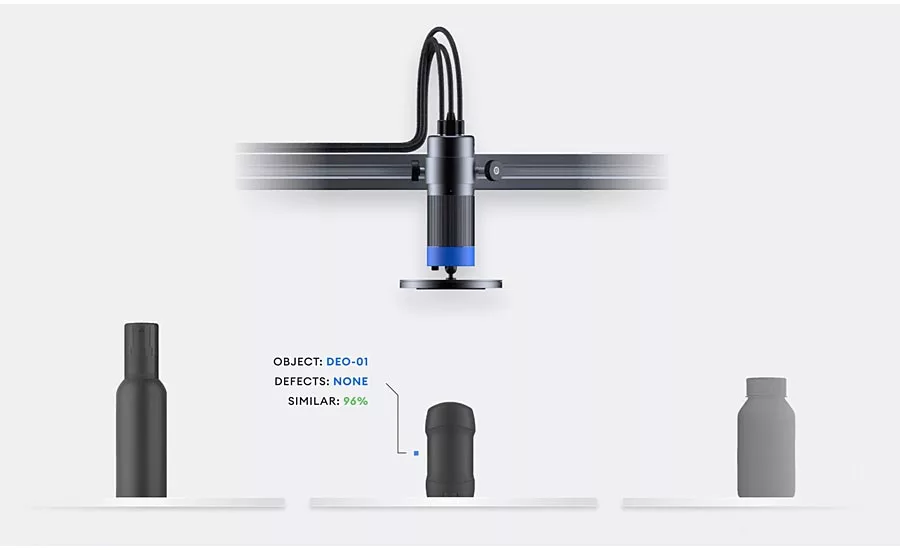
There is no doubt that vision inspection is paramount to any successful quality process.. Source: Elementary Robotics
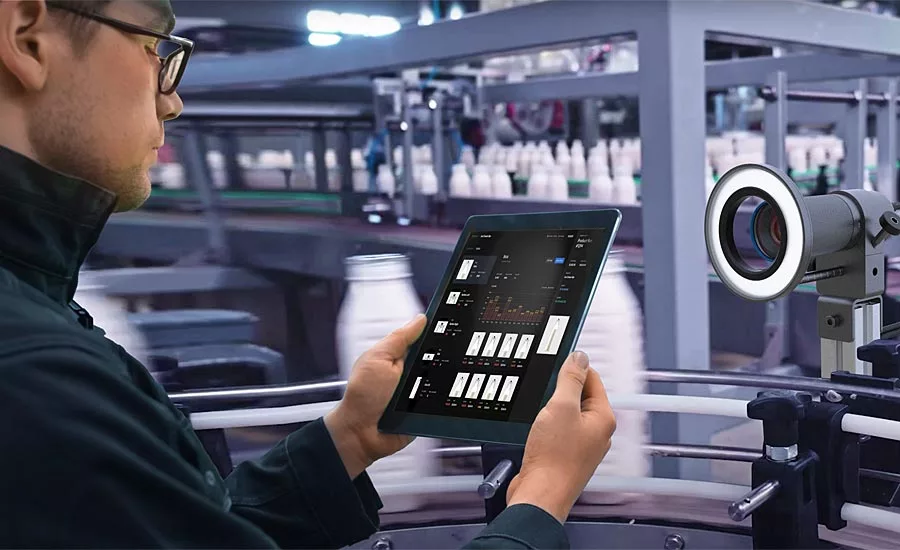
Source: via Getty Images
There is no question that the COVID-19 pandemic dramatically impacted business practices across industry segments worldwide. Manufacturing was no exception and 2021 will be the year of reinvention through an emphasis on transforming business models. The best manufacturers embrace change and leverage innovation to leapfrog their competition and pave their road to success.
As we begin to envision the recovery from this pandemic, a number of trends have become permanent fixtures. The new normal around three key areas will impact how manufacturers think of quality.
-
Online Shopping
Online shopping was steadily rising before COVID-19, but the pandemic took the explosion to unprecedented growth. With the movement of shopping habits continuing to move online, manufacturers are more responsible for customer satisfaction than ever before. Traditional brick and mortar retail provided a physical barrier, adding some protection for the manufacturer. Consumers could pick from multiple products on a shelf if something appeared damaged. Stores could help mitigate a poor consumer experience through human interaction, store credits, and other customer satisfaction levers. Today, consumers quickly take to online reviews that can be viewed worldwide and instantly impact a company’s brand, putting quality in the spotlight like never before.
-
Work From Home
The abrupt shutdown of employees clocking into workplaces across the globe has led to a new era of remote work. For manufacturing, this has exacerbated an already complex labor dilemma. In addition to the cost of labor being among the highest item on a company’s balance sheet, in recent years labor shortages have been an ongoing struggle that is not going away anytime soon. According to Deloitte and the Manufacturing Institute, U.S. manufacturing labor shortfalls will reach the highest ever recorded by 2025. This leaves manufacturers needing to operate with fewer people on the floor. While quality is one of the most important functions in manufacturing, it is also one of the easiest ones to leverage automation.
-
Reshoring
Over the last 10 years, there has been a lot of talk about reshoring manufacturing. The pandemic has served to again prioritize such initiatives. According to a Thomas survey, 64% of companies report they are likely to bring manufacturing and sourcing back to North America. While cost has traditionally been the driving factor, the pandemic also exposed other deficiencies and weaknesses in the global business model. Reshoring will drive the need for cost-effective automation across all facets of manufacturing, including quality inspection.
The sum of these three shifts in manufacturing has led to companies re-evaluating how they use machine vision in the quality inspection process. Industry 4.0 was well underway with larger companies who sought the adoption of technologies to leverage AI, the cloud, machine learning, and robotics to provide large amounts of data for analytics. The pandemic has only accelerated these efforts and now some say Industry 5.0 is underway, which seeks to create collaboration between people and smart machines. But there is a large gap between companies that can afford to take on these proposals and those that cannot.
Whether you’re in the throes of Industry 4.0, learning about Industry 5.0, or just trying to improve your operations, smart quality is a key part of the equation. A recent McKinsey report stated that manufacturers that switch to smart quality will see up to a 50% reduction in the cost of quality, a game-changing ROI.
What Is Smart Quality?
Smart quality is created through AI’s role in machine vision, and the cloud enabling remote AI and vision software solutions that drive intelligence into production lines. This combination provides for remote connectivity, deployment, and analytics, turning subjective processes into intelligent autonomous systems that require less on-site operation. This, in turn, makes it easy to scale and ensure your factory is data-driven.
Before the availability of such smart quality systems, traditional vision systems were the primary vision option for quality inspection. These traditional systems require an expert for integration, programming, and installation, making them expensive, rigid, and challenging to scale. COVID’s impact on manufacturing has made it especially clear that relying on on-site vision experts is no longer a viable strategy. Manufacturers want to be empowered to leverage broader skill sets to test and deploy innovative solutions. Smart quality systems unlock this capability.
Traditional vision software is also not built to scale. The interfaces are typically boutique and custom-built for each deployment, meaning that they do not benefit from economies of scale, or improve exponentially the more systems you add. Lastly, because none of the systems are networked, all of the data being created by vision systems is stuck in silos, embedded alongside the cameras they are collected on and eventually lost, or, if analyzed done so in a manual way.
The need for expertise, software not built to scale, and siloed data, are the key components that need to be solved so that Industry 4.0 relative to smart quality could be leveraged by all manufacturing, regardless of size.
The Role Of AI In Smart Quality
AI was built for and thrives on making data-driven decisions that are robust to variance and constantly changing scenes. An AI vision platform transitions you to a world of no code, removing the expertise previously needed for traditional vision systems. Instead, it’s developed to be a simple exercise in setting up vision inspections through labeling parts and teaching a system about what’s good and bad. AI labeling, with an intuitive user interface, means anyone can create an inspection.
Once trained, your inspections benefit from the data by improving over time as you continue to capture data. In the same way that you would teach someone, and they would continue to learn and improve their knowledge, so does machine learning.
The Role Of The Cloud In Smart Quality
Cloud computing is the most effective way to leverage the benefits of AI systems. With AI and the cloud for inspection, you enable fast deployments through a remote centralized console which means your deployments can be copied and pasted to any system on the network. And because AI models improve with time, you’re able to share these learnings across all systems.
These benefits mean you can easily scale and leverage data analytics. Remote access means the team training the models can be located anywhere in the world, and then deploy the models to any camera connected to your network. Your on-site engineering teams only need to be able to set up vision systems, and you can then distribute your quality team and enable them to remotely manage your company’s vision systems and quality metrics through the cloud, driving automated root cause analysis.
Conclusion
There is no doubt that vision inspection is paramount to any successful quality process. In a post-pandemic world geared towards satisfying the demands of eCommerce consumers, while also balancing labor challenges and reshoring initiates, manufacturers will need to adapt quickly. Whether innovating with new products or modifying existing ones, manufacturing processes will need to be flexible enough to handle product variations and leverage data in meaningful ways. AI-based vision systems operated via the cloud complement industry 4.0 and 5.0 initiatives and create business continuity by providing the flexibility, democratization, and scalability needed while delivering a rapid return on investment.
Monique Apter is the EVP of Sales and Marketing at Elementary Robotics.
Looking for a reprint of this article?
From high-res PDFs to custom plaques, order your copy today!