Test & Inspection
How Laser Technology Helps Improve Manufacturing Quality
Laser technology today has taken significant leaps from even just a few years ago.
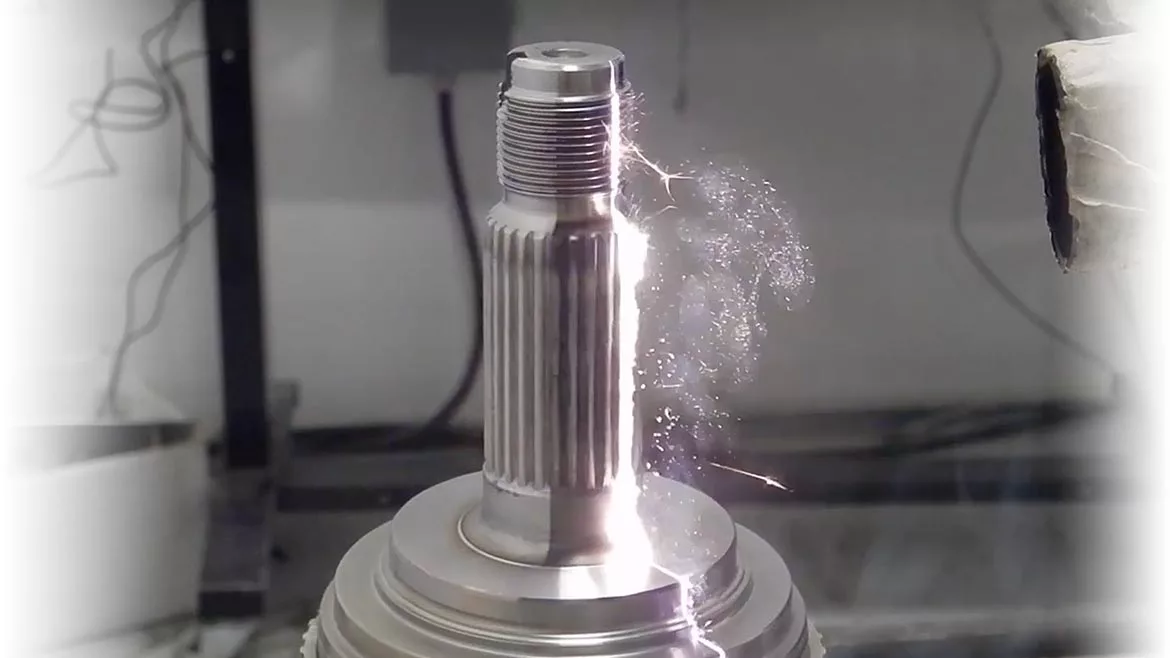
All Images/Videos Source: Laserax
Product failures, scrap, and recalls can have a devastating impact on a manufacturer’s reputation and bottom line. For this reason, tracking and solving manufacturing quality problems and continuous improvement are crucial in every industry.
The cost of low quality is not always easy to assess, but it’s usually expensive. The average cost of a product recall is around $10 million with some reaching significantly higher.
Beyond the hard costs of a recall, it’s hard to put numbers on customer dissatisfaction and shareholder confidence, but a damaged reputation can last a lifetime. Product recalls also open the door for competitors.
Manufacturers do their best to develop processes that meet product quality specifications and industry regulations. At the same time, however, they need to keep production lines as efficient as possible to keep a high production rate, reduce downtime, changeover, and loss of productivity.
In the last decade, laser material processing technologies have proven to be true allies for manufacturers, helping them achieve quality without compromising on production cost and speed.
Laser Processing Technologies In Manufacturing
It’s reasonable to say that laser technology has changed the manufacturing industry. Lasers have revolutionized many areas of the manufacturing process, allowing for precision manufacturing. Here are just a few ways lasers have positively impacted manufacturers:
- Laser marking: Laser marking generates identifiers directly on parts to add traceability for various metrics.
- Laser cleaning: Laser cleaning removes various contaminants such as coatings, rust, oxide, dust, and electrolytes to prepare parts for subsequent operations.
- Laser texturing: Laser texturing modifies the surface roughness and texture to generate desirable surface properties before other operations.
- Laser welding: Laser welding melts metals to join surfaces together.
- Laser heat treatments: Lasers heat metal surfaces to improve oxidation resistance, wear and corrosion resistance, and extend service time.
- Laser cutting: Lasers perform accurate and repeatable cuts without mechanical stress.
Benefits Of Laser Technology
Laser technology today has taken significant leaps from even just a few years ago. Nowadays, advanced laser beams and custom applications let manufacturers complete complex processes faster and more efficiently.
Here are a few of the key benefits.
1. Precision
Parts that demand strict manufacturing tolerances need high-precision tools. This precision has traditionally been a challenge, especially for CNC machines. Over time, stress and wear impact accuracy until it becomes a problem. Yet, even when components are off at a microscopic level, they can be out of compliance with manufacturing specs.
This precision is where lasers excel. You get consistent, highly accurate performance for several reasons, including:
- No contact: With lasers, there is no mechanical stress and wear on the tool used to process the part. This maintains a consistent quality over time, minimizing downtime and maintenance.
- Optical tools: Optical tools have no heavy mechanical parts that can induce large imprecisions. Laser scan heads are equipped with electromagnetic motors that are among the most precise motorized tools.
- Spot size: Lasers can process materials with micron precision. The focal point where the laser beam hits the surface is often 50-micron in size (or smaller). This allows high-resolution surface processing with incredible accuracy.
2. Repeatability
Precision alone is not enough to ensure consistent quality. Your processes need high repeatability, especially in high-volume productions. Lasers offer great repeatability for important reasons:
- Reduced wear: Because laser systems are contactless, they eliminate wear and tear on machines. In contact tools, wear and tear gradually diminishes quality over time and requires frequent maintenance.
- Technology made for automation: Lasers are managed by computers and require only minimal mechanical movements. They are designed to be automated. Compared to other technologies, downtime for maintenance is minimal.
3. Flexibility
Laser technology is agile in its configuration, making it ideal to meet the evolving quality needs of manufacturers while saving time and money.
Lasers include a variety of optical configurations that can be fine-tuned for each application. Configuration changes are handled by software, making changeovers and adaptations fast and easy to implement.
Laser programming can be adapted to accommodate different shapes, depths, lengths, speeds, and more. These adjustments tend to be more complex on machines that are not equipped with laser technology. They typically require extensive manual changeover, or even retooling to accommodate changes.
Laser integrations are flexible as well. Robots, conveyors, and table-top laser solutions are available to fit current installations or floor space limitations.
Examples Of Applications Where Quality Is Improved
In the automotive industry, lasers are used in nearly every stage of the manufacturing process to ensure quality. Quality improvements are also seen across the manufacturing industry at large.
Here are a few specific examples that show how precision, repeatability, and flexibility are making a difference.
Laser Cleaning to Replace Part Masking
Part masking is labor-intensive and prone to human error. This creates quality issues while increasing scrap, rework, and costs. It can slow down the entire coating process and lead to poor-quality finishes.
Localized laser cleaning is being used to replace part masking. Manufacturers coat an entire surface and clean the desired area instead of masking the areas that need to be protected from the coating. Not only does this save time, but it cleans parts precisely.
Laser cleaning simply removes contaminants from a specific area while leaving other areas untouched. The process is fast and fully automated, preventing manual errors while speeding up the process.
Localized Texturing to Replace Abrasive Blasting
Abrasive blasting methods such as grit blasting and shotblasting are efficient, but they are imprecise and can damage surfaces. By comparison, laser texturing is a highly controlled process that allows texturing precise areas without damaging surfaces. For example, it is used to prepare surfaces for coatings such as thermal sprays.
While grit blasting can damage the surface by creating microcracks and inclusions, laser texturing prevents the formation of cracks by etching specific patterns that strengthen the surface.
Blasting methods can also be cost-prohibitive, especially for large manufacturing operations. Blasting media also need to be recycled and replaced. Laser texturing accomplishes the same goals at lower operative costs by creating micropatterns on surfaces with micrometer precision and accurate repeatability. This increases surface adherence, wettability, thermal conductivity, and friction.
Post-Treatment Resistant Markings
Ensuring transparency and accountability through the supply chain is essential. Manufacturers today need to document each component both for compliance and safety requirements.
Part traceability and quality go hand in hand. In the last decades, OEMs have improved their traceability capacities to better manage recalls and product counterfeiting.
Cradle-to-grave traceability demands that manufacturers implement traceability as soon as parts are created so they can accurately be tracked throughout the manufacturing process and afterward.
Manufacturers using laser marking can generate marks that survive exceptional wear, including shotblasting, e-coating, powder coating, and heat treatments. With other marking technologies, these post processes can erase product identifications or make them unreadable.
Laser Welding to Replace Ultrasonic Wire Bonding
Laser welding has become an alternative to ultrasonic wire bonding in battery manufacturing when making connections between batteries and busbars.
Ultrasonic bonding is a slow process that requires multiple machines and significant floor space to meet production requirements. Lasers have been used for some time to clean and prepare surfaces for ultrasonic wire bonding, which requires a clean surface without contaminants to form a tight bond and obtain a final surface with low resistivity. This has become a standard solution to avoid abrasion that can damage battery components.
However, ultrasonic bonding has limitations. For example, it can only be used for lap joints. Welds cannot be made to fit into small spaces, limiting battery designs. Many manufacturers are beginning to replace ultrasonic bonding with laser welding in newer designs.
Laser welding can speed up the process and minimize the footprint by replacing about ten machines with a single one. Laser welding can work with surfaces of varying quality, does not require substantial force to clamp parts together during the process, and offers minimal heat-affected zones.
Laser welding also helps improve the quality of the welds by generating fewer failure points and less rework.
Conclusion
Laser technology has advanced dramatically over the past few years and its advancement continues to change the manufacturing industry. With laser tech, manufacturers can worry less about quality problems that occur with traditional technologies, leading to less downtime, less rework, and better adaptability to maintain quality and repeatability.
Looking for a reprint of this article?
From high-res PDFs to custom plaques, order your copy today!