Manufacturing Management
US Manufacturers Come to Grips With Tariffs
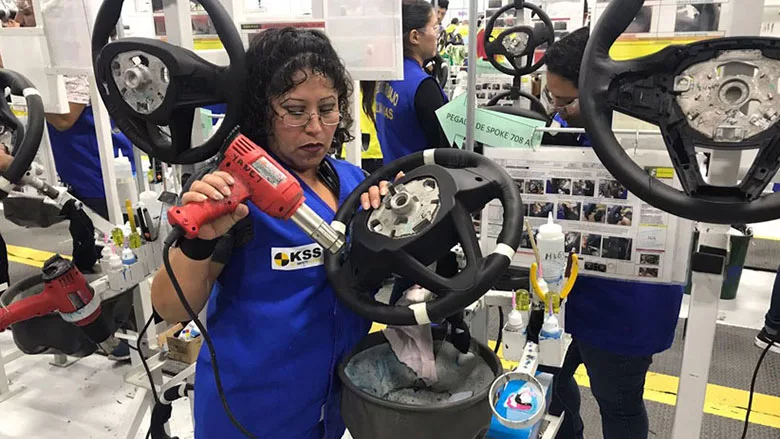
Photo courtesy Joyson Safety Systems
Tariffs may end up being the defining word of 2025. The issue has been making headlines since President Donald Trump’s inauguration in January.
Opinions on the topic have varied. For example, in a recent web poll, we asked readers how tariffs will affect their assembly plants. Initially, responses were split 50/50. Half believed that tariffs will help their operations, while the other half felt that tariffs would hurt their. However, since those first few weeks of President Trump’s second term, the poll now shows around 68 percent of respondents believe tariff will hurt their operations.
To learn more, we sought out experts who could shed some light on how tariffs might affect manufacturers and what they can do to prepare.
Just a few weeks after President Trump stepped into office, we spoke with Tony Klimas, partner and president of management consulting firm Horváth USA, for an episode of on ASSEMBLY Audible.
Listen: The Impact of Trump's Tariffs on Manufacturers
We revisited the conversation in the spring for an updated perspective from René Linsner, president and CEO of Horváth, to discuss how manufacturers are responding.
Listen: How Manufacturers Are Responding to Tariffs
From rising production costs to reshoring strategies, planning challenges, and even some business opportunities amid the constant policy shifts—this article is a collection of responses on how tariffs are impacting manufacturers and what to do about it.
Q: How are you working with manufacturing companies?
Klimas: Horváth is a 43-year-old management consulting firm. Traditionally, our foundation is more in the finance and accounting space, but we’re also very deep in manufacturing and operations in Germany, Switzerland, Austria and of course, here in the U.S.
Q: Since Trump’s inauguration, have there been official status updates on proposed tariffs or is a lot of it hearsay?
Klimas: I think there’s a lot of information out there. And of course, the first place we can look is what he did in his first administration. He introduced tariffs, some of which were left in place by the last administration. The reality is, during that period, depending on who you talk to, tariffs were a good thing, because they raised $84.5 billion in new revenue for the U.S. Of course, in terms of our GDP, that’s a very small amount, less than half a percent.
And then there are others who will tell you that tariffs were a tax, and they cost jobs and caused challenges.
But whether we like them or not, tariffs are very much a part of the current administration’s trade policy.
If you read between the lines, I think there’s at least some hope, that, whatever happens [with tariffs and trade deals] will be done in a rational way.
Q: Can you give us an update since we spoke with Tony in January? What has and has not happened?
Linsner: As expected, the tariffs have happened. But, it was a little different than we expected. When we talked about this topic in January, there was an expectation the tariffs will be imposed. But, we also expected that [tariffs would be imposed in a rational way], with different tariffs set up for different industries and different products.
Instead, it’s been up and down. Tariffs are imposed, and two days later, they take them back.
Q: Is there anything that was surprising to you?
Linsner: Yes. It was surprising that tariffs have been imposed for Canada and Mexico. We didn’t expect that. It was pretty clear that Europe would be affected. It was also clear that of course, China would be affected, but Mexico and Canada were surprising.
Q: What are manufacturers concerned about?
Klimas: Ultimately, from a business perspective, the concern is about the impact it’s going to have on costs. The administration views tariffs as a tool for negotiations and for trying to ensure fair trade. However, fair trade is a very difficult term, because it means a lot of things to different people.
At the end of the day, most of the concern is financial. But obviously there’s a human element here. There are concerns about jobs, about people’s livelihoods. There’s a lot of change going on right now, just in general from the digital revolution that started maybe 10 or 15 years ago. That revolution is nowhere near played out, and that adds to people’s uncertainty and fear.
Tariffs is just one small part of it.
Q: So how will the tariffs affect manufacturers?
Klimas: Tariffs will affect everybody. A lot of our clients assemble products in the U.S., but they actually buy a lot of the raw materials and parts from elsewhere.
They have understood that tariffs were coming, and they have been looking at the robustness of their supply chains. We believe very strongly that modeling and forecasting tools are important for dealing with this issue. But at the end of the day, companies will either deal with tariffs or resigning themselves to some tough times ahead and maybe some higher prices.
It depends on the complexity of your existing supply chain, how well you are at forecasting, and ultimately, how elastic your prices are. How will your customers react if you have to raise prices due to an increase in costs?
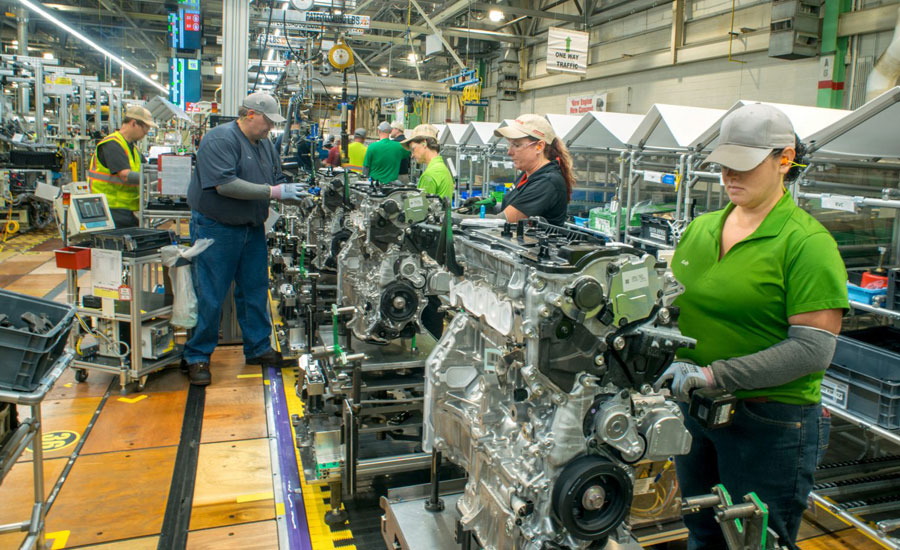
The automotive industry has been particularly hurt by the latest round of tariffs. Photo courtesy Toyota Motor Co.
Q: Will the tariffs impact certain manufacturing industries over others?
Klimas: It’s a very complex issue. And depending on what industry you’re in, you might have a different response. One of our key messages to our clients is the importance of having strong forecasting and analytical capability, because that will help you get through whatever’s going to happen.
The automotive industry, for example, has already been very impacted by the tariffs. That industry is more cost-focused.
With other industries, like semiconductors, for example, trade issues are more about intellectual property, and you can only do certain things in certain places. The president has mentioned tariffs against Taiwan, for example, which is the main source of semiconductors for the U.S. and many other places. On the one hand, that scares a lot of people. On the other hand, there’s a case to be made for not getting all of your semiconductors from a country that’s in the middle of a geopolitical dispute with China.
In more complex, technical industries, like medical device manufacturing, tariffs are just another distraction. It’s one more thing they have to deal with. So executives in those industries approach the problem with a different mindset. It’s a pure cost issue, and they have to figure out how to deal with it.
Q: So how can assemblers prepare? Do they need to consider alternate suppliers or lock in pricing? What’s your best advice?
Klimas: Hopefully, you’re not just preparing now. Tariffs have been happening for some time. Again, forecasting is important for understanding different scenarios. We have all these new technologies at our disposal, so we need to really emphasize that capability. Obviously, the more robust your supply chain, the better. Having options.
A lot of people are rethinking safety stock. In the past, we all learned that safety stock should be kept as little as possible. But, that was for a different time, when everything was relatively stable. Manufacturers are being more creative in terms of inventory.
Manufacturers also need to look at their throughput times, because if you can do things faster, that gives you more flexibility, which creates options for whenever the next crisis comes into play.
Obviously, you can’t lose sight of the day-to-day stuff, and you have to still focus on your customers. But there are a lot of capabilities you can put around what you’re doing day to day to help you manage through whatever’s coming next, whether it’s tariffs or something else. And there will always be something else.
Q: How can people make decisions when everything is in flux or the information is changing consistently?
Linsner: Exactly. It’s a challenge. When information is always changing, when the tariffs change every day or every week. It’s really hard to make decisions. Our clients are using a lot of tools to simulate the effect of tariffs on their products and their prices.
One of my clients was complaining that he went to a meeting to talk about tariffs, and when he left the meeting, the situation was different. This makes it really hard to make decisions! You need know how high the tariffs are and which products will be affected. But, when this information is changing all the time, then it’s really challenging.
Q: You mentioned tools to simulate the effects of tariffs. How is that done?
Linsner: Normally, manufacturers just use Excel, to be honest, but there are many other tools available.
The challenge is that manufacturing is not homogeneous. Some components will be affected by tariffs, but other components are manufactured here in the U.S. and will not be affected. So making calculations can be challenging.
Q: What advice do you give manufacturers?
Linsner: You need to stay on top of this topic. It’s important to be informed and to have a proper ERP system in place.
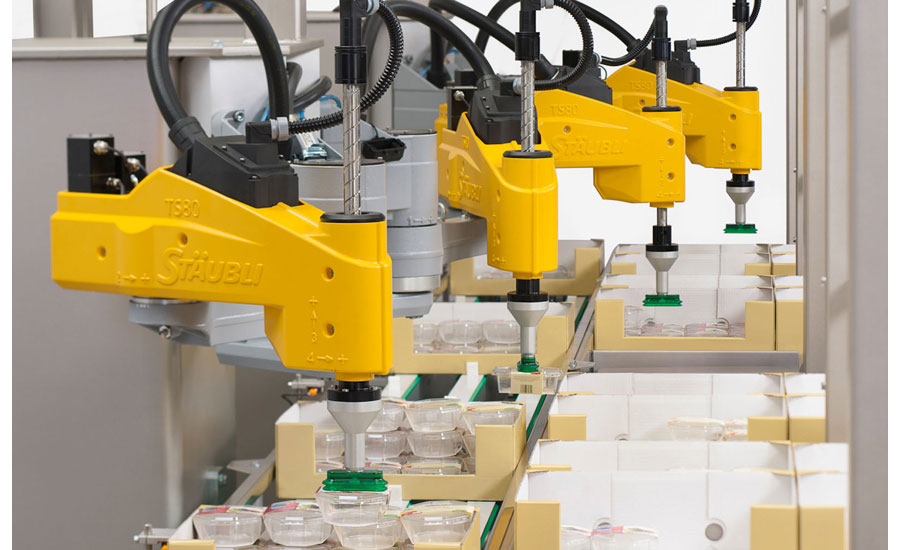
Automation can help manufacturers reshore production. Photo courtesy Staubli Robotics
Q: The underlying premise of tariffs is that they will prompt manufacturers to reshore production. What do you think of that justification? And is there any evidence that it’s working?
Linsner: In general, yes, the effect is pretty clear. But, when you look in the details, it’s not that easy. For one thing, we have a lack of qualified workers. It’s just not that easy to extend the manufacturing footprint here.
And when it comes to setting up a factory, finding domestic suppliers could also be a big challenge. It might take months to find new suppliers.
You can’t just set up a new manufacturing site and have it done up and running in a couple of months.
Q: Do you have tips or advice to leave us with today?
Linsner: Companies need to know how tariffs will affect their products and have the right systems in place to assess that.
The U.S. market is so important even for European companies and for companies from other countries. The tariff discussion will not stop those companies from investing. It will even foster their investments and speed up their investment plans.
Q: So do you foresee this, this this issue coming to an end anytime soon? When will the dust settle?
Linsner: A good question. Unfortunately, I can’t answer this completely, but it’s pretty clear that Trump is open to negotiations. He’s forcing the European Union and other countries to come to the table and negotiate with him not only on tariffs, but the entire setup.
Other countries will see this. As soon as they are willing to negotiate and make some good offers to the United States, then the dust will settle and everything will be clearer. This might take a few weeks or maybe a few months, but, it won’t last for the next six years. I’m convinced that by the end of this year, the situation will be clearer.
Looking for a reprint of this article?
From high-res PDFs to custom plaques, order your copy today!