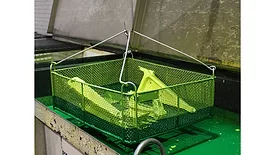
Liquid penetrant testing is known for being relatively easy to perform, but it does requires skilled technicians to perform and interpret results accurately and consistently.
Liquid penetrant testing (LPT) is a versatile, portable, simple, and sensitive method for detecting surface defects. It can be used on a wide range of materials and is excellent at finding surface discontinuities such as defects, porosity, lack of fusion, or surface-breaking cracks.
Laser-based NDT methods continue to be refined and improved, with recent significant advancements in the measurement of difficult-to-inspect shiny surfaces, underwater and radiation environments.
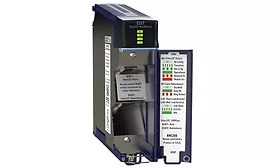
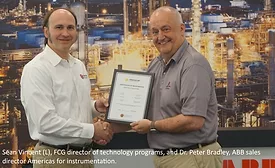
Ethernet-APL certification assures superior product quality for process instrumentation, and reliable interoperability throughout industrial communication networks.
Determining liability and accountability for AI system actions is challenging. Organizations need a comprehensive approach addressing technical, ethical, legal, and organizational aspects of AI.
Military standards came from a need for a sampling system that did not require 100% inspection for use in testing munitions and other destructive tests.
The ANSI/ASQ Z1.4 standard is similar in format to MIL-STD-105E and ASTM E2234-09 but differs in its definition of a rejectable item. It uses definitions and terminology in line with ANSI/ISO/ASQ 3534-2:2006. Two definitions are particularly important in applying the standard.