For over 30 years, companies have relied on Lean thinking principles to drive successful business models and become more competitive globally. Lean Thinking, based on Japanese manufacturing techniques, aims to handle work more efficiently and create value with fewer resources and less waste.
Orders of manufacturing technology, measured by the U.S. Manufacturing Technology Orders (USMTO) report published by AMT – The Association For Manufacturing Technology, totaled $321.7 million in July 2024.
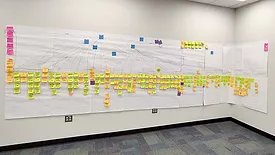
Value stream mapping is a powerful tool that reveals every step of your activity cycle, helping you identify what drives success and what doesn't. By spotlighting high-impact initiatives and streamlining less valuable ones, you'll optimize efficiency and maximize results. Discover what truly works and transform your business today!
Paul N. Gardner USA (Gardco) announced two new custom Gardco mobile apps to enhance efficiency and precision, the Gardco Viscosity Calculator App and the Gardco Psychrometric Calculator App.
For automation-focused companies, Autonomous Process Control (APC) isn’t just a tech advancement—it’s essential for achieving six sigma quality and boosting yields and profitability.
This article is designed to assist people that test for leaks using air in industrial quality control and want to learn how they can determine a leak test specification beyond zero leaks.
Leak testing is an important quality control measure in manufacturing. This article provides guidance on determining leak testing specifications by exploring factors and modifying existing specifications or creating new ones.
ZEISS Industrial Quality Solutions is presenting a hero's journey at the 2024 International Manufacturing Technology Show (IMTS) booth #134302 in the East Hall, Level 3.
In an ideal situation, every contaminant and raw material would have its own XRF and FTIR spectrum, which can be used to compare to unknown contaminants or incoming materials.
FTIR is the primary method for material and contaminant identification but lacks sensitivity to metallic components. X-ray fluorescence (XRF) can fill this gap and improve identification accuracy.