Test & Inspection
What’s Wrong with a Zero Leak Test Specification?
This article is designed to assist people that test for leaks using air in industrial quality control and want to learn how they can determine a leak test specification beyond zero leaks.

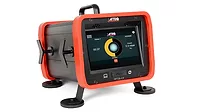
Image Source: ATEQ
Leak testing is a critical quality control test in the manufacture of many parts and products. The leak rate for products manufactured in the past can be applied to the next generation of these products. The lack of prior history to draw from has contributed to leak specifications with a Zero Leak rate.
This article will provide a guideline for determining a leak testing specification by first exploring the factors included. It will explore the easiest route via modifying an existing leak testing specifications rate from an application already in use with included examples. When that is not an option, it will provide an overview of creating a new leak test specification and the various factors included.
“Why can’t I just say I want my part to have zero leaks?”
What’s wrong with a Zero Leak rate?
Everything leaks; it is just a question of how much. Also, not all materials or gases leak in the same way. A highly viscous liquid may not leak from a hole where air would. Also, certain materials are porous to a gas but not a liquid. For example, glass is porous to Helium gas but not other gasses or liquids.
While a product specification of zero leaks may seem desirable, particularly if the consequence of a leak is high, it is unrealistic because everything leaks. As an example, the leak rate for certain products in military applications is a single air bubble over a 100-year period[1]. This stringent leak rate is still not a Zero Leak rate specification. Since there is no such thing as a 100% leak-free component, the key is to determine what leak rate is acceptable to manufacture products that are safe or adequate for the customer’s needs and can be manufactured cost-effectively.
To some people, a “no leak” means “a specified acceptable amount of leakage.”
The Anatomy of a Leak Test Specification
All leak test specification have been constructed based on the following factors:
READ MORE
Characterizing Failure Conditions: In many instances, a product capability backed by a product warranty will begin to define a leak test specification. A manufacturer can market their smartwatch as usable while swimming or that a smartphone can operate after being dropped in a 6 ft pool without water damage. Compliance with product capability driven by regulations or oversight common in the Healthcare industry can define a failure condition. Necessary shelf life can also define a failure condition, like a fire extinguisher holding its charge for 10 years.
Test Medium: The material of consequence or the equivalent for the leak test. Water ingress into a watch may be the material of consequence, but the test medium could be air, thereby not damaging a leaking part. Helium is a viable test medium, but there are other factors to consider, such as cost, and it may be overkill for most applications and is outside the scope of this article.
Test Time: Defines the accumulation time of the test medium. The duration is often expressed in standard time periods, such as one second, one minute or one hour. In cases where the test time exceeds these time periods, like one air bubble in 100 years, an equivalent test medium is used with one of these aforementioned common test periods.
Total Leakage Amount: Defines the threshold quantity of test medium that should not be exceeded over the test duration. The leakage amount is expressed in a volumetric value, typically cubic centimeters or liters. It is important to emphasize that the leakage amount is the combined quality from all leaks of the test medium over the test time. Therefore, numerous small leaks can have the same total leakage amount as one large leak.
Test Conditions: This specifies what parameters to conduct the leak test. Typically, the test conditions incorporate the normal operating conditions of the product to be tested. At the very least, they should define the test pressure.
Leak Rate Specification: The leak rate is the combination of the above items into one leak rate test parameter, expressed as sccm[2]. At times a bubble rate is used as a leak rate specification. Bubble sizes can vary[3], whereby an air leak rate is recommended[4]. NOTE: A flow rate may also be used.
Existing Leak Test Specification Examples
The following are some examples of leak test specification ranges for various applications, providing a starting point for engineers who are required to determine leak testing specifications for a product. A negative test pressure is a vacuum.
|
Product |
Oil Pan |
Muffler / Catalytic Converter |
Radiator |
EV Battery Tray |
EV Battery Pack |
EV Battery Coolant Circuit |
Medical Container |
|
Leak Rate |
0.5 - 4 sccm |
20 - 300 sccm |
0.5 - 10 sccm |
10 - 300 sccm |
10 - 400 sccm |
1 - 12 sccm |
.0137 sccm |
|
Test Pressure |
7.25 psi |
7.25 psi |
14.5 psi or 1 bar |
-(0.5) - 4 psi |
-(0.5) - 4 psi |
25 - 55 psi |
8-60 PSI |
|
Part Volume |
2-5 liters |
3-8 liters |
2-12 liters |
250 liters |
300 - 450 liters |
1-15 liters |
40ml - 1 liter |
The following values are provided for illustrative purposes
Numerous other applications can be drawn upon.

Basic Approach to Creating a Leak Test Specification
If no prior applications exist to draw from when creating a leak test specification, the simplest method is to create a specification containing air pressure for a given amount of time. In the following example, we will use a car tire filled with air and calculate an air leak test specification.
Characterizing Failure Conditions: A car tire is able to hold 30 PSI pressure in the wheel for one year while only losing 3 PSI of pressure drop in six months.
Test Medium: Air.
Test Time: Six months.
Total Leakage Amount: To be calculated based on the volume of the tire.
Test Conditions: 30 PSI, operating at room (ambient) temperature.
The formula for calculating the Leak Rate is as follows;
Leak Rate (sccm) = 0.0006 x Part Volume (cm³) x Pressure Drop per Second (Pa/Sec)
Part Volume:
Part (Tire) Volume = 30,000 cc
Pressure Drop per Second: Expressed in Pascals[5] per Second.
3 PSI = 3 * 6894.75729 Pascals or 20,684 Pascals
6 months = 15,552,000 seconds.
Pressure Drop per Second is 20,684/15,552,000 = 0.00133 Pa/sec
Leak Rate = 0.0006 x 30,000 cc x 0.00133 Pa/sec = 0.024 sccm
The Theoretical Approach to Creating a Leak Test Specification
Calculating a leak rate involves a number of physics-related factors. The good news is that formulas are available to make this easier. The following are provided for information purposes, as the full explanation of these factors is outside the scope of this article.
At a high level, the physics factors for calculating a leak rate are as follows:
Surface Tension: A water spider captures the impact of surface tension. Without surface tension, the spider could not stay on the surface. The same condition will apply to a leak. A small enough hole will allow air to escape but hold water or another liquid. The effect of surface tension of a liquid on a surface is quantified by a physical property called contact angle.
Flow Types: Not all flow is equal. The three main Airflow models that impact a leak rate are as follows;
Laminar: the most commonly used on thick wall leak path
Turbulent: commonly used on thin wall leak paths, below 2 atmospheres of absolute pressure, or vacuum above ½ atmosphere
Supersonic: commonly used on high pressures above 2 atmospheres absolute or in vacuum less than ½ atmosphere
Channel Length: The length or depth of the leak is a critical factor in calculating a leak test specification and also impacts the Flow Types.
Hole Geometry: Rarely is a hole perfectly round. Hole geometry can impact a leak rate.
The porosity of the Material: A wine bottle illustrates the impact of porosity. If the pore size of the natural cork is small enough, the wine’s surface tension will be more than its weight, and the wine will stay inside the bottle.
Conclusion
Everything leaks; therefore, a product specification of zero leaks is not achievable. The key is to define the acceptable leakage amount. The easiest method is to utilize the leak test specification of existing products. When that is not an option, a leak test specification can be calculated using the product failure conditions. Moreover, behind the calculation of a leak rate are a number of physics factors that should be considered. At the very least, hopefully, this article has lowered some of the shroud of mystery around creating a leak test specification and reinforced by a Zero Leak specification is not advised.
[1] MIL SPEC 883 Class K specifies a leak rate of 3 x 10-11
[2] Standard Cubic Centimeters per Minute.
[3] Champagne Bubbles have a diameter of 1.5mm. 2mm is used as the default diameter of a water bubble.
[4] Video showing air leak and bubble rates https://www.youtube.com/watch?v=Z8JQNPePIXY
[5] 1 PSI = 6894.75729 Pascals.
Looking for a reprint of this article?
From high-res PDFs to custom plaques, order your copy today!