Quality Magazine logo
search
cart
facebook twitter linkedin youtube
  • Sign In
  • Create Account
  • Sign Out
  • My Account
Quality Magazine logo
  • NEWS
  • PRODUCTS
    • FEATURED PRODUCTS
    • SUBMIT YOUR PRODUCT
  • CHANNELS
    • AUTOMATION
    • MANAGEMENT
    • MEASUREMENT
    • NDT
    • QUALITY 101
    • SOFTWARE
    • TEST & INSPECTION
    • VISION & SENSORS
  • MARKETS
    • AEROSPACE
    • AUTOMOTIVE
    • ENERGY
    • GREEN MANUFACTURING
    • MEDICAL
  • MEDIA
    • A WORD ON QUALITY PUZZLE
    • EBOOK
    • PODCASTS
    • VIDEOS
    • WEBINARS
  • EVENTS
    • EVENT CALENDAR
    • IMTS
  • DIRECTORIES
    • BUYERS GUIDE >
      • Supplier Insights
    • NDT SOURCEBOOK
    • VISION & SENSORS
    • TAKE A TOUR
  • INFOCENTERS
    • Digital Quality Management Systems
    • NEXT GENERATION SPC & QUALITY ANALYTICS
  • AWARDS
    • ROOKIE OF THE YEAR
    • PLANT OF THE YEAR
    • PROFESSIONAL OF THE YEAR
  • MORE
    • Expert Columns
    • NEWSLETTERS
    • QUALITY STORE
    • INDUSTRY LINKS
    • SPONSOR INSIGHTS
  • EMAG
    • eMAGAZINE
    • ARCHIVES
    • CONTACT
    • ADVERTISE
  • SIGN UP!

Production Leak Testing: Where to Start?

In leak testing, there is no one method that works best for every situation.
By Gene Grilli
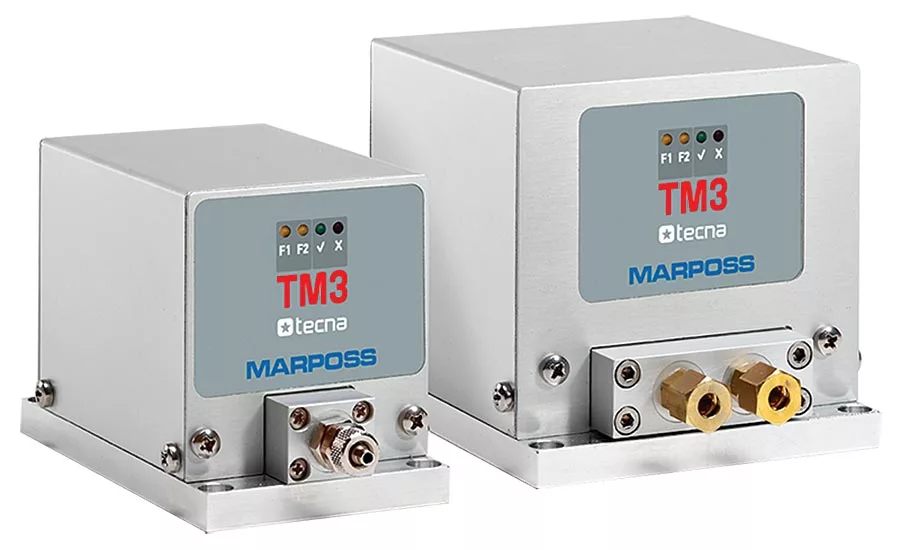
pressure decay measurement

Devices that use pressure decay measurement techniques can also be converted to measure flow rate.

March 15, 2020

Production leak testing can mean a lot of different things, and if you are not familiar with this branch of nondestructive testing, the choices of methodologies and techniques can seem a bit daunting. To begin with, there is leak location testing and leak measurement testing, with various approaches to accomplish either of these, or sometimes both.

Bubble Emission

There are three types of bubble emission testing; all include a core routine where the part is sealed and pressurized with a compressed gas—normally air—to identify any leaks.

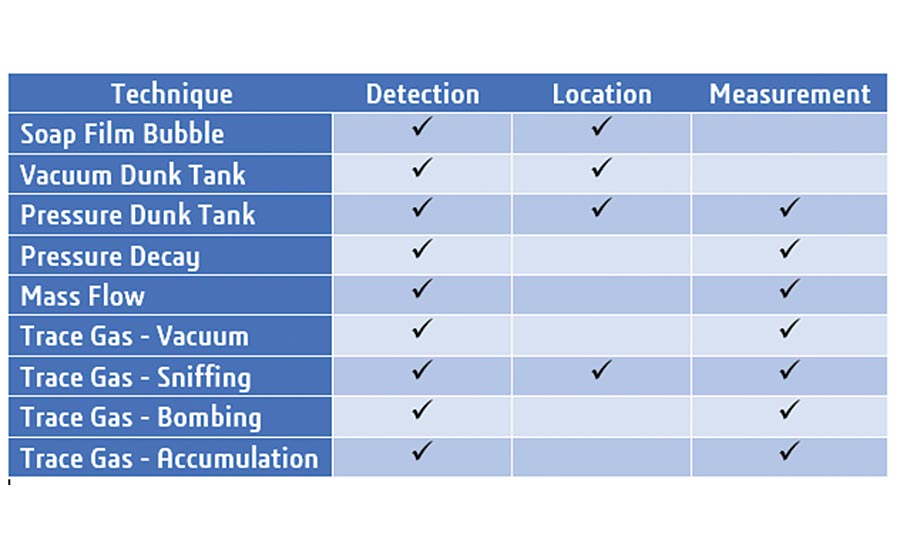
The first of these is soap bubble testing where the part is sealed and pressurized with a compressed gas and then sprayed or wiped with a bubble solution. If the technician can see bubbling, this indicates leakage and its location, but does not provide a value of measurement.

Second is dunk tank testing where the part is sealed, pressurized and then submerged under water with the technician visually monitoring any bubbles escaping from the part. By adding a measured beaker and stopwatch, the dunk test can also show leak location as well as measurement.

Lastly, there is a vacuum dunk tank method for use on parts that are already sealed and lacking a natural way to be pressurized. The part is placed in a tank of water that has a sealable lid. The tank is then de-pressurized with a venturi vacuum pump and the technician looks for any bubbles coming from the part.

Pressure Decay

Pressure decay leak testing is similar to bubble emission in that it also includes the core routine of sealing the part and pressurizing it with a compressed gas—normally air. However, instead of an operator looking for leakage location (bubbles), the technician monitors change on a pressure gage after isolating the test part from the air supply.

A leak test instrument can also be utilized in this approach, helping to remove potential operator bias from the test. A basic pressure decay leak test includes a test pressure regulator, solenoid valve, absolute pressure transducer and leak test instrument, which makes the pass/fail decision.

Differential pressure decay utilizes the same core routine and pneumatics, but adds an isolation valve and differential pressure transducer so that a test part and a reference part can be pressurized in parallel. When isolated from the pressure supply, the absolute pressure sensor verifies the correct test pressure and the differential pressure sensor monitors the change between the two cavities allowing for a more sensitive test.

Pressure decay can also be converted to a flow rate, sometimes called a predictive test. This will produce linear, repeatable and reproducible results.
leak testing

In general, leak measurement techniques are used most in high volume production and leak location is used in low volume production or troubleshooting.

Mass Flow – Leak

Mass flow is similar to pressure decay testing, but it adds a mass flow sensor. A simple mass flow pneumatic setup includes a pressure regulator, absolute pressure transducer, mass flow sensor and isolation valve. The part is pressurized, and the absolute sensor ensures the required test pressure is met. In this approach, the test part is not isolated from the air source, so the mass flow sensor measures the amount of air required to make up for any leakage out of the part.

Trace Gas

There are a variety of gases and detectors available for trace gas leak detection, which requires a sensor designed to respond to a specific gas. Helium is the most commonly used trace gas and is readily detectable with mass spectrometers and thermal conductivity.

In vacuum chamber trace gas testing, the part is put into a chamber where a vacuum is created. The part is then pressurized with helium and the helium leakage is measured through a mass spectrometer. An alternative method allows parts without a natural opening to be “bombed” or filled with helium prior to being placed into the vacuum chamber. This will only allow leak measurement.

In trace gas sniffer testing, the part is pressurized with a trace gas and a mass spectrometer or thermal conductivity tester is fitted with a sniffer probe that is moved over the areas of the possible leak to detect its presence. Sniffer testing can allow both leak location and measurement.
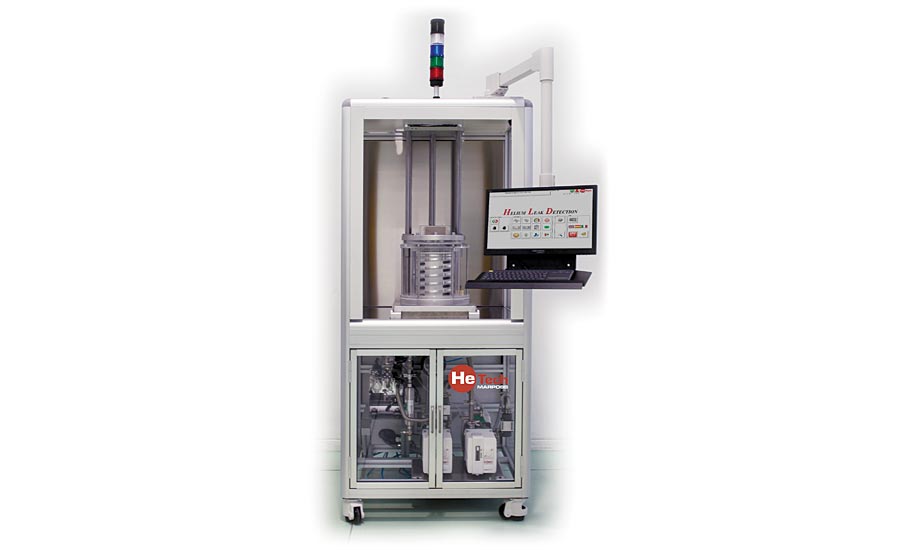
vacuum chamber trace gas testing

In vacuum chamber trace gas testing, the part is put into a chamber where a vacuum is created. The part is then pressurized with helium and the helium leakage is measured through a mass spectrometer.

How to Choose?

In leak testing, there is no one method that works best for every situation. In general, leak measurement techniques are used most in high volume production and leak location is used in low volume production or troubleshooting. Asking questions such as these can help drive your decision in what method to select.

  • How is the part used?
  • Is the part used to contain a gas or fluid?
  • What is the operating pressure?
  • What will cause the part to not operate correctly or degrade performance?
  • What is the production rate?
  • What type of budget is available?

Additionally, working with a supplier that has real-world experience and knows how to apply all of the leak test methods can help to ensure a robust testing process that lets you sleep well at night knowing you have a proven and sound testing methodology.

KEYWORDS: leak testing nondestructive testing pressure decay leak testing

Share This Story

Looking for a reprint of this article?
From high-res PDFs to custom plaques, order your copy today!

Gene Grilli is a leak and flow testing product specialist of Marposs. For more information, call (248) 309-5753, email [email protected] or visit www.marposs.com.

Recommended Content

JOIN TODAY
to unlock your recommendations.

Already have an account? Sign In

  • 2024 Quality Rookie of the Year Justin Wise 1440x750px banner with "Quality Rookie of the Year" logo inset

    Meet the 2024 Quality Rookie of the Year: Justin Wise

    Justin Wise is an exceptional individual who has been...
    Aerospace
    By: Michelle Bangert
  • Man with umbrella and coat stands outside while it rains at night looking at a building.

    Nondestructive Testing: Is there an ethics problem?

    I was a whistleblower who exposed fraudulent activities...
    NDT
    By: Dale Norwood
  • Unraveling Deflategate: Football stadium with closeup of football on field

    Unraveling the Tom Brady Deflategate

    The Deflategate scandal erupted following the 2014 AFC...
    Measurement
    By: Greg Cenker and Henry Zumbrun
Manage My Account
  • eMagazine Subscriptions
  • Newsletters
  • Online Registration
  • Subscription Customer Service
  • Manage My Preferences

More Videos

Sponsored Content

Sponsored Content is a special paid section where industry companies provide high quality, objective, non-commercial content around topics of interest to the Quality audience. All Sponsored Content is supplied by the advertising company and any opinions expressed in this article are those of the author and not necessarily reflect the views of Quality or its parent company, BNP Media. Interested in participating in our Sponsored Content section? Contact your local rep!

close
  • Key Takeaways for Quality Leaders
    Sponsored byComplianceQuest

    Key Takeaways for Quality Leaders from the 2026 Gartner Magic Quadrant™ for QMS

  • This image shows a person seated next to a Bobcat T66 compact track loader.
    Sponsored byPolyWorks by InnovMetric

    Supercharging Digital Gauging at Bobcat North America

  • Dorsey Calibration Lab photo by Tom LaBarbera Picture this Studios
    Sponsored byDorsey Metrology International

    Ensuring Product Quality in a Competitive Manufacturing Landscape

Popular Stories

This image shows a person seated next to a Bobcat T66 compact track loader.

Supercharging Digital Gauging at Bobcat North America

a professional in the aviation field performing maintenance, repair, and overhaul (MRO) work

Manufacturing Retention: Strategies for Improving Company Culture, Engagement and Skill Development

Dorsey Calibration Lab photo by Tom LaBarbera Picture this Studios

Ensuring Product Quality in a Competitive Manufacturing Landscape

2026 Quality Professional of the Year!

Events

June 22, 2026

Automate 2026

Automate is North America's largest robotics and automation event — and the best place to take your ideas from insight to impact.
 
Our show floor features the world’s leading automation solutions, from AI and robotics to motion control, vision systems, and more. Plus, our educational conference is second to none, led by the brightest minds in automation today.
 
Ready to transform the way you work? Take the next step at Automate.
July 14, 2026

Quality Leaders Forum: Better Communication, Better Quality Data

The Quality Leaders Forum is a quarterly, editor-moderated fireside chat series hosted by Quality Magazine, featuring candid conversations with senior manufacturing and operations executives shaping enterprise-level quality.

View All Submit An Event

Products

Lean Manufacturing and Service Fundamentals, Applications, and Case Studies

Lean Manufacturing and Service Fundamentals, Applications, and Case Studies

See More Products
Quality Podcast Channel Custom Content

Related Articles

  • Ultrasonic flaw detectors

    Where to Start with Ultrasonic Thickness Gaging

    See More
  • woman working on her ipad

    Good Enough is a Great Place to Start

    See More
  • ABB to Start Manufacturing Robots in the U.S.

    See More

Related Products

See More Products
  • Optimizing Factory Performance: Cost-Effective Ways to Achieve Significant and Sustainable Improvement

  • image.jpg

    Management Lessons from Taiichi Ohno: What Every Leader Can Learn from the Man who Invented the Toyota Production System

See More Products
×

Stay in the know with Quality’s comprehensive coverage of
the manufacturing and metrology industries.

Newsletters | Website | eMagazine

JOIN TODAY!
  • RESOURCES
    • Advertise
    • Contact Us
    • Directories
    • Manufacturing Division
    • Store
    • Want More
  • SIGN UP TODAY
    • Create Account
    • eMagazine
    • Newsletters
    • Customer Service
    • Manage Preferences
  • SERVICES
    • Marketing Services
    • Market Research
    • Reprints
    • List Rental
    • Survey/Respondent Access
  • STAY CONNECTED
    • LinkedIn
    • Facebook
    • YouTube
    • X (Twitter)
  • PRIVACY
    • PRIVACY POLICY
    • TERMS & CONDITIONS
    • DO NOT SELL MY PERSONAL INFORMATION
    • PRIVACY REQUEST
    • ACCESSIBILITY

Copyright ©2026. All Rights Reserved BNP Media, Inc. and BNP Media II, LLC.

Design, CMS, Hosting & Web Development :: ePublishing