ASQ has a broad publishing program that includes Quality Progress magazine, Lean & Six Sigma Review, and four technical journals: Journal of Quality Technology, Quality Engineering, Quality Management Journal, and Technometrics. The Quality Press catalog has over 200 books available in print and ebook formats, with annual sales exceeding 30,000 books.
LUCID Vision Labs, Inc., announced the relocation of its headquarters from Richmond, BC, to a significantly larger, state-of-the-art facility in Burnaby, British Columbia.
Carestream’s Non-Destructive Testing (NDT) group announced the launch of the INDUSTREX Fieldview Tablet, a rugged industrial tablet designed to simplify digital radiographic (DR) imaging in the field.
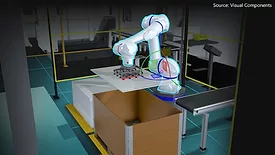
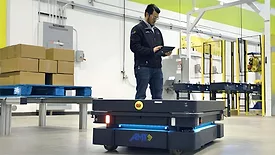
Manufacturing leaders prioritize quality, as customers expect consistency, safety, and performance. While companies have long relied on lean initiatives and Six Sigma programs, automation has emerged as a crucial tool for enhancing these efforts. In the last two decades in automation, I've seen it evolve from a cost-saving measure to a means of achieving consistency and precision throughout production, focusing on supporting quality at every stage rather than just integrating robots.
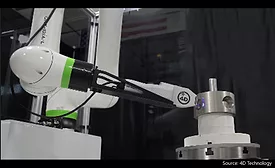
Onto Innovation, together with its Tucson-based subsidiary 4D Technology, announced that 4D Technology has been officially approved as a FANUC collaborative robot (cobot) device supplier.
New orders of metalworking machinery, measured by the U.S. Manufacturing Technology Orders Report published by AMT – The Association For Manufacturing Technology, totaled $387.3 million in July 2025.
While computed tomography (CT) has garnered attention for its volumetric imaging capabilities, 2D DR remains a faster and more cost-effective option for many production environments. As component complexity and production volumes grow, DR systems with automated image processing provide an effective and efficient solution for quality assurance workflows.
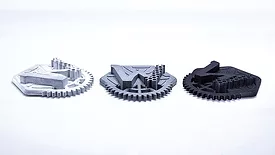
Additive manufacturing (AM) has long intrigued engineers with its design freedom and rapid prototyping. However, as it shifts to full-scale production, quality has become a critical bottleneck. Meeting the consistency, functionality, and cost expectations of conventional manufacturing is essential, making finishing as important as printing.