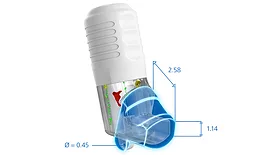
Precision is crucial in medical manufacturing, yet the industry faces labor shortages and increasing complexity. AI developments offer a solution by enhancing human expertise, enabling manufacturers to operate efficiently with limited labor and time while also improving patient safety and production resilience.
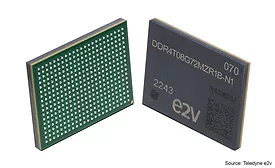
Teledyne e2v, a leading provider of high-reliability solutions for space applications, announced the immediate availability of Engineering Models for its new 16GB radiation-tolerant DDR4 memory.
The Women in Manufacturing Association (WiM) announced the 12 prestigious women leaders who comprise the 2025 class of Women in Manufacturing Hall of Fame inductees.
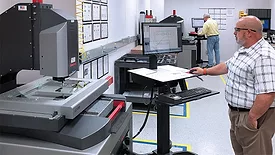
Component Engineers Inc. (CEI) in Wallingford, CT prioritizes quality control by consistently meeting or exceeding customer expectations from quoting to delivery. CEI continuously enhances its processes to adapt to changing requirements and tackles complex manufacturing challenges, solidifying quality as a core business principle.
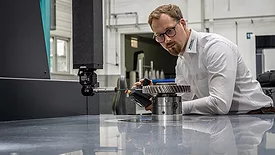
Gear inspection has significantly evolved since the early 20th century. What began as basic evaluations for high-precision gears in the 1920s has now become a complex field with standardized protocols and advanced technology. This evolution continues to transform quality assurance in gear manufacturing.
In a joint Assembly/Quality podcast, Jennifer Pierce, multimedia editor with Assembly Magazine and the host of Assembly Audible, and Michelle Bangert, managing editor of Quality, explore an area where assembly and quality intersect: machine vision, with David Dechow, founder and owner of Machine Vision Source.
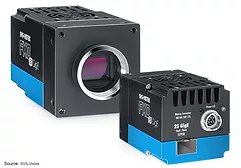
SVS-Vistek expanded its FXO platform by introducing the new FXO 25GigE Series of machine vision cameras enabled with Remote Direct Memory Access (RDMA) technology.
Ensuring adequate light for high-speed applications involves more than measuring lux; it depends on how much light the sample reflects and absorbs and whether it captures direct or scattered light. High-intensity light may still fail if the sample doesn't reflect enough to the camera, making brighter lights essential for short exposure times to prevent blur.