
Articles Tagged with ''workforce''


Management
The Urgent Call for Training: Addressing & Actions to Close the Skills Gap
We’ll explore what is causing the skills gap, what training programs we should be implementing, how to start, and how we protect the non-digital skills in a growing digital world.
Read More

Speaking of Quality | Claire Hopkins
Creating a Space for NextGens
Quality is present in all sorts of industries, which makes it a vibrant and
interesting field, but also presents a challenge when looking to find new
professionals to bring into the community.
Read More

Vision & Sensors | Automation
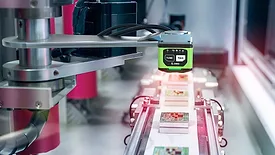
Augmenting Your Workforce: Three Opportunities to Leverage Technology to Automate Repetitive Tasks
As with any good engineering approach to problem-solving, we can divide the manufacturing labor challenge into parts.
Read More


Management
Bridging the Gender Gap: Solving the Skilled Labor Shortage
We must highlight the women already leading the charge and the exciting opportunities available, from 3D metrology to data analytics.
Read More

Management
Students and Educators Prove Quality is Never-ending Learning Process
Continuously learning.
Read More


Automation
How Automation Can Help You Achieve Your Growth Targets
The work that employees enjoy least is generally the most suitable for automation.
Read More

Vision & Sensors | Vision
Integrated, Centrally-Managed Machine Vision for Built-In Quality
If we can bridge the confidence gap between underperforming legacy vision systems and manufacturers’ needs today, the rate of adoption is sure to grow exponentially.
Read More