I often take shots at those companies with great quality systems that get their calibration reports, scan them for red flags and then file them away if none are present.
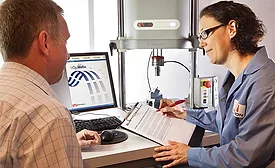
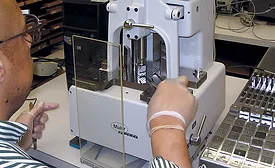
Anyone involved in medical device manufacturing knows that their industry is highly regulated. Almost every medical device manufacturer or pharmaceutical supplier uses materials testing systems in their quality control and research laboratories or outsources their testing to approved third-party laboratories.
A few customers are requesting that reports show the actual lab humidity during calibration of their equipment. I realize that this can be a critical consideration for some types of calibration but when it comes to fixed limit gages, I have never heard the rationale for such a request other than it’s what their customer expects.
Calibration reports are supposed to be clear and concise so the reader can understand the details. In fact, the ISO 17025 standard has a section that deals with this topic in specific terms so it would seem there should be no room for misinterpretation.
My journey in dimensional inspection and quality started what seems like a lifetime ago when I ran the one-CMM quality department in my father’s aerospace engineering firm. Thirty years later, my passion for American ingenuity has never been stronger.
Before I get into hand-to-hand combat on this gentle reader, I thought it might be helpful to explain a few things about what uncertainty is, and what it is not.
I regularly take shots at quality auditors for some of their antics but thought that, in the interest of fairness, it was time to turn my sights on issuers of calibration reports for some of their antics.