Manufacturing leaders prioritize quality, as customers expect consistency, safety, and performance. While companies have long relied on lean initiatives and Six Sigma programs, automation has emerged as a crucial tool for enhancing these efforts. In the last two decades in automation, I've seen it evolve from a cost-saving measure to a means of achieving consistency and precision throughout production, focusing on supporting quality at every stage rather than just integrating robots.
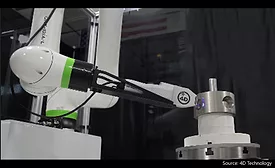
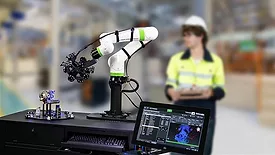
Onto Innovation, together with its Tucson-based subsidiary 4D Technology, announced that 4D Technology has been officially approved as a FANUC collaborative robot (cobot) device supplier.
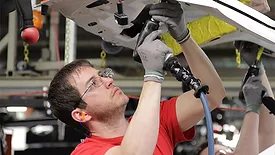
Nissan's Smyrna, TN, plant hosted sixty attendees from Assembly South before a Nashville show. Covering over 6 million square feet, the facility includes production areas and a test track. In mid-April, Nissan reversed its plan to cut shifts due to concerns over tariffs and trade war risks.
When you buy a cobot, you may have just one application in mind, but leading cobots are platforms for almost any number of quality applications - and not just quality applications.
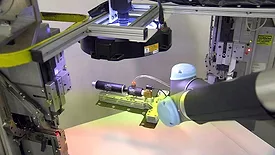
I've noticed that operators and inspection workers often realize upon first meeting collaborative robots (cobots) that they aren't replacements for human labor. Instead, cobots signal a shift from traditional automation in quality and inspection, providing distinct advantages over traditional robots.
New advancements in vision-guided robotics are enabling auto industry players to eliminate a lingering friction point in an otherwise highly automated, highly efficient process.
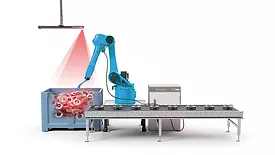
Automakers are embracing automated bin-picking to overcome manufacturing challenges, leveraging cutting-edge vision-guided robotics to boost efficiency in their processes.
AI is profoundly reshaping manufacturing, enabling businesses to achieve higher quality standards, greater operational efficiency and more imaginative resource utilization.
Unplanned downtime challenges manufacturers, but AI-powered predictive maintenance helps predict failures and reduce costs. A Deloitte study shows that 86% of executives view intelligent factory technologies as crucial for future competitiveness.
As industries advance, metrology—the science of measurement—becomes essential for innovation. With a growing need for precision and efficiency, the field is evolving to enhance quality control. This summary highlights key trends shaping metrology today.
Unlock the potential of pre-engineered cobot systems to enhance automation in manufacturing. With their adaptability and ease of use, these solutions address labor shortages and drive impressive ROI, making now the perfect time to invest in customized automation for your business.
As robotics use grows throughout processing, packaging, and logistics environments, it’s important to understand your options — and how to keep up with safety guidelines.
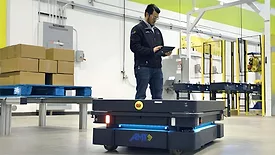
As robots gain prevalence in manufacturing, emphasizing their safe use is vital. This includes understanding safety features, challenges, and best practices across all robot types, such as industrial, collaborative (cobots), autonomous mobile (AMRs), and humanoid robots, to navigate their complexities effectively.