As automation simplifies and enhances manufacturing processes, quality control staff see significant career advantages, making a shift towards more efficient, consistent, and data-driven production environments.
Manufacturing automation is on the rise, offering quality control workers a career advantage. Stefan Friedrich of New Scale Robotics notes that as manufacturers embrace automation, it becomes more user-friendly, aiding new workers in using robots and software effectively.
Quality sat down with Stefan Friedrich of New Scale Robotics to explain why quality is often one of the later steps to automate. Adopting a robot or cobot can be intimidating but it doesn’t need to be. Here he describes what quality professionals need to know. Hint: it’s not programming.
Automation helps move skilled workers from repetitive tasks to more important roles, experts say. It’s essential to train them to use these new technologies properly.
In a domain where microns and millimeters matter, efficient quality inspection and metrology processes can make the difference between consistent, successful production runs and labor-intensive failures.
The phenomenal rise of collaborative automation systems over the past decade or so has seen collaborative technologies deployed on a growing number of quality control applications. Collaborative automation enables companies of all sizes to improve throughput and reduce cycle times on inspection tasks.
Manufacturers often look at collaborative robots, or cobots, as an ideal way to enhance production efficiency, with human workers and automation working closely together.
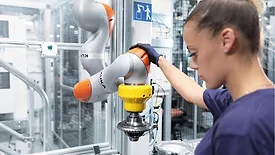
Over the last few years, collaborative robotics has come to the fore as a way to increase manufacturing flexibility and improve ROI. When considering a human-robot collaborative workcell, we explicitly incorporate and expect humans to be safely working close to and/or interacting with the robot during operation.
This white paper explores how the automation of operations such as quality inspection and metrology – previously reserved for larger companies with hefty budgets – has changed dramatically with the advent of collaborative robots.