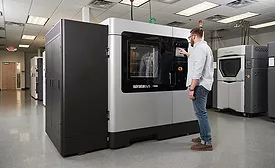
On every trade show floor featuring additive manufacturing, there’s a growing selection of additive processes for making production parts that stand alongside machines more commonly associated with prototyping. An essential aspect of additive’s transition from prototyping to production is data collection.
Since SPM specialists Image Metrology and Digital Surf joined forces in 2014, development teams from both companies have been working hard to create the next generation of SPM image analysis software.
Bruker announced the launch of the new Luxendo InVi SPIM AIM next-generation lattice light-sheet microscope, which features an advanced illumination module (AIM) for lowest phototoxicity light-sheet fluorescence microscopy of live samples.
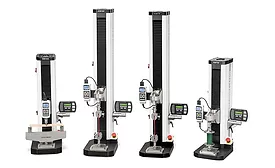
Why conduct these tests? There are many reasons to perform materials tests. Data from testing can be used by engineers, scientists, designers, and managers.
I’ve commented on this subject from time to time but thought I’d have another go at it since the questions never seem to go away. I’m referring to the language used in our day-to-day work in measurement and calibration.
The electronics industry is driven by the trend for more GOPS (Giga-Operations per Second) per mm3. This requires smaller technology nodes in wafer manufacturing, a drive to advanced packaging, as well as back-end inspection of the smaller interfacing components like micro-bumps, distribution layers, etc.
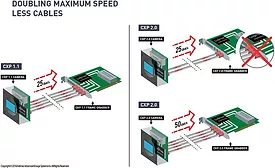
Two interfaces—GigE and USB—have been dominating the machine vision industry for the last five years. One supports long cable lengths and easy integration of multiple cameras, while the other offers higher bandwidth and true plug-and-play convenience.