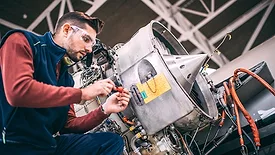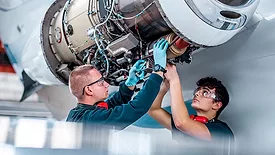
Advanced ultrasonic testing solutions must keep pace with these new challenges while maintaining the rigorous quality control standards that ensure aircraft safety.
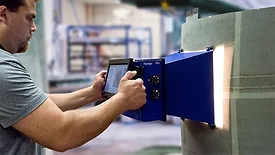
Aerospace components, varying in shape, size, and material, require specialized inspection methods to ensure quality and safety due to the diverse manufacturing processes involved. Automated Ultrasonic Testing (UT) systems enhance efficiency and defect detection, but effective scanner control, inspection planning, and results analysis are essential to maximize their benefits.
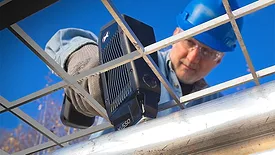
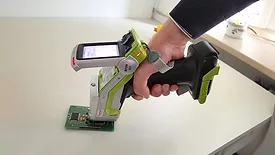
XRF (X-Ray Fluorescence) and LIBS (Laser-Induced Breakdown Spectroscopy) are key nondestructive testing methods. XRF identifies elemental composition, while LIBS measures lighter elements like carbon.
The EU's RoHS Directive (2002/95/EC) restricts hazardous substances in electrical and electronic products to protect health and the environment, prohibiting materials like lead and cadmium.
The combination of advanced infrared camera technology and dedicated software analysis tools has made active thermography a viable alternative to traditional methods.
Active thermography (AT) is a nondestructive testing method that uses advanced infrared camera technology and software to inspect subsurface defects in materials like those used in aerospace and automotive industries.
Conformable/flexible digital detector array (DDA) panels are revolutionizing industrial radiography by enabling comprehensive imaging of complex shapes across sectors like aerospace, oil and gas, automotive, construction, and electronics. This technology improves nondestructive testing and image quality, supported by key ASTM standards.
Ethics in Nondestructive Testing (NDT) are vital, as inspectors' decisions directly impact safety. Unethical practices, such as skipping inspections, using forged documents, and misusing inspection stamps, can lead to serious consequences and compromise industry integrity.
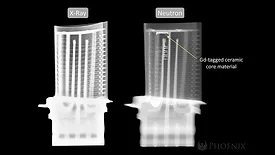
Neutron imaging enhances aerospace valve inspection by detecting issues traditional methods like X-rays miss. It reveals contaminants and allows for detailed 3D models, improving the assessment of complex valve assemblies.
Additive manufacturing (AM) is revolutionizing industries by enabling the production of complex metallic components, but it also presents unique challenges in quality assurance. This article examines the vital role of nondestructive testing (NDT) in ensuring the integrity and reliability of AM products.
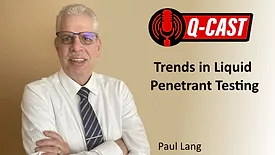
Paul Lang, chief global strategy officer for the American Society for Nondestructive Testing (ASNT) and executive director for ASNT Certification Services LLC (ASNT CS), shares his thoughts on trends and liquid penetrant testing.
Batteries are key to electrification, demanding high-quality control and efficient production. The use of Automated Defect Recognition (ADR) and other technologies is critical as the industry aims to scale up to meet the rising demand from electronics, electric vehicles, and energy storage sectors, while also minimizing environmental impacts.